
The 2026 World Cup final taking place at MetLife Stadium in New York City is a classic clash of 2 teams ranked 1st and 2nd in the world, of global superstars. They will play on a natural grass field - a detail that may not be noticed by many people, but is developed, sown, installed and maintained extremely meticulously for a long time.
The MetLife pitch is used Bermuda grass, the type of grass that FIFA requires to be used for all World Cup matches. However, things are not that simple.
The fixed surface at MetLife is originally artificial grass, meaning FIFA needs to install a temporary natural grass surface before the tournament, the process takes about 1 month.
After Bermuda grass is installed, it is sewn with an additional 5% artificial grass. Whether it is a direct seam (3 days to complete) or using a lawn, this method helps reinforce the grass surface to have more durability and uniformity.
Below are some layers located between the grass surface and the fixed synthetic surface below.
At the bottom is the geotextile layer, followed by the aluminum floor - a hard surface that helps minimize any impact of artificial grass.
Above is a waterproof layer to protect the synthetic surface, followed by an 85 mm thick Permavoid drainage layer, and above is an irrigation system and 8-10 inches of sand to create a buffer to bring the most natural feeling possible to the grass layer above.
Grass for MetLife's field during the 2026 World Cup is grown at Carolina Green Corp in Indian Trail, North Carolina, southeast of Charlotte.
They have supplied Bermuda lawns for football fields in the US for many years.
FIFA did not provide specific information about transporting the grass to MetLife, but it is said to require about 20 truck trips.
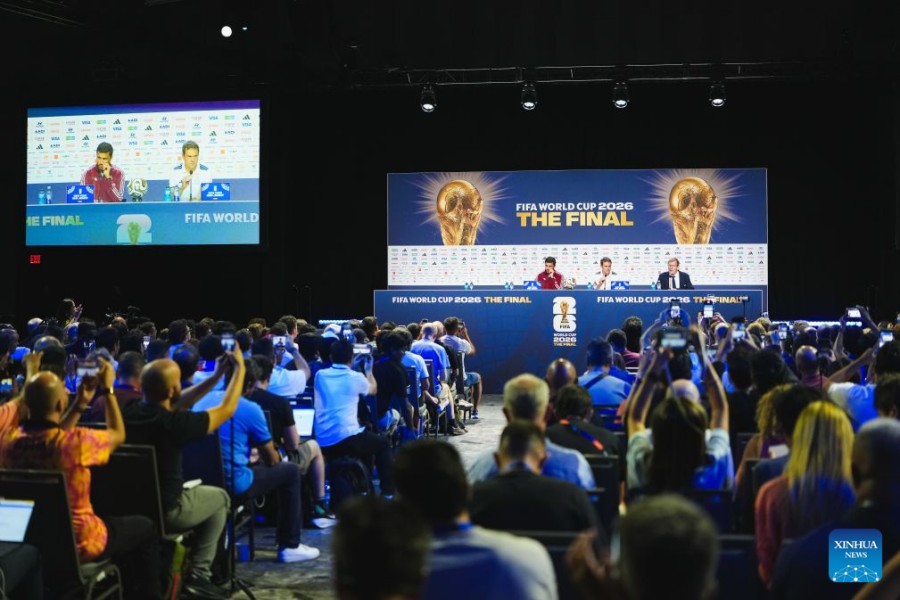
The pitch for the World Cup final is completed after 8 years of research, development, cultivation and implementation.
This is a crazy process to get results like today" - Dr. John Sorochan, head of 1 of 2 research branches for this project (a similar program implemented at Michigan State University), shared.
Dr. Sorochan met FIFA's senior stadium manager, Alan Ferguson, in 2016, when he was the head of the stadium management department at Wembley Stadium as well as St. George's Park (the official training ground of the English Football Association).
2 years later, when Ferguson joined FIFA, the two met at a coffee shop in London, where the entire project started right after the World Cup in Russia ended.
After that, Sorochan contacted his former professor of Golf Course Grass Research at Michigan State University, Dr. Trey Rogers, to collaborate on a project to change the surfaces of sports fields in North America.
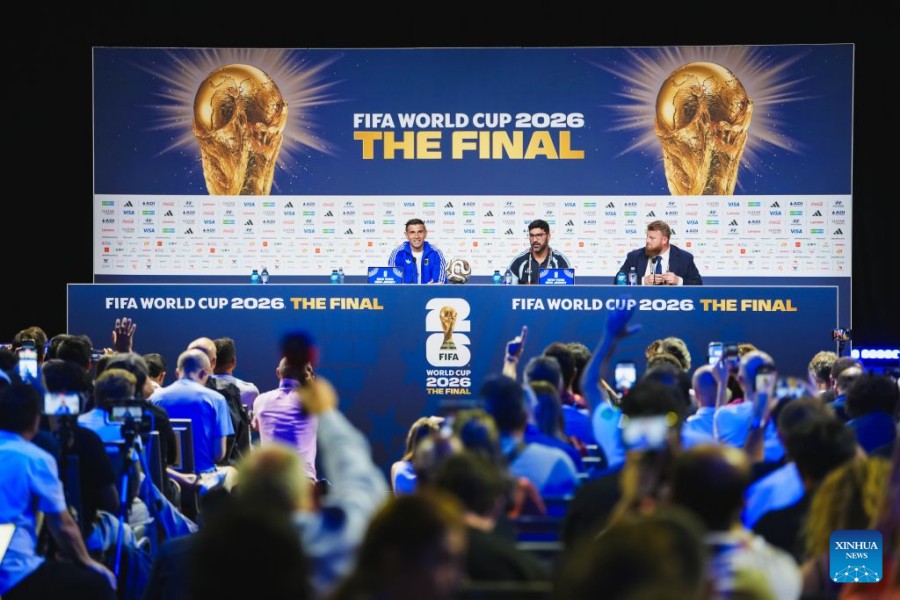
The research team must develop not only 1 field surface, but field surfaces suitable for 16 different geographical environments, at different temperatures, climates, altitudes and stadiums.
There are outdoor courtyards under intense sunlight, indoor courtyards with air conditioning but no natural sunlight, courtyards at an altitude of over 20,000 meters above sea level, and areas with frequent storms.
While Miami courts are quite easy because they use Bermuda grass, other courts have to experiment with mixing Kentucky bluegrass, perennial ryegrass or other species to find the most perfect formula under the in-depth research of Dr. Jackie Guevara.
FIFA even built a controlled environmental simulation dome nearly 465 square meters wide at the University of Tennessee, equipped with growth lighting and climate control to test the durability of grass in the face of dense competition density.
They focus on 2 factors: the feedback of the ball (avoiding too much or too little bounce) and the feeling of the surface under the players' feet by developing a "flexibility testing device" to detect any vibration from the artificial grass underneath.
One of the biggest developments that the team created is the method of planting grass on a plastic layer so that it can be transported and installed with the least damage to the root system, helping plants not suffer physiological shock when cut or grafted.


