
Domestic pepper prices: Increase and decrease alternate
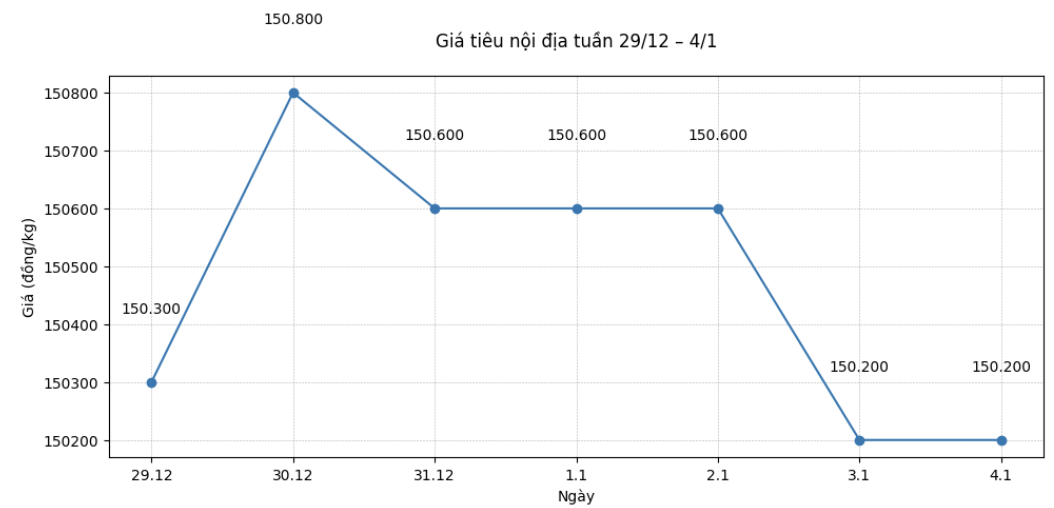
Today (January 4), domestic pepper prices traded in the range of 149,000 - 151,000 VND/kg, fluctuating in opposite directions in all regions.
At the end of last week, pepper prices in Dong Nai recorded a decrease of 1,000 VND/kg, down to 149,000 VND/kg.
Conversely, pepper prices in Gia Lai increased by 500 VND/kg, currently being purchased at 150,000 VND/kg.
Meanwhile, pepper prices in Dak Lak and Lam Dong province reached the same level as last week with 150,000 VND/kg. Similarly, pepper prices in Ho Chi Minh City remain unchanged at 150,000 VND/kg.
World pepper prices: Continuously reversing
According to the International Pepper Corporation (IPC), world pepper prices fluctuate.
Indonesian black pepper price decreased by 51 USD/ton compared to the previous week, down to 6,763 USD/ton. At the same time as the survey, Indonesian white pepper price increased by 23 USD/ton compared to the previous week, reaching 9,202 USD/ton.
Brazilian black pepper ASTA 570 increased by 100 USD/ton, to 6,100 USD/ton. Meanwhile, the price of black and white ASTA Malaysia pepper remained unchanged, selling at 9,000 USD/ton and 12,000 USD/ton respectively.
In Vietnam, black pepper export prices simultaneously stood still before the week's closing, at 6,500-6,700 USD/ton for 500 g/l and 550 g/l types.
Perspectives and forecasts
According to experts, the domestic pepper market last week underwent slight downward adjustment pressure after the New Year holiday. The main reason is that demand from the Chinese market has not had a breakthrough as expected, along with cautious sentiment before the upcoming harvest season in Lam Dong. However, the price around the threshold of 150,000 VND/kg is still considered a good price, ensuring profits for pepper growers.
Forecast for next week, the domestic pepper market will continue to fluctuate. Part of the global supply is at a low level supporting prices. On the other hand, psychological pressure from Vietnam's new crop and competition from Brazil may curb the increase.


