
Domestic pepper prices: Continue to increase
As of 11:30 am today (March 7), domestic pepper prices continued to increase, averaging 145. 400 VND/kg. Currently, key areas are trading in the range of 144. 500 - 146. 500 VND/kg. Domestic pepper prices continue to increase, specifically as follows:
Gia Lai and Dong Nai provinces increased by another 500 VND/kg, listed at the mark of 144. 500 VND/kg.
Dak Lak and Lam Dong also put prices at 146,500 VND/kg on the market, an increase of 500 VND/kg.
Ho Chi Minh City alone remained unchanged, anchored at the threshold of 145,000 VND/kg.
World pepper prices: Slight decrease
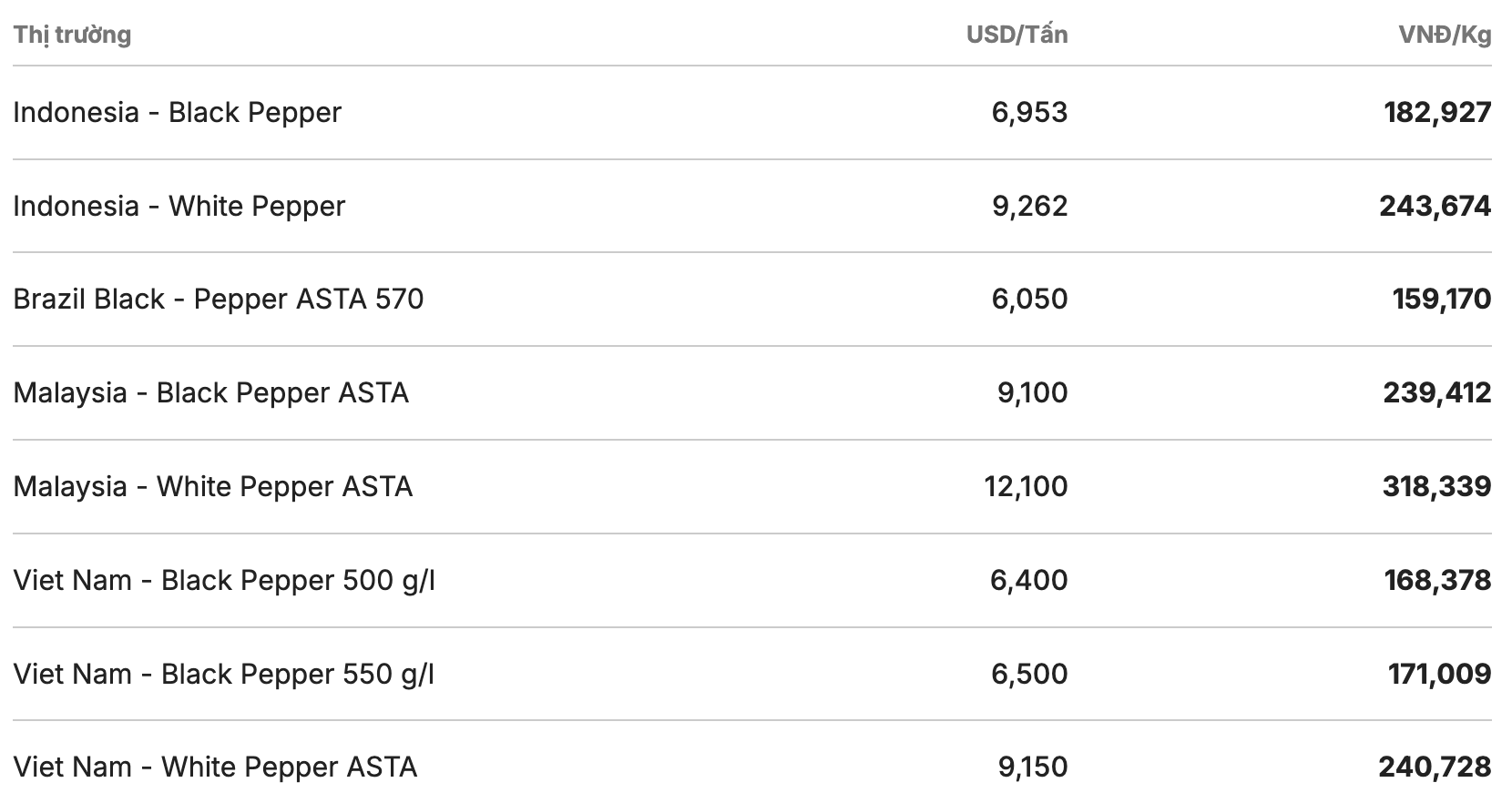
In the world market, pepper prices continued to decline in some regions. The Indonesian exchange - one of the most active markets - slightly decreased. Black and white peppers traded in the range of 6,953 - 9,262 USD/ton (equivalent to 182,927 VND/kg - 243,674 VND/kg), down 3 USD/ton and 4 USD/ton respectively.
The Brazilian market is listed at 6,050 USD/ton (about 159.170 VND/kg). Notably, black and white peppers maintained an increase of 100 USD/ton, trading at 12,100 USD/ton and 9,100 USD/ton.
In Vietnam's pepper export market, black pepper prices of 500 g/l and 550 g/l slightly decreased, anchored at the mark of 6,400 - 6,500 USD/ton. Meanwhile, ASTA white pepper price continues to be offered for sale at 9,150 USD/ton (equivalent to 240,000-728 VND/kg).
Assessments and forecasts
The supply of pepper from the old crop year has almost run out, while the new harvest in the southern provinces is taking place in the context of harsh hot weather, which has put direct pressure on actual output.
Many gardeners in key areas tend to keep goods to wait for higher price levels, causing export businesses to raise purchase prices to ensure delivery progress for international partners.
It is forecasted that from now until the end of March, pepper prices will still be greatly affected by the weather situation in the Central Highlands and the discharge rate of large warehouses, creating momentum for agricultural export turnover to break through strongly in the following months of 2026.


