
On January 15, the Lam Dong Provincial Military Command held a conference to announce the Ministry of National Defense's decision on reorganizing the Commune-level Military Command.
At the same time, awarding decisions on transferring and appointing officials to hold positions at the Military Command of communes, wards, and special zones.
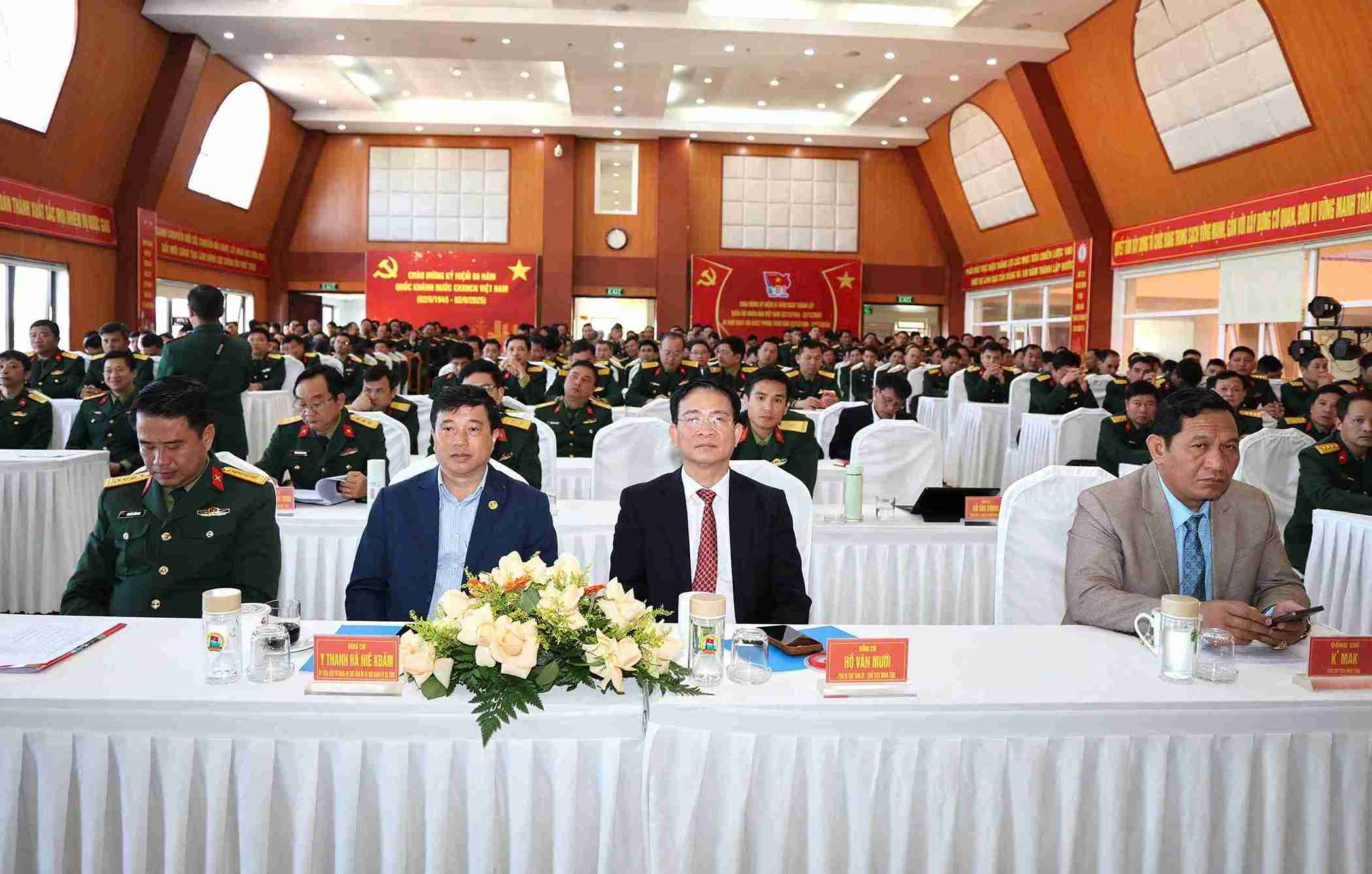
Attending the conference were Colonel Nguyen Tan Linh - Deputy Commander of Military Region 7; Secretary of Lam Dong Provincial Party Committee Y Thanh Ha Nie Kdam; Chairman of Lam Dong Provincial People's Committee Ho Van Muoi and leaders of departments, branches, and localities.
At the conference, the Provincial Military Command announced the decisions of the Minister of National Defense and the General Staff on the reorganization and promulgation of the organizational chart of the Military Command Boards of communes, wards, and special zones directly under the Provincial Military Command of Lam Dong.
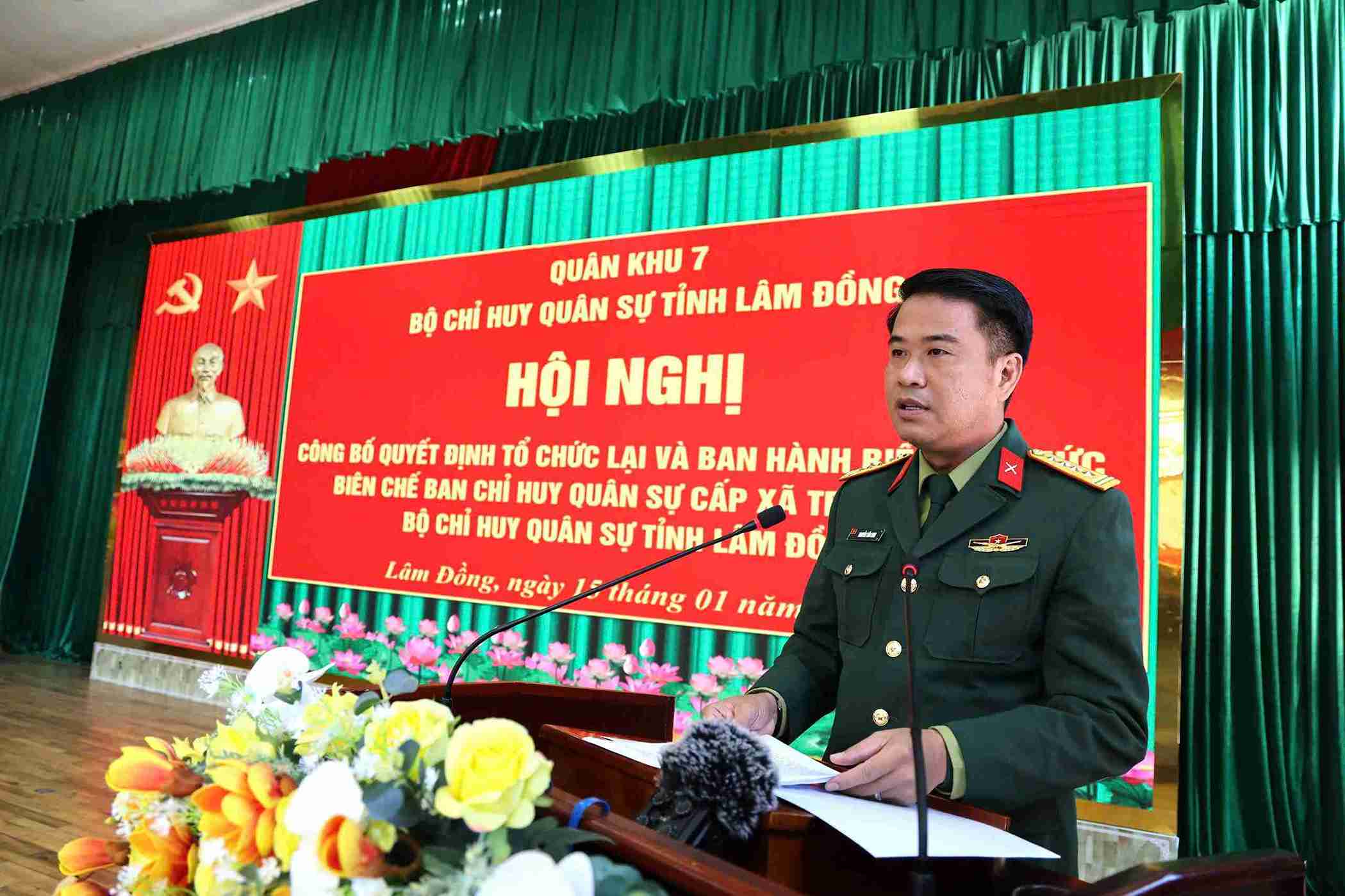
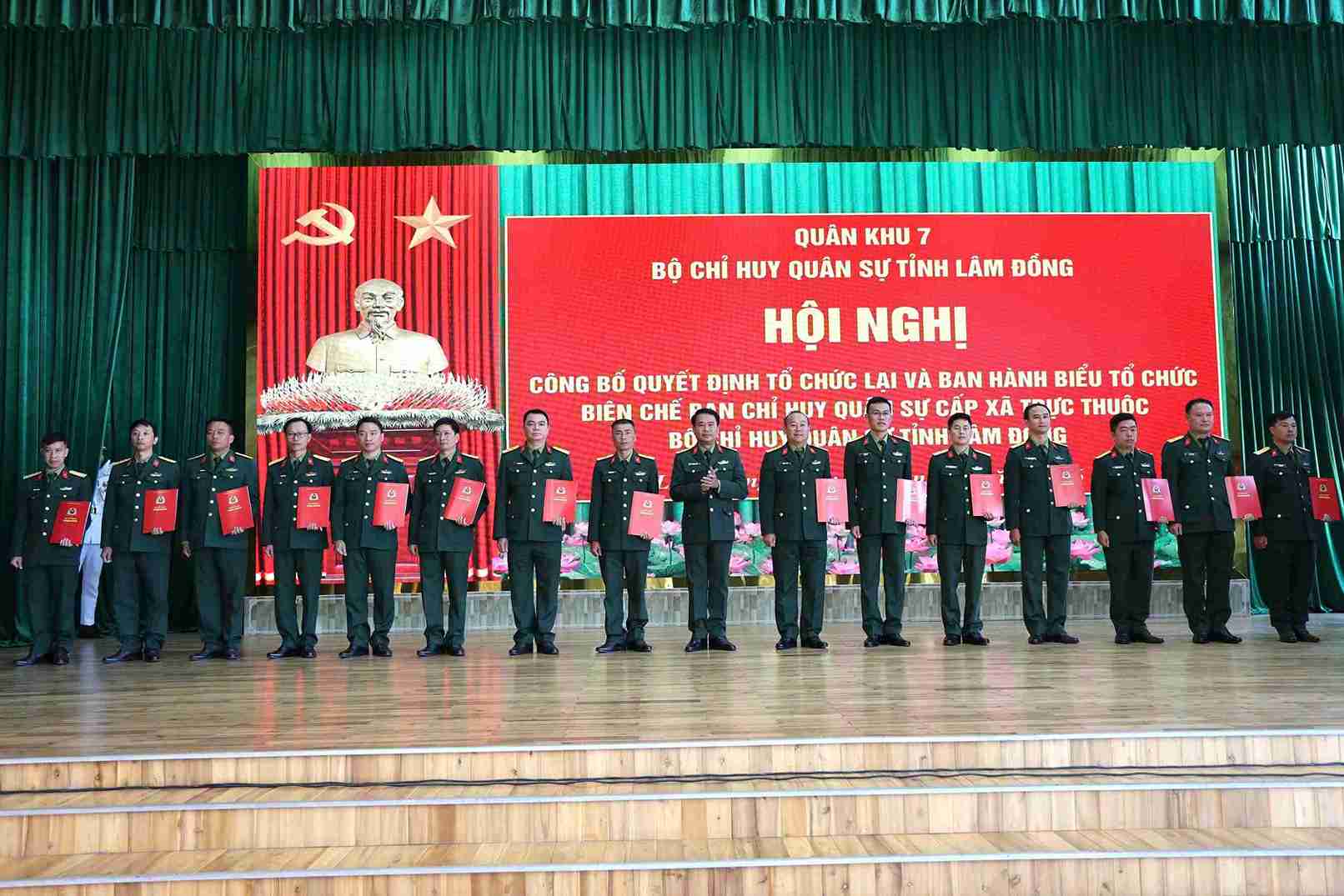
At the same time, announcing the decision to transfer and appoint 124 officers to hold the position of Commander of the Military Command in 124 communes, wards, and special zones throughout the province.
Along with that, nearly 500 officers and professional soldiers were transferred and appointed to hold positions of Deputy Commander, Deputy Political Commissar, assistant, and staff at the Military Command of communes, wards, and special zones.
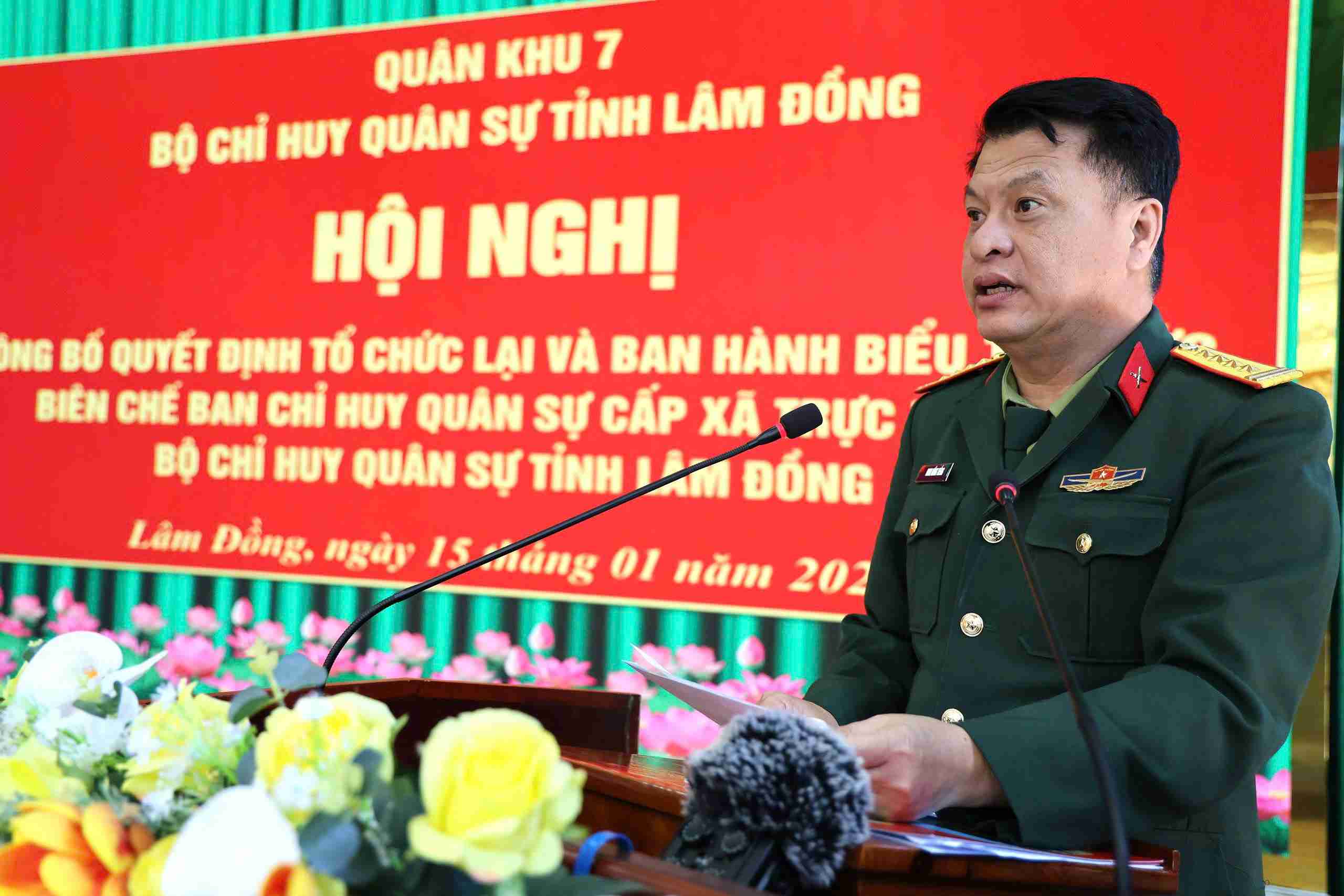
Speaking at the conference, Colonel Dinh Hong Tieng - Commander of the Military Command of Lam Dong province affirmed that the reorganization of the Commune-level Military Command is a major policy, demonstrating the strategic vision of the Party, the Central Military Commission and the Ministry of National Defense, in line with the two-level local government model.
This contributes to streamlining the organization, unifying command, and promoting the core role of the military force in the political system at the grassroots level.
Colonel Dinh Hong Tieng requested officials transferred and appointed to new positions to maintain political bravery, overcome difficulties, and constantly study, train, and improve their qualifications and working capacity.
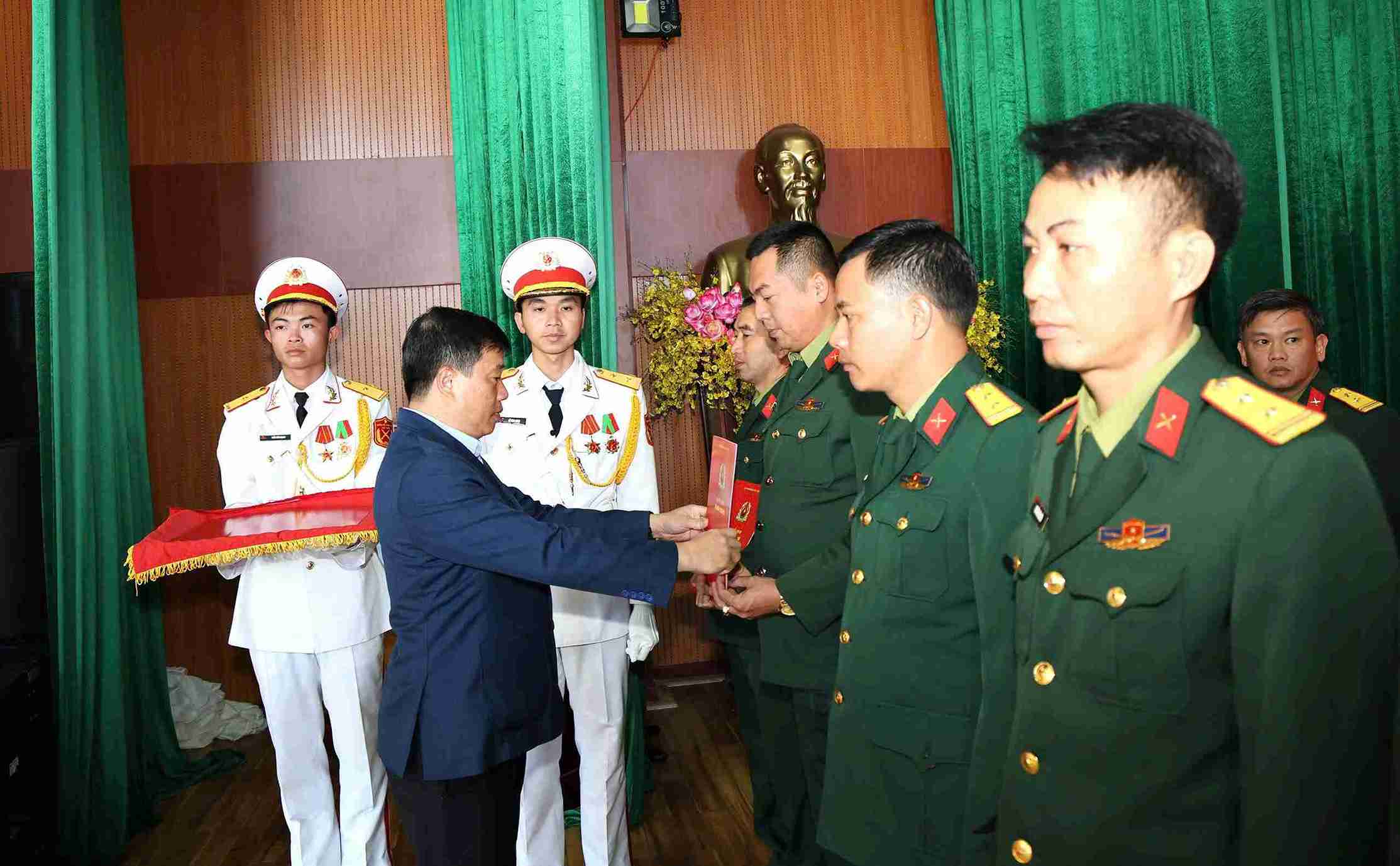
Thereby, doing a good job of advising local Party committees and authorities in leading and directing the implementation of local national defense and military tasks; focusing on Party building, improving the quality of training the militia and self-defense forces.
Along with that, strengthen coordination with the police force and other forces at the grassroots level, proactively grasp the situation, promptly handle arising situations, and not be passive or surprised.
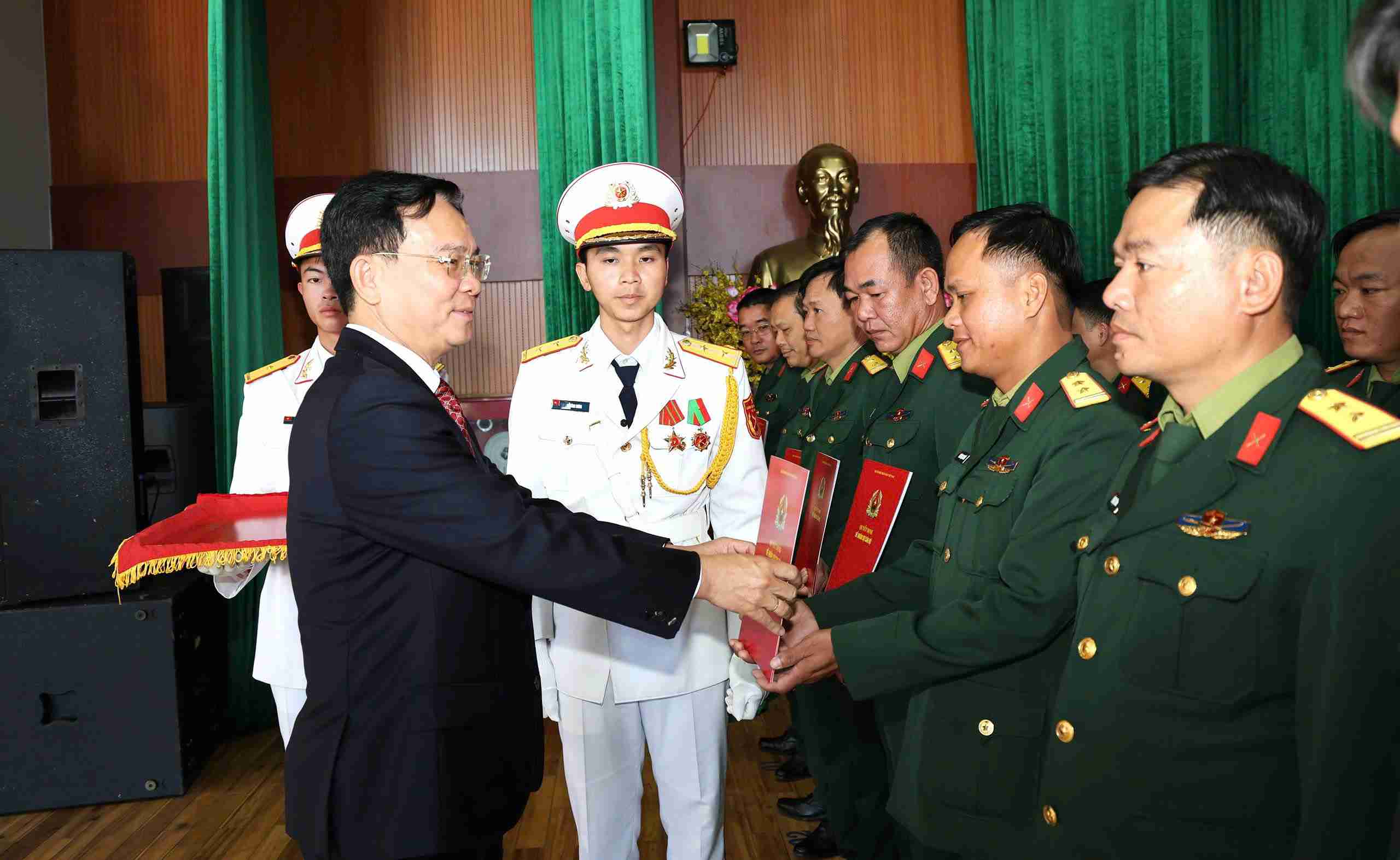
In the immediate future, officials who are transferred and appointed to the Commune-level Military Command need to quickly access the area, organize the reception and handover of work, and stabilize accommodation, living and working places.
Officials need to review and adjust the system of documents and combat readiness plans; build a self-defense militia force in accordance with regulations, and fully prepare conditions for the 2026 training mission.
At the same time, well implement the work of selecting and calling citizens to enlist, handing over troops and managing demobilized soldiers returning to their localities.
From there, build a comprehensively strong Commune Military Command, contributing to coordinating with local Party committees and authorities to successfully implement socio-economic development goals associated with national defense and security.


