
Right from the beginning of 2026, the Government and the Prime Minister have focused on directing ministries, branches, and localities to drastically implement resolutions and conclusions of the Central Government, the Politburo, and the National Assembly.
In which, the highlight is the thorough preparation to serve the organization of the 14th Party Congress very successfully; bringing new faith and spirit to the entire nation to enter the new term; focusing on implementing the Work Program of the Central Committee, Politburo, Secretariat, conclusions of key leaders; drastically implementing 9 breakthrough resolutions of the Politburo.
Successfully organized a national online conference of the Government and localities to deploy tasks for 2026, identifying the operating theme for 2026 as "Responsibility discipline; proactiveness and efficiency; innovation; accelerating breakthroughs; sustainable growth".
Direct ministries, branches, and localities to drastically implement Resolution No. 01 (with 5 viewpoints, focuses, 12 groups of tasks, key solutions, 152 specific tasks); Resolution 02 on improving the investment and business environment, and enhancing national competitiveness.
The Government also requested to focus on drastically implementing solutions to promote growth to achieve the double-digit growth target in 2026.
Including renewing traditional growth drivers (investment, consumption, export) and promoting new growth drivers (science and technology, innovation, digital transformation, green transformation...); drastically directing the disbursement of public investment capital right from the beginning of the year, especially key projects in the transport sector (highways, railways); meetings of the State Economic and Private Economic Steering Committees.
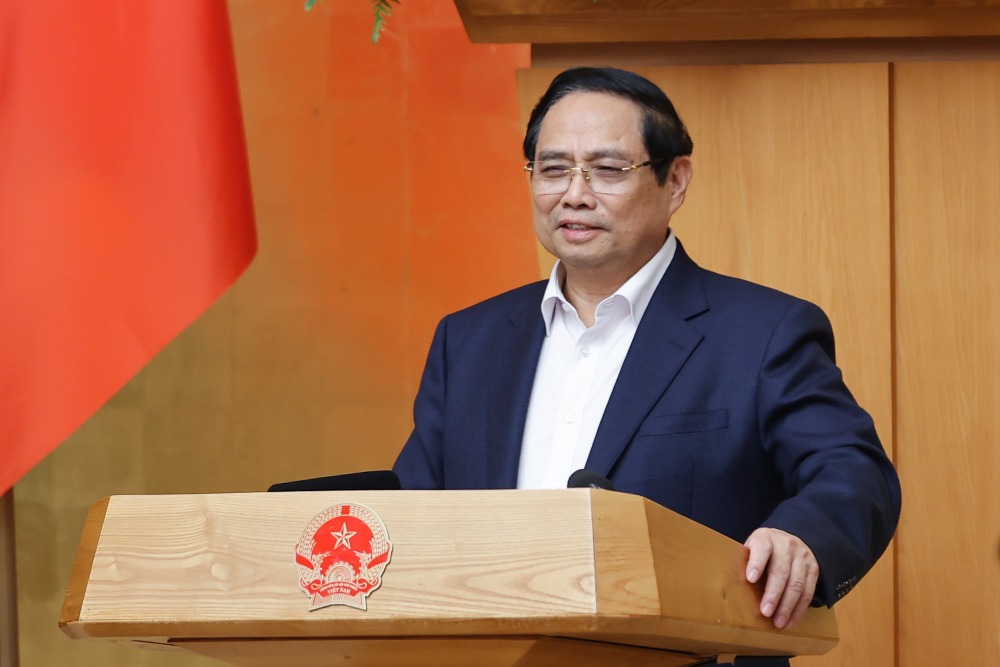
In Resolution 01/NQ-CP on socio-economic development and state budget estimates for 2026, the Government identified focusing on implementing 12 key groups of tasks and solutions.
Some important tasks and solutions can be mentioned such as focusing on synchronously completing institutions and laws, improving the efficiency of law enforcement organization; promoting the reduction and simplification of administrative procedures, and improving the investment and business environment.
Continue to improve regulations on the organization of the administrative apparatus; strengthen decentralization and delegation of power, promote the responsibility of heads; further promote the work of preventing and combating corruption, wastefulness, negativity, and group interests.
Fundamentally transform the growth model based on productivity and innovation; putting improving productivity, quality of human resources, science and technology, and innovation at the center of the development strategy.
Focus on investing in building modern and synchronous strategic infrastructure projects, creating a foundation for national competitiveness, especially key transport projects, national trunk transport system, railways, international airports, seaports, energy; promote inter-regional projects, large urban infrastructure, digital transformation infrastructure; adjust planning to suit the new context.
Creating breakthroughs in science and technology development, innovation and national digital transformation; focusing on developing high-quality human resources, especially in the fields of chips, semiconductors, artificial intelligence; improving the skill level of the whole society...
Also in Official Dispatch No. 06/CD-TTg dated January 24, 2026, the Prime Minister also requested to continue to implement a reasonable, focused, and key expansion fiscal policy, closely and effectively coordinate with monetary policy and other macroeconomic policies; manage monetary policy proactively, flexibly, and promptly, ensuring major balances.
Regarding monetary policy, the State Bank presides over proactive, flexible, appropriate, and effective management, ensuring a dual goal of both promoting growth and controlling inflation; directing credit into production and business, priority sectors, growth drivers, social housing, infrastructure, digital technology, production, processing and consumption of agricultural products...; strictly controlling and ensuring credit quality in potentially risky sectors.


