
Officially increase pensions, allowances 8%
The Government has issued Decree No. 162/2026/ND-CP on adjusting pensions, social insurance (SI) allowances and monthly allowances.
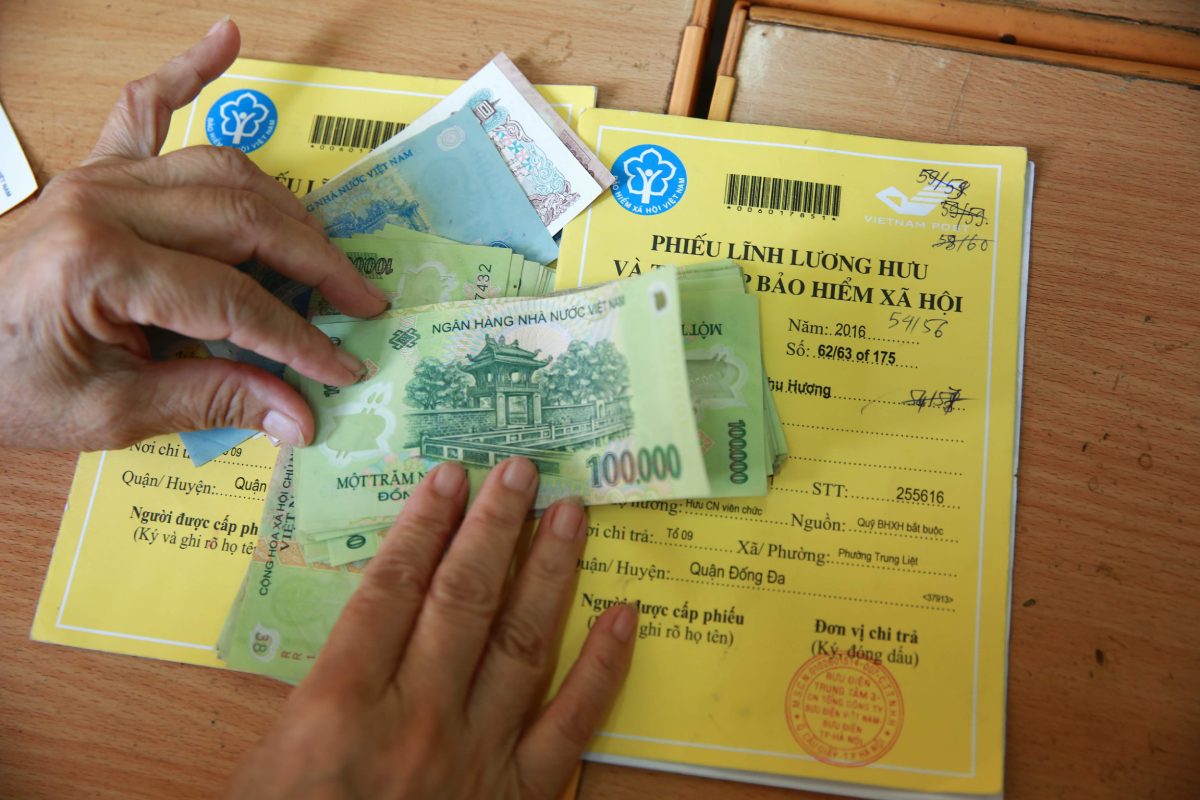
Accordingly, from July 1, adjusting to increase by an additional 8% on the pension level, social insurance allowance and monthly allowance of June.
After increasing by 8%, the group receiving pensions, social insurance allowances, and monthly allowances before January 1, 1995 with a benefit level lower than 3.8 million VND/month will continue to be adjusted in 2 directions.
First, increase by 300,000 VND/person/month for those with a benefit level equal to or lower than 3.5 million VND/person/month.
Second, increase to 3.8 million VND/person/month for those with a benefit level higher than 3.5 million VND/person/month but lower than 3.8 million VND/person/month.
The level of pension, social insurance allowance, and monthly allowance after the above adjustment is the basis for calculating the adjustment of pensions, social insurance allowances, and monthly allowances in subsequent adjustments.
Mr. Nguyen Minh Huan - former Deputy Minister of Labor, Invalids and Social Affairs (now the Ministry of Home Affairs) assessed that the 8% increase basically ensures the principle of contribution - benefit, and is also suitable for the current socio-economic development situation.
According to Mr. Huan, in the context of inflation and rising prices of many essential goods, pension adjustments are necessary to support the lives of retirees.
The 8% pension increase is equivalent to the adjustment level for civil servants and public employees who are working is appropriate" - Mr. Huan assessed.
Mr. Bui Sy Loi - former Deputy Chairman of the National Assembly's Social Committee (now the Culture and Social Affairs Committee) - said that the decision to increase pensions by 8% from July 1 is appropriate in the current context.
According to Mr. Bui Sy Loi, this adjusted policy still ensures the principle of contribution - benefit of social insurance, meaning that people with high contributions receive high benefits, low contributions receive low benefits. The group with low pensions below 3.5 million VND/month receiving additional support is considered a necessary solution to support low-income people, showing the spirit of "leaving no one behind".
In the immediate future, when the economy is still difficult, we must implement temporary solutions such as adjusting salaries and increasing pensions. But in the long term, it is necessary to focus on macroeconomic development solutions, inflation control and salary reform to improve the lives of pensioners, retirees and social assistance recipients" - Mr. Bui Sy Loi said.
Pension adjustment is only a component
Further discussing this issue, Assoc. Prof. Dr. Tran Van Trung - Lecturer of Public Management Department, Faculty of Business Administration, University of Economics and Law, Vietnam National University Ho Chi Minh City - said that in the context of rapid population aging, the pressure to balance the social insurance fund and the budget is increasing, there will be no single "increase" that can simultaneously achieve both goals of ensuring social security for retirees and maintaining financial sustainability in the long term.
According to Mr. Tran Van Trung, the optimal option should be a comprehensive policy package, in which pension adjustment is only a component.
In addition to adjusting the benefit level, this expert believes that it is necessary to continue to reform the parameters of the social insurance system to ensure the sustainability of the fund in the future.
In which, increasing the retirement age according to the roadmap of the 2019 Labor Code is considered an important financial solution to extend the contribution period and reduce payment pressure.
In addition, it is necessary to adjust the benefit rate in a more appropriate direction in the long term, reduce the percentage accumulation rate according to the number of years of contribution and expand the scope of social insurance participation, especially for informal sector workers and voluntary social insurance participants to increase revenue for the fund.
Another content he emphasized is the need to clearly separate the functions of "insurance" and "social security".
Accordingly, the social insurance fund operates in accordance with the principle of contribution - benefit, while the state budget will focus on supporting poor elderly people or groups with low pensions, avoiding the situation of "cross-carrying" causing prolonged pressure on the social insurance fund.


