
On June 22, at the Government Headquarters, Member of the Party Central Committee, Deputy Prime Minister Ho Quoc Dung - Chairman of the Appraisal Council, chaired the appraisal conference on Adjusting the National Land Use Plan for the period 2021-2030, vision to 2050.
Reporting at the conference, the Ministry of Agriculture and Environment (MARD) proposed to continue to improve land financial policies in a transparent and effective direction; research tools to regulate revenue from land; and improve criteria and standards for changing land use purposes in accordance with development requirements.
The focus is placed on digital transformation in the land sector. Accelerating the construction of a centralized and unified land database nationwide; applying advanced technologies such as artificial intelligence (AI), big data (Big Data), Internet of Things (IoT) and geographic information systems (GIS) in land management and monitoring, early detection of violations and supporting the decision-making process.
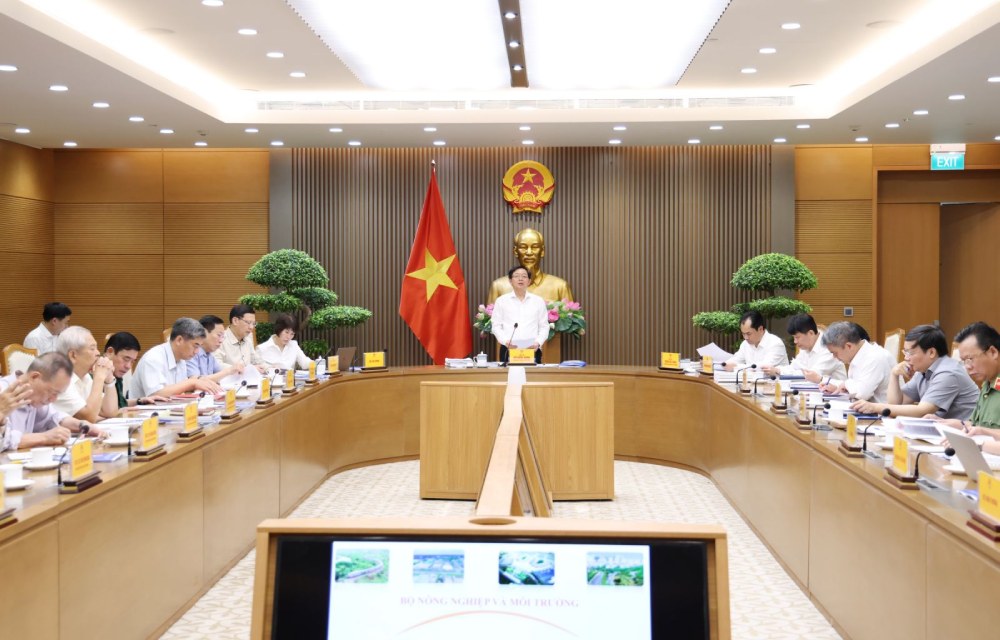
Concluding, Deputy Prime Minister Ho Quoc Dung noted that reviewing and evaluating the results of land use planning implementation in the 2021-2025 period is an important basis for developing adjustment plans for the next phase, promptly meeting the needs of land use to serve strategic infrastructure, defense, security projects as well as the requirements of expanding socio-economic development space according to new orientations.
The Deputy Prime Minister especially noted the situation of "suspended planning", prolonged planning but unable to be implemented in reality. This is an inadequacy that needs to be thoroughly overcome because it not only affects people's rights but also causes great waste of land resources.
In which, some forecasts in the planning in the past time were not close to reality, leading to the situation that the demand for land use is highly calculated but the implementation rate is low.
Therefore, this planning adjustment must be based on scientific basis, accurately assessing the needs and exploitation and use of land, avoiding the situation of holding land but not putting it into effective use.
The Deputy Prime Minister also requested to pay attention to developing the carbon credit market, promoting urban and housing development models in the direction of economical and efficient land use.
It is necessary to gradually change the development mindset from "land subdivision and sale" to developing high-rise housing areas and apartments to improve land use efficiency and meet the requirements of modern urban development.
In particular, the Deputy Prime Minister proposed to study a flexible operating mechanism between the Central Government and localities in allocating land use targets.
Every year, it is necessary to organize an assessment of the implementation results of each locality to have a basis for adjusting and transferring targets in accordance with actual development needs, ensuring that land resources are used most effectively.
The Ministry of Agriculture and Rural Development closely coordinates with relevant ministries and sectors to continue reviewing and completing dossiers, ensuring a full legal basis and quality of content before submitting them to competent authorities for consideration.
The Deputy Prime Minister emphasized that national land use planning is not only about allocating land targets but must truly become a lever for economic growth, environmental protection, national defense and security, and maximizing the value of the country's particularly important resources.


