On the morning of December 5, the National Assembly discussed the investment policy for the national target program on new rural areas, sustainable poverty reduction, socio-economic development of ethnic minority and mountainous areas until 2035.
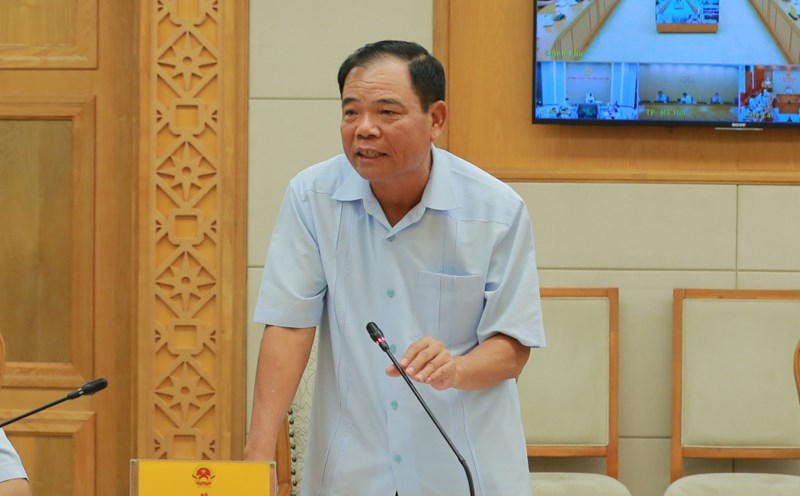
Participating in the comments, delegate Ha Sy Huan (Thai Nguyen delegation) highly agreed with the policy of merging 3 national target programs into 1 program in the period of 2026-2035.
Regarding the decentralization of program management, delegates highly appreciated the mechanism for implementing the program in the direction of: The Central Government manages the whole and issues policies, guides, supervises, inspects, decentralizes, and decentralizes power thoroughly along with the allocation of resources to localities in the spirit of "locality decides, locality does and locality takes responsibility".
However, this mechanism needs to be clarified and implemented more thoroughly. Clauses 5, Article 1 and 3 of the draft resolution have decentralized to the Provincial People's Councils to decide on resource allocation and organize program implementation.
In practice, the delegate said that this decentralization of procedures is cumbersome, takes a lot of time, lacks initiative at the grassroots level and makes it difficult to avoid the situation of scattered and broken investment that was pointed out in the previous stage.
The contents of the program are largely invested in infrastructure, technology, models for serving livelihoods and serving people in communes and villages.
The delegate said that currently, implementing local government at both levels and the commune level, the area has been directly managed, clearly understanding the subjects, cultural conditions, terrain, and livelihoods of the locality.
Therefore, to implement the motto "people are the masters" and increase the efficiency of grassroots investment, the delegate suggested that the National Assembly consider adjusting the decentralization of program implementation to be more strong and thorough for the grassroots government, in the direction of decentralizing to the commune level to decide on the organization of program implementation. The provincial level plays the role of guiding, inspecting, supervising, technical supporting and administrative procedures.
In particular, empowering localities, specifically the People's Councils at the commune level and the People's Committees at the commune level to decide on a list, implementation plan, and appropriate model in order of priority for each stage; deciding to integrate, coordinate, or synchronize the components and capital sources of the program and projects in the area to avoid overlapping, scattered, broken, and task-omitting investments.
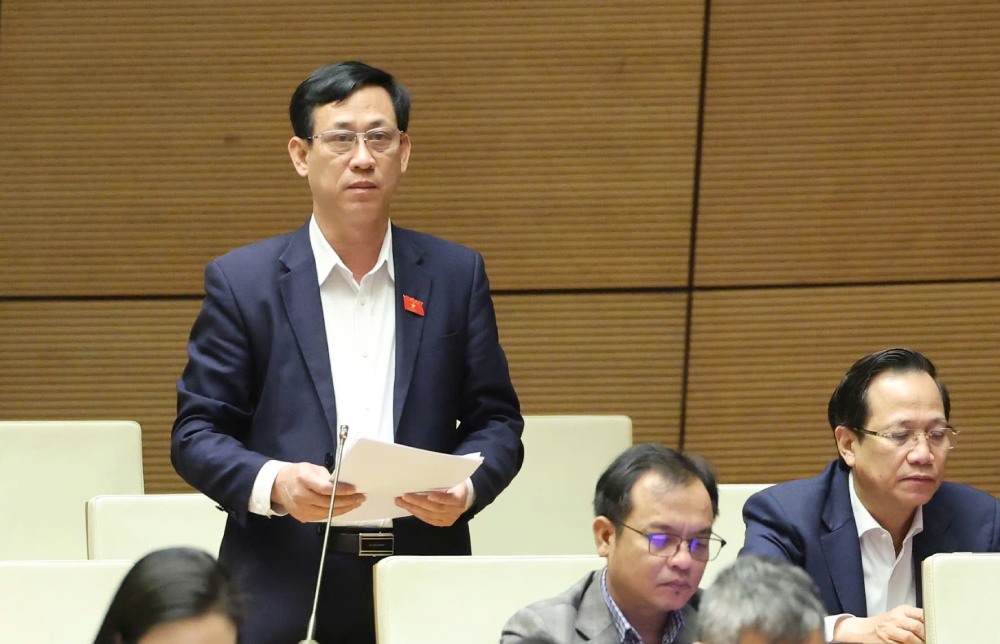
Delegate Mai Van Hai (Thanh Hoa Delegation) said that in the context of merging provinces and implementing the two-level local government model, the scale of provinces and communes is much larger than before.
This leads to a huge demand for investment capital for infrastructure and the completion of new rural criteria after the arrangement. Many mountainous provinces and mountainous communes still have many difficulties in budgeting, while for the majority of communes, the main source of investment is land use rights allocation for investment in new rural construction.
Now this capital source is not as good as in the previous period, the locality only receives 80 to 85% of land use fees, so it will be even more difficult to counterpart capital for the implementation of the program.
To ensure the feasibility of capital sources, delegates proposed to increase the central budget balance and need to have solutions to mobilize other legal capital sources such as capital from enterprises, cooperatives, and people's capital in implementing target programs.
In particular, it is necessary to increase central budget capital for socio-economic development in ethnic minority and mountainous areas.