
In the afternoon of April 21, continuing the first session, the 16th National Assembly, Minister of Finance Ngo Van Tuan, authorized by the Prime Minister, presented a report on the draft Law amending and supplementing a number of articles of the Law on Personal Income Tax (PIT), Law on Value Added Tax (VAT), Law on Corporate Income Tax (CIT) and Law on Special Consumption Tax (SCT).
Regarding PIT and VAT for households and individual businesses, the Minister said that legal regulations for households and individual businesses have had many positive changes. However, from the beginning of 2026 to now, due to the impact of the world situation, the domestic economy has had many fluctuations, fuel prices have increased, input costs have increased, purchasing power has decreased, and production and business activities of households and individual businesses have faced many difficulties.
Therefore, it is necessary to continue to research and adjust the threshold for revenue not subject to PIT of individual businesses and the revenue level of households and individual businesses that are not subject to VAT to support households and individual businesses, especially for industries with low profit margins and heavily affected by cost fluctuations.
In the draft Law, the Government proposes not to specifically stipulate the threshold for revenue not subject to personal income tax, the level of revenue not subject to value-added tax for households and individual businesses in the Law and assign the Government to stipulate this level. Currently, this level is 500 million VND, applied from the beginning of this year according to the Law on Personal Income Tax (amended).
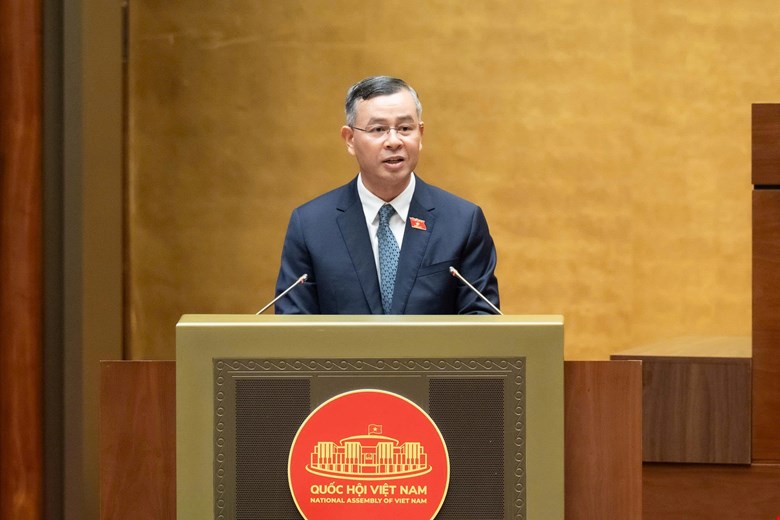
At the same time, amend the content of the Law on Corporate Income Tax in the direction of supplementing the level of revenue exempted from corporate income tax and assigning the Government to regulate this level as well as detail the tax exemption according to its authority.
Decentralizing power to the Government will create a legal basis for the Government to flexibly manage fiscal policy, including tax policy" - Minister Ngo Van Tuan said.
Regarding the content of regulations on special consumption tax (SCT) for battery-powered electric vehicles, the draft Law amending and supplementing regulations on SCT tax rates for vehicles with under 24 seats battery-powered engines in the direction of extending the application of current policies until the end of 2030.
To ensure that households, individual businesses, and small-scale enterprises are applied synchronously with the tax policies stipulated in this Law in 2026 and create favorable conditions for tax declaration, avoiding additional administrative procedures, the Government proposes that the above proposals take effect from January 1, 2026.
Appraising the draft Law, Chairman of the Economic - Finance Committee Phan Van Mai said that the majority of opinions agreed with the Government's proposal.
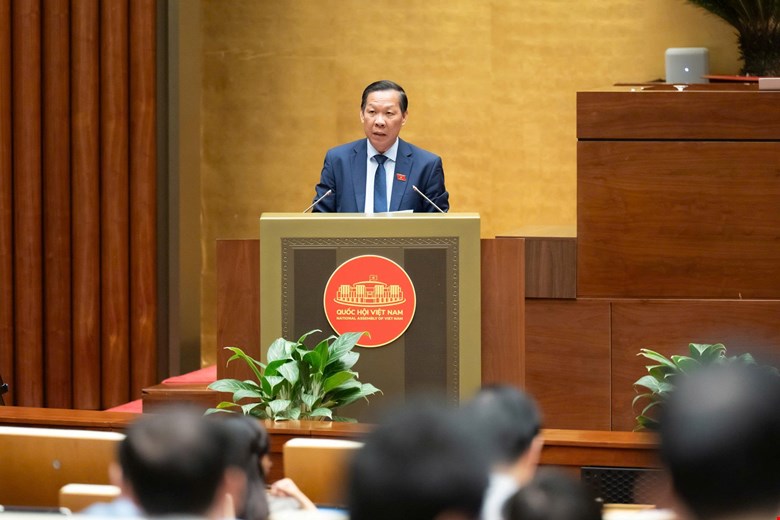
However, the Government's submission does not specifically show the expected plan to adjust the revenue threshold (up or down) compared to the level prescribed by the current Law. This leads to unclear orientation of the Government in applying policies; the impact assessment contents have not quantified the impact on budget revenue.
It is proposed that the Government comprehensively review tax laws to submit to the National Assembly for consideration and decision on immediate amendments at the First Session of the 16th National Assembly in the direction of assigning the Government to regulate contents that frequently fluctuate, contents that have been assigned to the NASC to regulate or adjust to ensure synchronization and uniformity in tax laws" - Chairman of the Economic - Finance Committee Phan Van Mai said.
Regarding the amendment and supplementation of the PIT Law and VAT Law, the appraisal agency proposed that the Government report more clearly on the expected options to provide a more convincing and complete basis for the process of considering and giving opinions on policy proposals; study to determine appropriate taxable revenue thresholds to support the development of households, individual businesses, and small and medium-sized enterprises.
At the same time, explain in detail, thoroughly, and more convincingly the reasons for proposing amendments in the direction of assigning the Government the authority to regulate the threshold of revenue that is not subject to tax.
Regarding the amendment and supplementation of the SCT Law, the majority of opinions agreed that it is necessary to consider and extend the application period of the SCT tax rate. However, it is necessary to carefully consider the extension period to ensure goals and harmony of interests.
The National Assembly's Economic and Finance Committee also proposed that the Government supplement a report on the impact of using battery-powered vehicles, in which it is necessary to focus on comprehensive and complete assessment of both advantages and limitations, avoiding focusing only on advantages, not mentioning or not fully mentioning the limitations of using battery-powered vehicles.


