
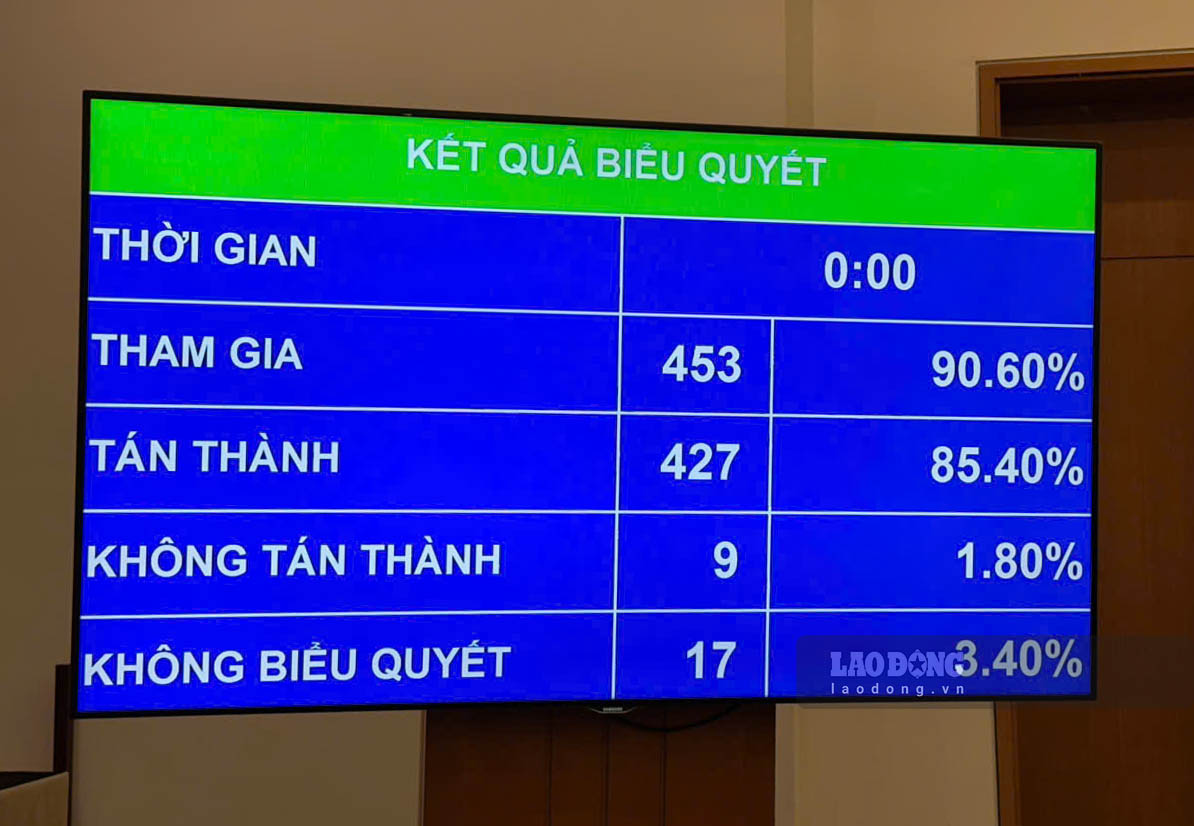
On the morning of August 24, with 85.40% of delegates in favor, the National Assembly officially passed the Resolution on the relocation of 2 historical and cultural relics within the scope of the project to invest in the construction of the route connecting Gia Binh International Airport with Hanoi Capital according to the provisions of Article 2 of Resolution No. 256/2025/QH15 of the National Assembly.
Previously, Member of the Party Central Committee, Minister of Culture, Sports and Tourism Lam Thi Phuong Thanh presented the Report on receiving, explaining and revising the draft Resolution above.
Regarding the opinion requesting to clearly define the scope of only 2 relics, Dong Coi communal house and Tam Son communal house, within the scope of the project of the road connecting Gia Binh International Airport with Hanoi Capital; not to use guiding mechanisms to expand the subjects, the Government has reviewed and regulated the draft Resolution in the direction of only applying Article 2 of Resolution No. 256/2025/QH15 of the National Assembly to 2 relics, including Dong Coi communal house (Thuan Thanh ward, Bac Ninh) and Tam Son communal house (Luong Tai commune, Bac Ninh).
For Tan Tran Temple (Lam Thao commune, Bac Ninh province), the Government will carefully review the current situation and issues related to the provisions of law on beliefs and religions and absorb the opinions of the National Assembly Standing Committee that have not been included in this draft Resolution.
Regarding the proposed principles and solutions that the Government needs to pay attention to in the process of relocating relics, Minister Lam Thi Phuong Thanh said that the Government is taking in the opinions of National Assembly deputies.
Accordingly, the Government will direct relevant agencies to ensure feasibility, efficiency, and maximize the originality, integrity and constituent elements of the relic's value;
Do not erode, distort or lose the inherent identity, cultural, historical, architectural, and religious characteristics of each relic, and at the same time pay full attention to the cultural, religious, and livelihood factors of the relevant community; ensure the participation and consensus of the people in the implementation process.
The above resolution will take effect from September 20, 2026.


