
On the afternoon of June 26, at the Government Headquarters, Member of the Party Central Committee, Deputy Prime Minister Nguyen Van Thang chaired a meeting of the Price Management Steering Committee on the results of price management and administration in the second quarter and the first 6 months of 2026; orienting price management in the last 6 months of 2026.
At the meeting, Deputy Minister of Finance Tran Quoc Phuong said that promoting public investment, increasing demand for building materials along with expanding credit to promote economic growth may increase aggregate demand and production costs.
The continued implementation of the roadmap for calculating correctly and fully for some services managed by the State such as healthcare, education; the impact of climate change, natural disasters, epidemics and the adjustment of the base salary from July 1, 2026 are also factors putting pressure on the price level in the second half of 2026.
According to Deputy Minister Tran Quoc Phuong, the Ministry of Finance is updating 3 scenarios of inflation in 2026 increasing in the range of 4.5%; 5% and 5.5%. The State Bank of Vietnam forecasts that the average inflation in 2026 will increase in the range of 4.8%-5.5% (in the range of 5% ± 0.5). International organizations forecast that Vietnam's average inflation will increase by about 3.8-5.2%.
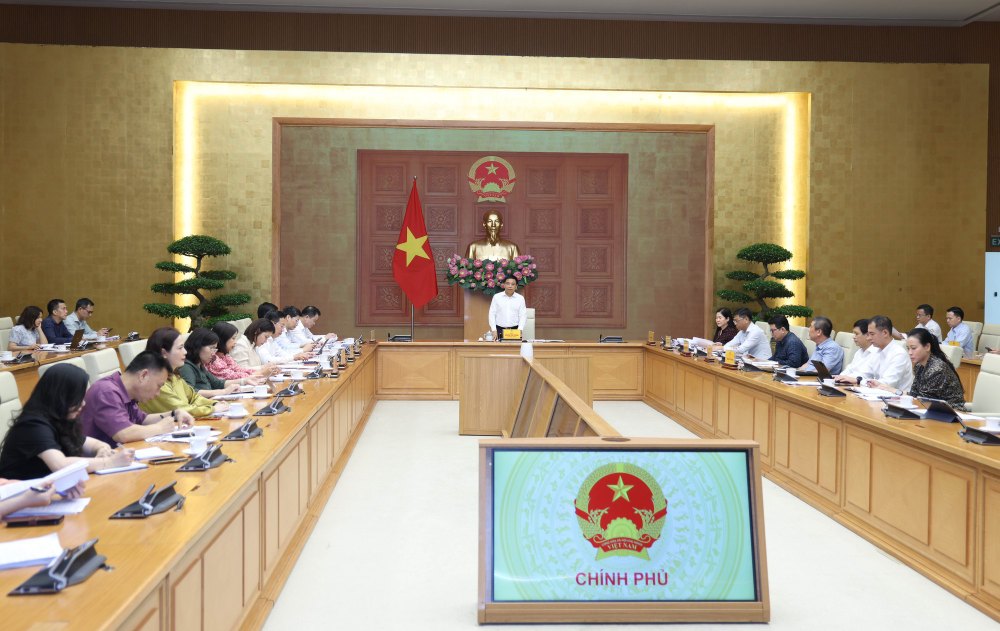
At the meeting, Deputy Prime Minister Nguyen Van Thang requested that for the health and education sectors, it is necessary to review the roadmap and price structure. Services under health and education that have been expected to increase in price need to be carefully evaluated to determine which contents are mandatory to implement, and which contents can be postponed.
At the same time, it is necessary to review the scope and level of price adjustment. From now until the end of the year, it is necessary to regularly monitor the room for inflation control. If there is still room by the end of the third quarter, it can be implemented according to the plan; conversely, if there is not much room left, it is necessary to re-evaluate both the scope and the increase level to be appropriate.
The Ministry of Industry and Trade shall take the lead in closely monitoring the developments of crude oil, finished petroleum products, liquefied gas, coal and other energy sources in the world market, managing domestic petroleum prices according to regulations, closely following world price developments and ensuring harmony between the goal of controlling inflation, stabilizing the macroeconomy and maintaining supply.
The Ministry of Construction strengthens inspection and examination of compliance with price laws for transport and logistics service businesses, inspects price declaration, price listing and implementation of freight rates according to regulations.
Request transport enterprises to implement corresponding fare reduction adjustments when fuel costs decrease, ensuring accurate reflection of input cost fluctuations, inspecting and strictly handling cases of taking advantage of gasoline and oil price fluctuations to unreasonably increase fares or delaying fare reduction adjustments when fuel prices decrease.
The Ministry of Health closely monitors the developments of drug prices, medical supplies, testing chemicals, medical equipment and medical examination and treatment services, ensuring sufficient supply of drugs and medical supplies to serve the medical examination and treatment needs of people at reasonable prices.
Develop a roadmap for adjusting medical service prices in accordance with the goal of controlling inflation and people's affordability, strengthen inspection and examination of price declaration activities, declaration and listing of prices of medicines and medical supplies, and strictly handle violations of the law on prices.


