
The Resolution of the 14th Party Congress set a goal to strive to achieve an average growth rate of gross domestic product (GDP) for the period 2026-2030 of 10%/year or more. This shows a very high political determination for Vietnam to achieve the goal of becoming a developed, high-income country by 2045.
Vietnam's double-digit growth target for 2026 is set on the basis of a growth rate 8% higher than the previous year, requiring a strong and comprehensive "push", including superior trade, large-scale investment and sustainable domestic consumption.
The "three-horse carriage" including exports - investment - consumption has created a foundation for high growth in Vietnam's economy for many years.
However, as the growth model mainly relies on capital, cheap labor and land exploitation gradually approaches limits, this "three-horse carriage" itself is facing the requirement to innovate, in order to meet a higher and more sustainable growth cycle.
In that context, 2026 is identified as the starting year of a new development phase, implementing major orientations for the 2026-2030 journey.
The goal of high growth of over 10% in 2026 poses a major challenge, requiring Vietnam to strongly shift from broad growth to growth based on quality, efficiency and productivity, that is, to solve core "bottlenecks" to create long-term momentum for the economy.
The economic growth model focuses on quantity, while the development model focuses more on qualitative.
Growth models often focus on very specific figures such as GDP growth, average per capita income. While the development model is more inclusive with indicators of human development, social development, including indicators of GDP growth and average per capita income," said Dr. Can Van Luc - Member of the Prime Minister's Policy Advisory Council.
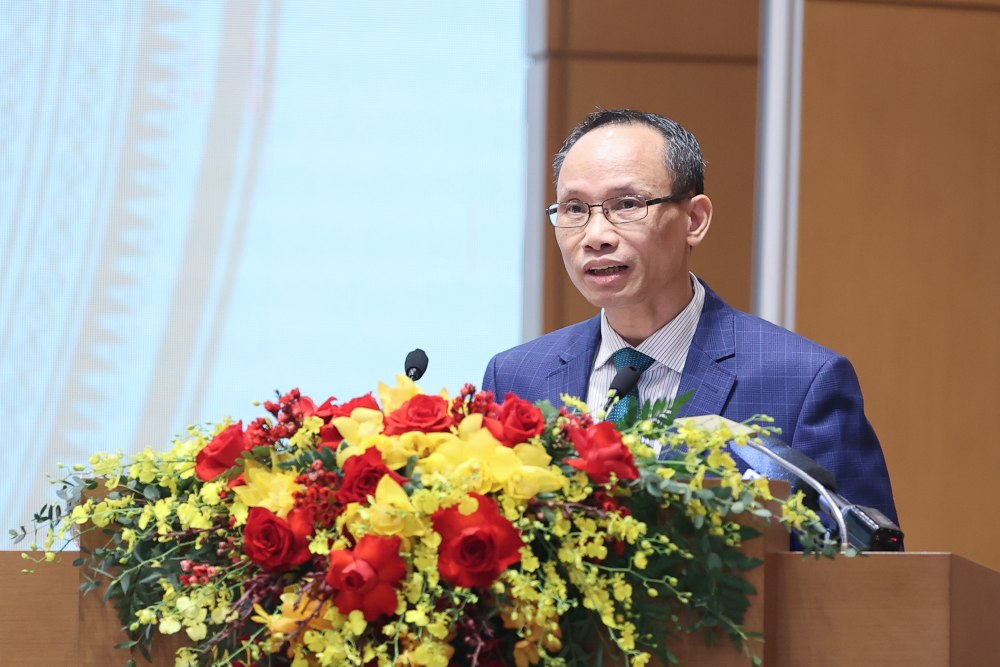
According to Mr. Luc, the normal growth model has 3 important factors: labor, capital and productivity of the combined factors (indice measuring the efficiency of using all input factors (capital, labor).
2025 witnessed improvements in growth quality when labor productivity increased by about 6.8%, from 5.7% in 2024. Composite factor productivity contributed 47% to economic growth, while 2024 was only 44%.
Clearly, the growth model is having certain improvements, but if we want double-digit growth, want more quality growth while input sources such as capital, land, and labor are having certain limitations, then in the end, we must innovate the growth model, at least for the next 5 years," Dr. Can Van Luc affirmed.
And the foundation for transforming the growth model to meet the double-digit growth target in 2026, as well as in the coming years, the prerequisite is macroeconomic stability. Because only stability can develop and vice versa develop to increase the stability of the economy.
Dr. Can Van Luc also noted issues related to macroeconomic stability, including inflation, exchange rates, public debt, foreign debt, budget deficit... must be ensured to be maintained.
The price to pay when macroeconomic instability is very high. For example, if growth is 10% but inflation reaches 7%, then people actually enjoy only about 3%, then people will see that high growth will not have much meaning," Dr. Can Van Luc analyzed.
Ms. Pham Thi Ngoc Thuy - Director of the Office of the Private Economic Development Research Board (Board IV) - assessed that one of the biggest bottlenecks for the transformation process lies in the awareness thinking of businesses.
For a long time, the growth model of businesses mainly followed the old model based on capital, cheap labor and land. This model seems to have reached a critical level," Ms. Thuy said and emphasized the issue is how to change the quality of a business and create a link between businesses.


