
On the afternoon of August 24, with the majority of delegates participating in the vote in favor, the National Assembly officially passed the Resolution on reducing personal income tax and corporate income tax for individuals and businesses.
30% reduction in personal and corporate income tax
The resolution just passed by the National Assembly stipulates that individual businesses and enterprises with revenue not exceeding 10 billion VND/year will be reduced by 30% of the tax payable in two years 2026 and 2027.
Accordingly, resident individuals with income from business, annual revenue not exceeding 10 billion VND in 2026 and 2027 are entitled to a 30% reduction in personal income tax payable for the corresponding tax period.
For corporate income tax, the 30% reduction applies to businesses and organizations established under Vietnamese law, with annual revenue not exceeding 10 billion VND in 2026 and 2027.
This regulation does not apply to enterprises formed from the division and separation of enterprises after the Resolution takes effect if the total revenue of enterprises divided and separated in 2026 or 2027 exceeds 10 billion VND.
In case a business is currently entitled to tax incentives under the Law on Corporate Income Tax or other Laws and Resolutions of the National Assembly, the amount of corporate income tax reduced specified in this clause is calculated on the amount of corporate income tax payable after tax incentives have been deducted.
The Resolution takes effect from August 24, 2026 and applies to the tax periods of 2026 and 2027. The Government shall specify this Resolution.
Tax reduction ensures correct and targeted subjects
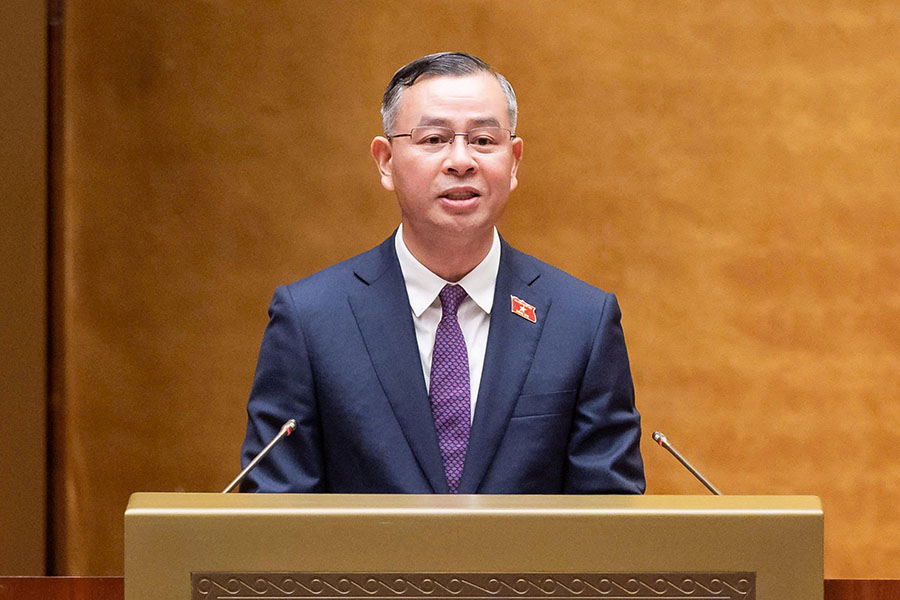
Before the National Assembly voted, authorized by the Prime Minister, Member of the Party Central Committee, Minister of Finance Ngo Van Tuan had a Report on receiving, explaining and revising the draft Resolution.
According to the Minister, surveys by a number of organizations (Vietnam Chamber of Commerce and Industry Federation, Association of Small and Medium Enterprises, Private Economic Research and Development Board) show that households, individual businesses and businesses with micro-revenue scale are the most difficult subjects currently facing difficulties, their resilience is limited, and they need support.
Data from the tax authorities by the end of 2025 shows that there are 2,696,863 business households and individuals with revenue not exceeding 10 billion VND, accounting for about 99.86% of the total of 2,700,552 business households and individuals.
Among these, 2,600, 376 households and individuals with revenue not exceeding 1 billion VND, accounting for about 96.29%, have been tax-exempt.
For businesses, there are 865,115 businesses with revenue not exceeding 10 billion VND, accounting for about 81.1% of the total 1,066,531 businesses. Of which, 235,800 businesses have revenue not exceeding 1 billion VND, accounting for about 22.1% and have been tax-exempt.
For the group of enterprises with revenue over 10 billion VND, including 201,416 enterprises, accounting for 18.9%, but generating 364,850 billion VND of corporate income tax payable, equivalent to 97.4% of the total tax amount. This shows that this group of enterprises has the ability to withstand, generate income and contribute significantly higher to the budget compared to the group with revenue not exceeding 10 billion VND.
Therefore, according to the Government, if tax reductions are applied to the entire group of businesses with revenue over 10 billion VND, it will be egalitarian and not suitable for the goal of supporting the right beneficiaries of the policy.
Tax reduction ensures the right and accurate targets with the goal of supporting households, individual businesses, and small-scale businesses," the report clearly stated.
With revenue in 2025, the tax reduction policy is expected to reduce budget revenue by about VND 3.191 billion in 2026 and VND 3.51 billion in 2027.
However, the Government believes that tax reduction may reduce budget revenue in the short term, but in the long term, when businesses and individuals are supported for development, revenue will be compensated through taxes from consumption and income activities.
The Government will direct the Ministry of Finance and relevant agencies to strengthen budget revenue management, effectively implement revenue management solutions, and at the same time ensure the balance of central and local budgets.


