
The newspaper bears the voice of the people
The 150th anniversary of the birth of Mr. Huynh Thuc Khang is an opportunity to commemorate a patriot, a great cultural figure, and at the same time look back at the values he left for Vietnamese journalism. In that heritage, Tieng Dan Newspaper holds a special position.
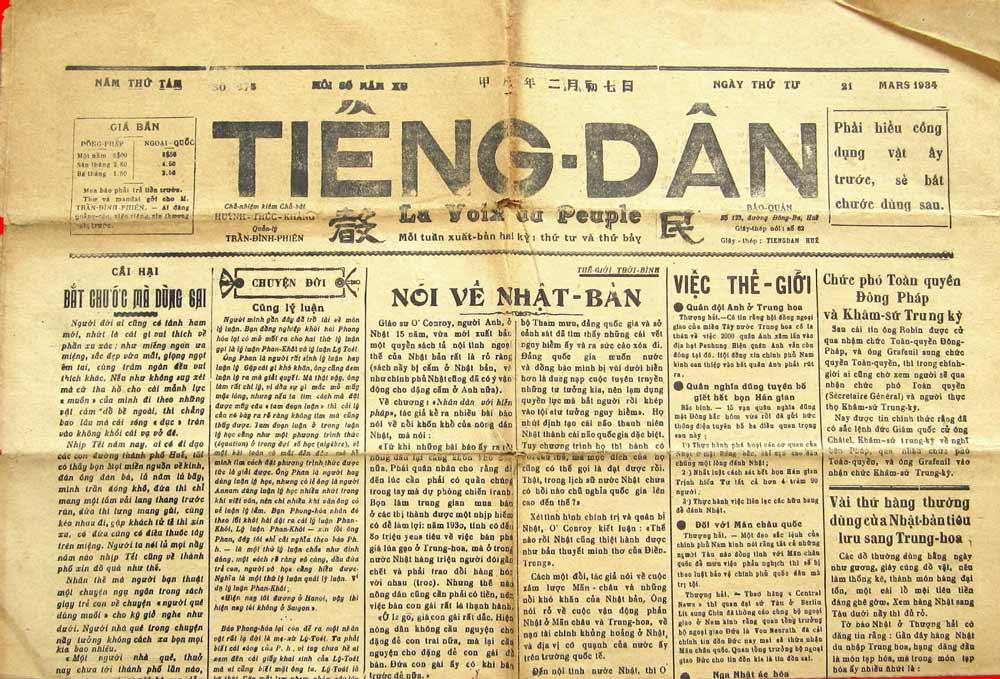
On August 10, 1927, the first issue of Tieng Dan was published in Hue. The birth of the newspaper not only marked a step in the development of Quoc Ngu journalism in Central Vietnam, but also opened up a forum to broaden people's knowledge, boost people's morale and protect the rights of the people in the context of the country being under colonial rule.
Hue at that time was both the capital of the Nguyen Dynasty and a gathering place for many intellectuals, patriots and renovation thinkers. Phan Boi Chau, Phan Chau Trinh and many typical figures of the Duy Tan movement left a deep influence on this land.
In that environment, the Voice of the People was born as a necessary voice of the era.
Initially, Mr. Huynh Thuc Khang intended to name the newspaper Trung Thanh. After asking for Mr. Phan Boi Chau's opinion, the name was changed to Tieng Dan (People's Voice). A simple name but clearly expressing the goal: Bringing the voice, thoughts and rights of the people to the newspaper.
Dan language uses the national language script, choosing a moderate, easy-to-understand but still profound way of expression. The newspaper not only publishes political articles and commentary on current affairs but also has poetry, literature, history, translation, educational novels and information related to social life.
Through each issue, concepts of civil rights, people's knowledge, fairness and social responsibility are conveyed to the public. The Voice of the People is therefore not only responsible for reporting, but also becomes a "class" on thinking, culture and patriotism.
The newspaper writes about workers, farmers, about injustice, abuse of power, hunger and the indifference of the ruling apparatus. The great problems of the country are expressed in a language close to life, helping readers understand their circumstances and be more aware of their right to be human, the right to be a citizen.
Also from "Tieng Dan", many great writers such as Dao Duy Anh, Hai Trieu, Vo Nguyen Giap, Nguyen Chi Dieu... have another forum for academic exchange, knowledge dissemination and national spirit awakening.
The temperament of a journalist
What is admirable is that "Tieng Dan" has existed for nearly 16 years, publishing 1,766 volumes under the strict censorship of the colonial government.
That is not the result of compromise, but the result of the bravery, intelligence and flexible but steadfast journalism art of Mr. Huynh Thuc Khang and his colleagues.
Mr. Huynh once passed the Confucian Doctorate, participated in the Duy Tan movement, was exiled to Con Dao and became the Director of the Central Committee People's Congress. After realizing that the parliamentary forum belonged to a formal address, he withdrew from the People's Congress to focus on journalism.
That was a dedicated choice. He saw journalism not as a path to seek fame and fortune, but as a means to awaken compatriots and serve the country.
During his existence, Tieng Dan was censored many times, causing difficulties. Mr. Huynh was summoned, examined, and forced to submit his paper before printing. But he maintained the principle: If you do not have the right to say everything you want to say, then at least you have the right not to say things that others force you to say.
That spirit expresses the integrity of a journalist who does not accept to bend his pen.
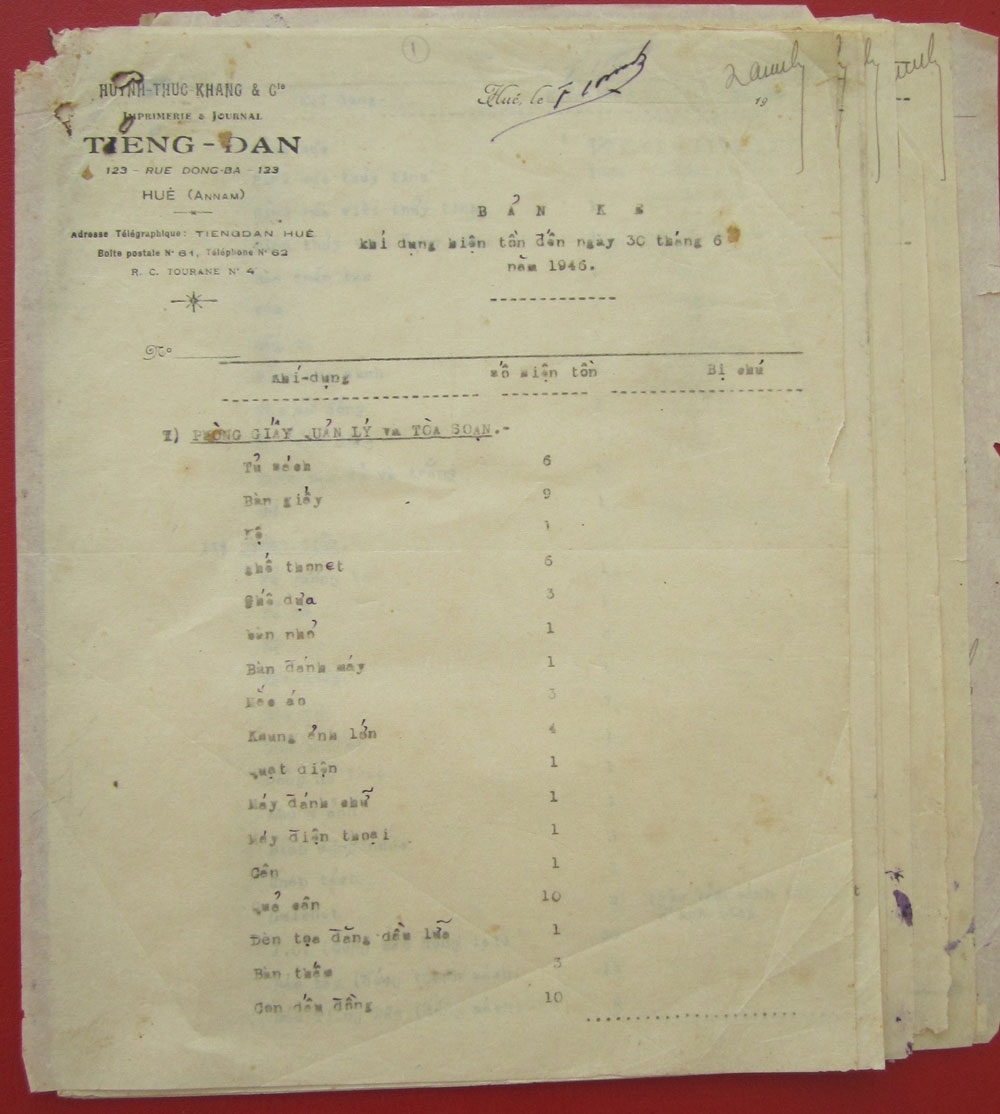
Another important foundation is financial autonomy. Mr. Huynh established a company to publish newspapers, publicly mobilize shareholders and not let the newspaper depend on sponsorship for control purposes. Thanks to that, Tieng Dan has the conditions to maintain relative independence in content and protect the chosen principles.
On April 21, 1943, the colonial government issued a decision to suspend the publication of Tieng Dan. But a newspaper may be forced to stop publishing, and the progressive ideas it sows into society cannot be removed.
More than 80 years have passed, the lesson from Tieng Dan is still valuable. In the era of social networks, fake news and market pressure, the press must further protect the truth, nurture the spirit of criticism and put the interests of the public above immediate benefits.
The 150th anniversary of the birth of Mr. Huynh Thuc Khang is an opportunity for today's journalists to review their responsibilities to society.
The most precious legacy that Mr. Huynh and Tieng Dan left behind is the belief that the honest pen, with integrity and attached to the people, always has long-lasting vitality.
Tieng Dan has stopped publishing, but the voice of enlightenment, criticism and serving the people of the newspaper continues to echo in the flow of Vietnamese journalism.


