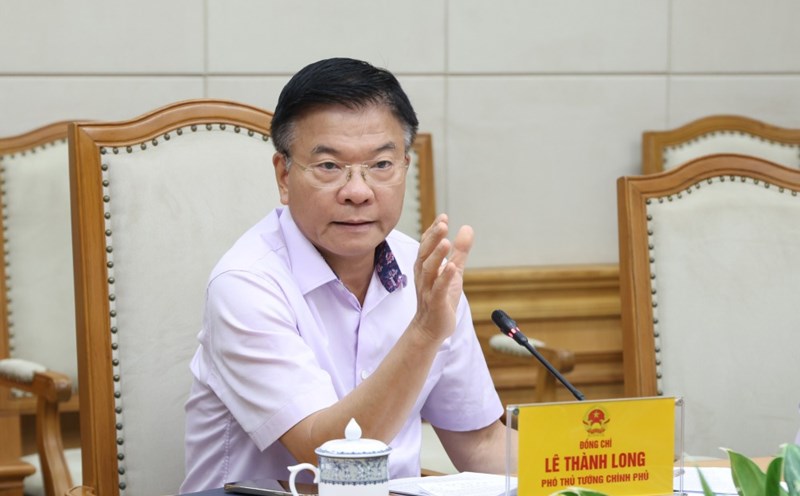
On July 9, at the Government Headquarters, Politburo Member, Standing Deputy Prime Minister Pham Gia Tuc worked with the Ministry of Finance and a number of ministries, branches, and associations on reviewing and handling obstacles in bidding law, proposing amendments to the Bidding Law.
According to the report at the meeting, in the process of monitoring the implementation of bidding laws, the Ministry of Finance found that although the current legal system has created a more open, favorable, flexible and proactive mechanism for investors, in reality, many investors still have a psychology of hesitation and fear of responsibility, especially in determining the price of bidding packages.
A part of commune-level officials are still confused in deploying bidding activities after the local government at 2 levels went into operation. The supervision of bidding activities in some places is not timely, and has not fully promoted the effectiveness of prevention, warning and rectification of violations.
The opinions basically agreed with the report of the Ministry of Finance, stating that the current obstacles mainly lie in the stage of organizing the implementation of bidding laws, especially in sub-law guiding documents such as decrees and circulars.
Delegates said that it is necessary to define the Bidding Law as a framework law, a general law, focusing on stipulating the principles, forms, methods of contractor selection, procedures, authority, responsibilities of subjects and state management of bidding.
Professional and technical contents of each industry and field such as capacity conditions, technical standards, contracts, pricing of packages, estimates... should be adjusted according to corresponding specialized laws; at the same time, develop interconnected and unified processes between laws, avoiding overlap, and limiting the need to repeat the same type of data.
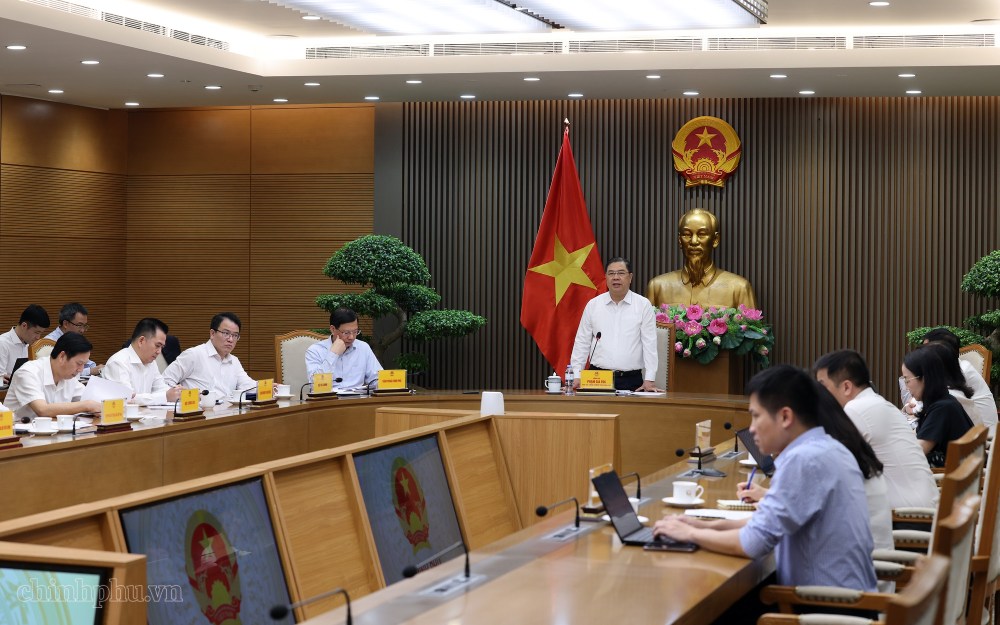
Concluding the meeting, Standing Deputy Prime Minister Pham Gia Tuc emphasized that the amendment of the law on bidding must ensure publicity and transparency, create favorable conditions for contractors, and contribute to preventing and combating corruption and wastefulness.
Government leaders said that the current direction of law-making is to shift from detailing and specifying in the law to building a framework law, pipeline law, only regulating issues of principle; specific contents are assigned to the Government to regulate in decrees to create favorable conditions in the process of organization and implementation.
The amendment of the Bidding Law must be based on summarizing practical implementation, clearly identifying problems that need to be resolved, thereby developing appropriate amendment proposals. The law-making process must ensure that sub-law guiding documents are prepared simultaneously and submitted together.
The Standing Deputy Prime Minister emphasized that the amendment of the Bidding Law has been included in the 2026 law-making program. Along with the proposal to amend some regulations on bidding at the decree level, the Ministry of Finance needs to clearly report the research content and comprehensive amendment of the Bidding Law to submit to the National Assembly in accordance with the direction of competent authorities.
Regarding the amendment of Decree No. 214/2025/ND-CP and related decrees, the Standing Deputy Prime Minister requested the Ministry of Finance to fully absorb the opinions of ministries, sectors, and associations; study and determine the limit for applying direct contractor appointment appropriately for consulting and site clearance packages according to the direction of the Prime Minister.