
Strongly develop the formal employment sector, expand social security coverage
The Party Central Committee Office issued a Notice of Conclusion of General Secretary and President To Lam at the working session on the quality of Vietnamese labor resources, sustainable job creation solutions in rural and urban areas, ethnic minority areas and human resource training in the new development stage (Notice No. 123-TB/VPTW dated July 16, 2026).
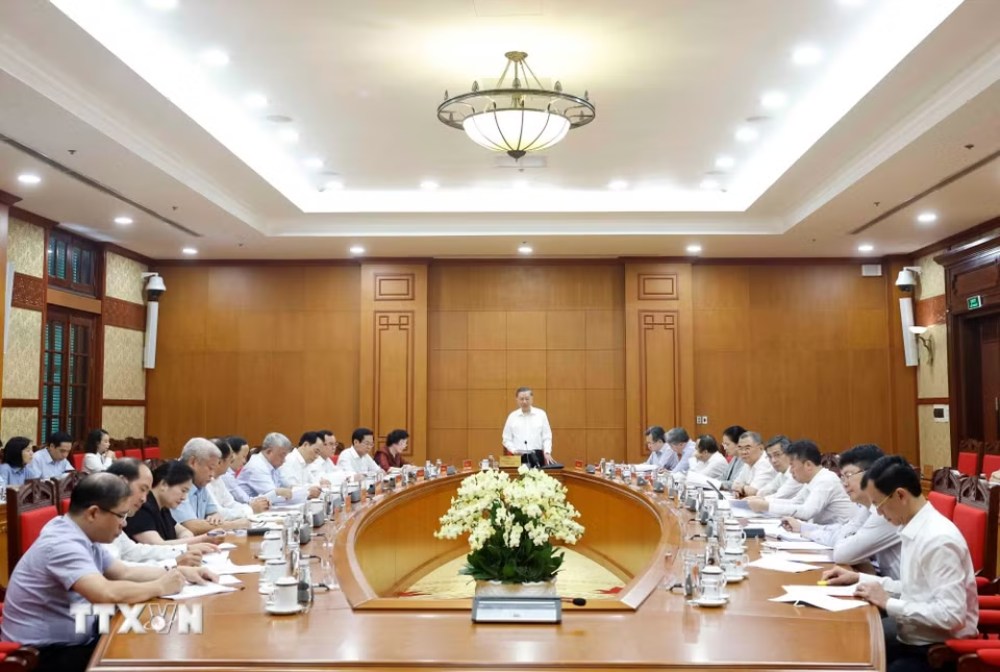
According to the announcement, on July 8, 2026, General Secretary and President To Lam chaired a working session with the Ministry of Home Affairs and a number of agencies on the quality of Vietnamese labor resources, solutions to create sustainable jobs in rural and urban areas, ethnic minority areas, and human resource training in the new development stage.
After listening to the report of the leaders of the Ministry of Home Affairs and the opinions of the delegates, General Secretary and President To Lam concluded some contents.
In which, regarding some tasks in the coming time, there is the task of creating sustainable jobs in urban areas associated with new growth models, business development and improving the quality of life.
The notice clearly states that strong development of labor demand in urban areas is through promoting production and business, especially the private economy, small and medium-sized enterprises, processing and manufacturing industries, supporting industries, logistics, e-commerce, high-quality services, digital economy and green economy...
Strongly develop the formal employment sector, gradually narrow the informal employment sector, expand the coverage of labor relations and social security. Have appropriate policies for informal workers, business households, and micro enterprises to move to the formal sector more conveniently; ensure that workers are signed contracts, participate in insurance, are protected in their rights and have conditions to improve professional skills.
Linking urban employment with improving the quality of life and balancing labor supply and demand, ensuring that workers enjoy institutions such as worker housing, social housing, rental housing, schools, primary healthcare, public transport, cultural institutions and essential services in industrial parks, export processing zones, and economic zones.
At the same time, proactively prepare human resources for industrial parks, economic centers, large projects, and key projects; do not let key projects and large projects delay due to lack of skilled labor.
Creating sustainable jobs in rural areas associated with improving labor value
Notice No. 123-TB/VPTW also states the content of creating sustainable jobs in rural areas associated with improving labor value, promoting the transfer of skilled labor, and ensuring sustainable livelihoods.
In which, focus on creating local jobs, improving job value in agriculture, strongly shifting from crude production, low productivity to high-tech agriculture, green circular agriculture, associated with deep processing, modern logistics and e-commerce. Linking product value with rural job value; farmers must be developed from individual production labor to be the subject of the value chain.
Pay attention to developing rural industry, craft villages, industrial clusters, small and handicraft industries, agricultural product processing, mechanical services, transportation, trade, environment, renewable energy; developing OCOP, rural tourism, community tourism, cooperative economy, new-style cooperatives, chain-linked household economy, rural startups suitable to the actual conditions of each region. Develop vocational training along with creating livelihoods; develop economic models associated with output markets and people's incomes.
Have a suitable roadmap for rural labor migration. Career orientation, rural labor training, expanding career transfer opportunities to modern agriculture, local industry and services, participating in regional value chains, working in urban areas or working abroad under contracts...
Creating sustainable jobs in ethnic minority areas associated with promoting internal strength and sustainable poverty reduction
The announcement also clearly states that creating sustainable jobs in ethnic minority areas is associated with promoting internal strength, sustainable poverty reduction and preserving the cultural identity of the nation.
Vocational education and skills training are linked to livelihoods, actual conditions of each region, each ethnic group, and each community; do not impose a common model, do not train according to movements or forms. Evaluate the effectiveness of training by creating jobs, products being consumed, and people's income increasing.
Focus on developing specialty agriculture, forest economy, pharmaceuticals, animal husbandry, traditional handicrafts, community tourism, border trade services, e-commerce, local products, forest protection and development.
Expanding market connections and job services for workers in ethnic minority areas. The State supports infrastructure, credit, information, training, legal advice; businesses, cooperatives, production facilities linked to consumption, technical guidance, brand building, quality standards. Local authorities organize safe job connections, limiting free migration, precarious labor, being exploited, being scammed, causing security and order complications.
Developing jobs associated with preserving cultural identity, protecting the environment, protecting forests, protecting land, protecting water sources, protecting borders, ensuring security and order...
The announcement also outlined tasks on innovation in human resource training associated with building a national skill development system, shifting from meeting immediate needs to preparing the country's long-term competitiveness.
Expand job creation channels, improve workers' skills and develop high-quality human resources to meet the requirements of socio-economic development.


