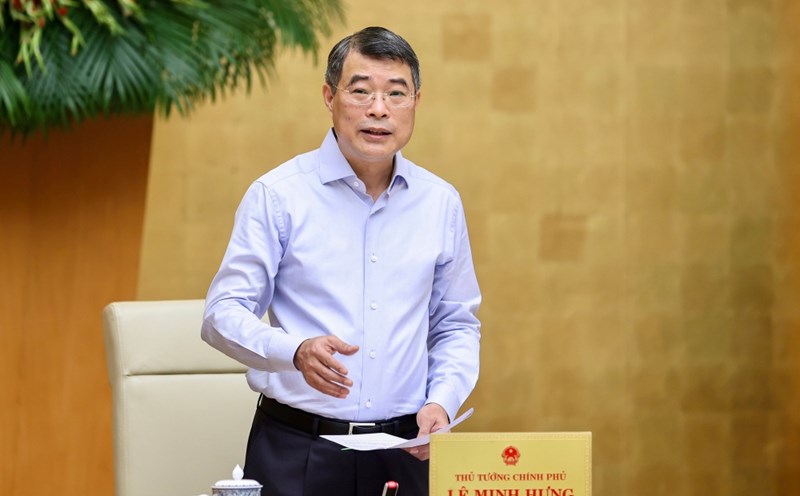
On August 11, at the First Extraordinary Session, the National Assembly discussed in the hall about the draft Law on Urban Development.
Speaking at the hall, National Assembly Deputy (NA Deputy) Trinh Xuan An - Specialized Member of the National Assembly's Committee for National Defense, Security and Foreign Affairs said that the draft Law has formed a new institutional framework for urban governance and development.
Accordingly, strongly shift from management to development creation, from each locality having to "ask" for special mechanisms to strong, stable, transparent and responsible decentralization.
This delegate also strongly agreed with the determination of the principle of "thorough and comprehensive decentralization"; as well as the requirement that the authority and responsibility of the head must be linked to power control, publicity, transparency, accountability, inspection, examination and supervision.
The greater the power granted, the stronger the control mechanism must be" - delegate Trinh Xuan An emphasized.
The delegate said that Chapter II of the draft law with 35 articles already has 32 articles assigning authority to the People's Council (HĐND), related to many important areas: Organizational structure; planning; order and safety; marine economy; energy; health; science - technology, controlled testing; finance - budget, investment, land, human resources.
From there, the delegate noted that the issue is not only in the number of rights but more importantly in the nature of the rights granted. The People's Council has a very large space to decide policies at the local level.
Therefore, decentralization should not only be understood as transferring power from the Central Government to the People's Committee and the Chairman of the People's Committee. The People's Council must truly promote its role as a people-elected institution in policy decisions and control of the activities of local administrative agencies.
The delegate proposed to clarify the three levels of control including: before decision; during implementation; post-inspection, evaluation and handling of responsibility after implementation.
At the same time, it is necessary to improve the capacity of the People's Council committees and the advisory apparatus to be commensurate with the role of the policy-making agency in special urban areas.
Regarding this content, delegate Nguyen Dai Thang (Hung Yen National Assembly Delegation) highly appreciated the innovative approach of the draft with many breakthrough policies such as promoting decentralization and delegation of power, increasing proactiveness for urban government, urban development in the direction of public transport (TOD), international financial centers, free trade zones and public service digitization.
According to the delegate, the regulations on the principles of applying new laws in Articles 3 and 5 are of great significance in removing institutional bottlenecks, creating a basis for rapidly implementing strategic infrastructure projects and new urban development models.
However, strong decentralization must go hand in hand with a corresponding control mechanism. The delegate proposed to clarify the accountability of the head, the supervisory mechanism of the National Assembly, the Government and the People's Council; and at the same time specifically stipulate criteria and conditions for other cities to apply the mechanisms of the law.
This is to ensure that special mechanisms are applied in the right place, in the right conditions, in accordance with management capacity, avoiding the emergence of "asking - giving" mechanisms or applying policies when conditions are not sufficient.