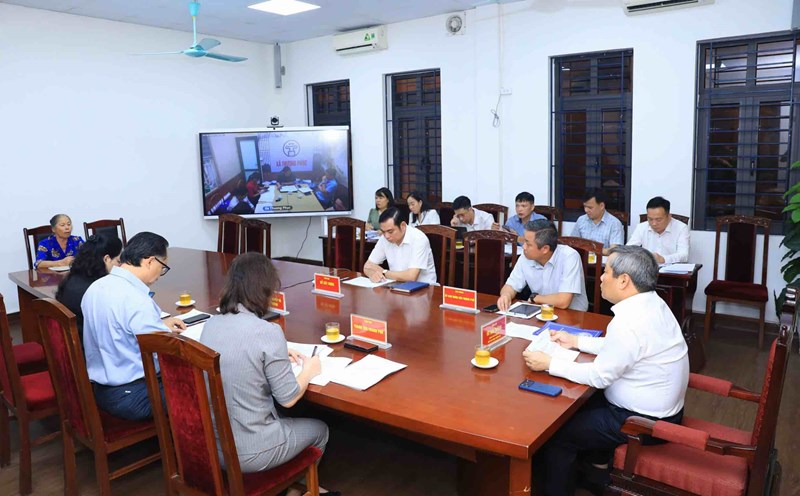
On the afternoon of April 21, the National Assembly discussed in groups the draft Law amending and supplementing a number of articles of the Law on Personal Income Tax (PIT), Law on Value Added Tax (VAT), Law on Corporate Income Tax (CIT) and Law on Special Consumption Tax (SCT).
Delegate Nguyen Van Than (Ho Chi Minh City delegation) said that in the current 5.2 million business households, the number of households with revenue over 1 billion VND accounts for a very small proportion.
Statistics show that out of 3.6 million households managed by tax authorities, only 37,000 households have revenue of over 1 billion VND; most of the rest are below this threshold.
Therefore, according to delegate Nguyen Van Than, determining that revenue levels below 1 billion VND are not subject to tax is appropriate, helping to cover support policies to the majority of business households; contributing to significantly "relieving" pressure, creating conditions for people to focus on making a living and ensuring monthly income.
For the group from 1 to 3 billion VND, this delegate proposed a flexible plan, assigning the Government to manage based on surveys, declarations and estimates of profit rates by industry. As for revenue over 3 billion VND, it will still be implemented according to the current tax mechanism.
Delegate Nguyen Van Than emphasized the requirement to ensure fairness between business households and salaried workers. Tax obligations need to be determined based on actual income exceeding the tax threshold, similar to the personal income tax calculation method for officials, civil servants, and public employees.
Business people have invested their own capital, their own labor, their own efforts, their own business, they don't know if they will lose or gain money, but income below that level still has to be taxed, that's not acceptable" - this delegate said.
Sharing the view that difficulties for business households need to be removed soon, delegate Tran Hoang Ngan (Ho Chi Minh City delegation) emphasized that for business households and small and medium-sized enterprises, it is necessary to prioritize social security and maintaining employment above all else.
Pointing out the current context that many business households have to close down, Mr. Ngan said that solving employment and ensuring social security is the most important goal, not the goal of taxes.
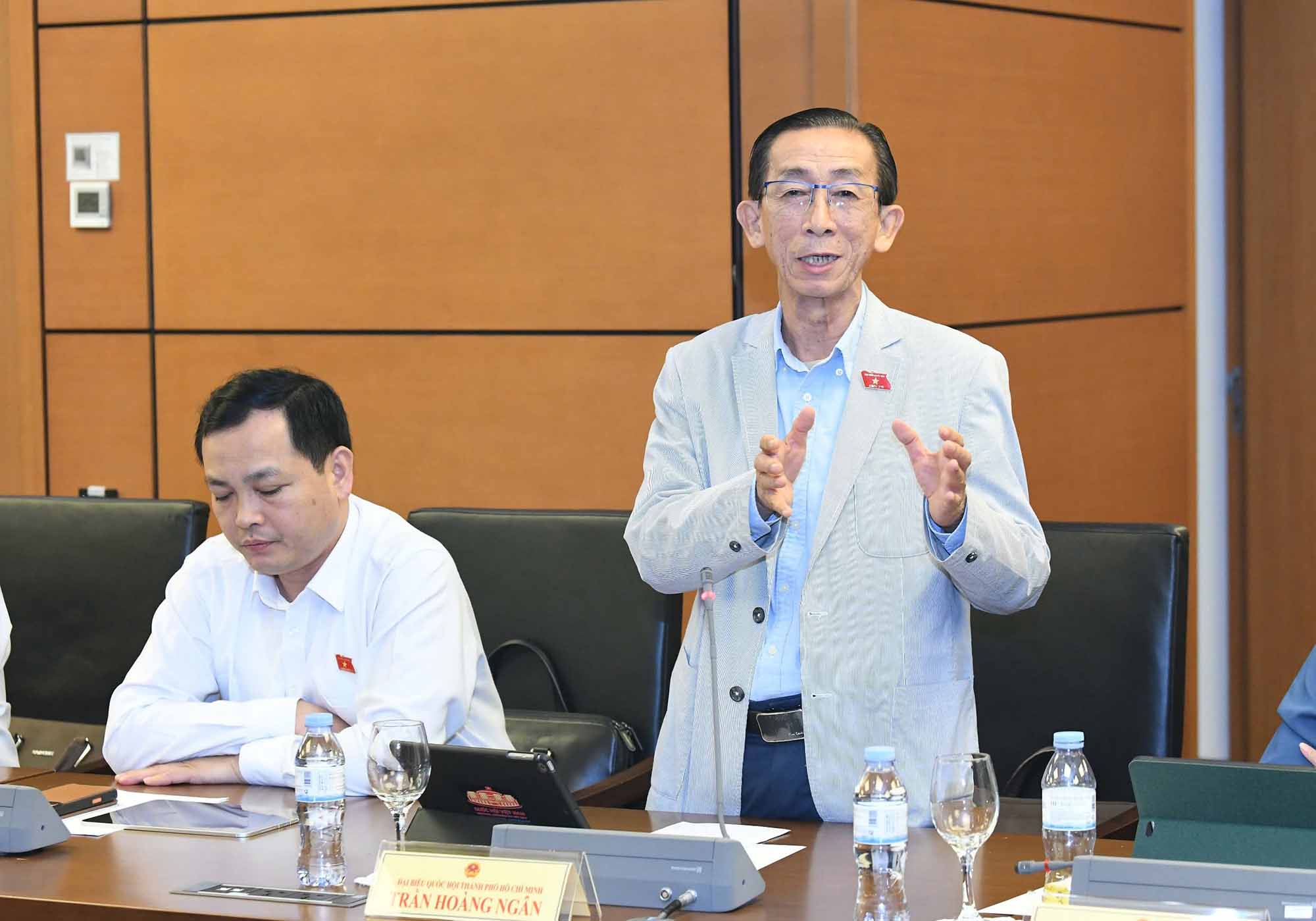
Mentioning the reality that taxable revenue thresholds are continuously adjusted in a short time, delegate Tran Hoang Ngan suggested that there should be a more flexible approach.
This delegate agreed with the decentralization plan for the Government to stipulate revenue thresholds for each stage, but the Government needs to clarify specific orientations on the expected level to ensure transparency.
From practical surveys, Mr. Ngan believes that the revenue threshold of about 2 - 3 billion VND for business households is appropriate and compatible with the income level needed to ensure the lives of a household.
For small and medium-sized enterprises, delegate Tran Hoang Ngan proposed to study applying a higher corporate income tax exemption revenue threshold, from about 5 billion VND, in order to create motivation for business households to transform into enterprise models, reducing obligations and procedures in the early stages of development.