On May 13, at the Government Headquarters, Member of the Party Central Committee, Deputy Prime Minister Ho Quoc Dung chaired a meeting on the development of the Resolution of the Party Central Committee on environmental protection (BVMT) and response to climate change and policy orientation for carbon credit management.
At the meeting, Deputy Minister of Agriculture and Environment (MARD) Le Cong Thanh said that environmental protection and response to climate change still have many limitations.
Air pollution in Hanoi and some major cities continues to be at a serious level; river basins, craft villages and plastic waste have not been effectively treated; biodiversity is rapidly declining; environmental protection infrastructure, climate change adaptation and disaster prevention and control in many localities are still weak.
The green financial mechanism and new carbon market are in the early stages of development; the environmental data system is still scattered and lacks connection; post-inspection, inspection and handling of violations have not met practical requirements.
To meet the requirements in the new period, the Ministry of Agriculture and Rural Development proposes to include in the new draft Resolution the goals by 2035 of building a modern governance system, restoring the ecosystem and promoting green transformation.
Concluding the meeting, Deputy Prime Minister Ho Quoc Dung stated clearly that the development of the new Resolution stems from development requirements in the new period, especially the goal of double-digit growth, including environmental protection, sustainable development and effective adaptation to climate change.
The Ministry of Agriculture and Rural Development needs to fully absorb the opinions of ministries and sectors to continue to improve the draft Resolution; and at the same time clarify the scientific basis, practical basis and new requirements set for the issuance of a Resolution replacing Resolution No. 24-NQ/TW.
The Deputy Prime Minister requested that the draft Resolution must clearly identify key issues, new issues and breakthrough contents, ensuring to meet the requirements of rapid and sustainable development in the coming period.
In which, it is necessary to build a mechanism to assess the substance, measure the results of implementation, assign specific responsibilities to the head and be consistent with the current decentralization and delegation of power requirements. Environmental protection work must be identified as a task of the entire political system, levels, sectors, businesses and the whole society.
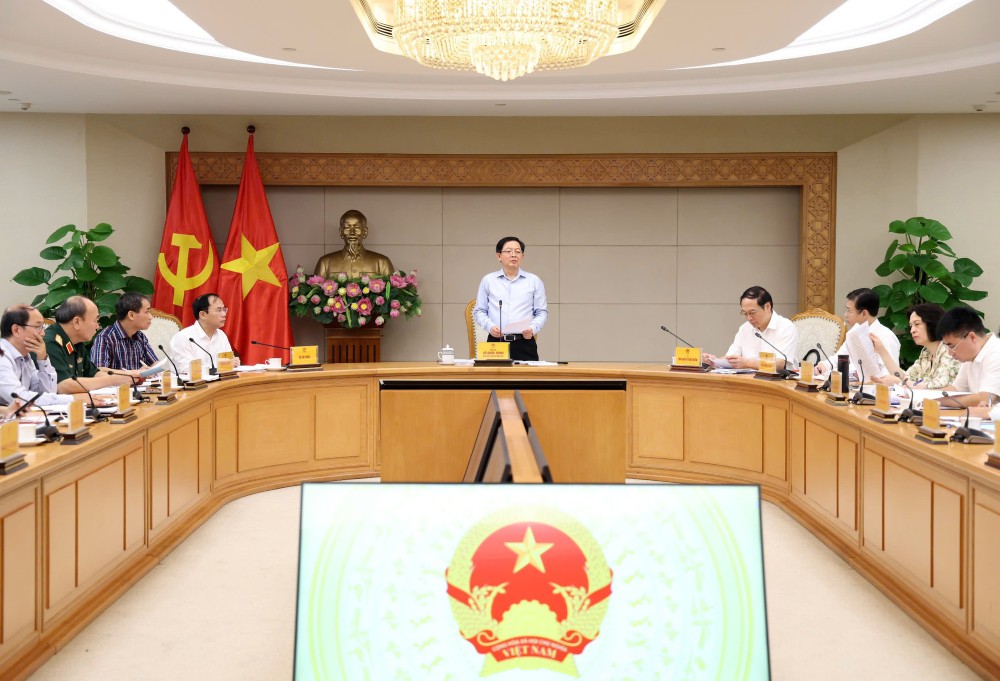
The Deputy Prime Minister also especially emphasized the requirement to build a culture of behavior towards the environment, starting from raising awareness and consciousness of each citizen.
It is necessary to promote propaganda movements and activities to form environmentally friendly habits and behaviors throughout society; considering this as an important factor to improve the effectiveness of environmental protection work.
Regarding resources for implementation, the Deputy Prime Minister requested to research and improve the mechanism for mobilizing resources for environmental protection and climate change response, in which state resources play a leading role, creating motivation to attract social resources.
It is necessary to clearly stipulate the responsibilities of enterprises in complying with environmental standards and regulations when implementing investment projects.