The bays that make up the prosperous capitals of the world
It is no coincidence that many leading economic and financial centers in the world are developing around the bay areas - which are both gateways for trade between the mainland and the ocean, and convenient for forming coastal cities and large-scale logistics networks.
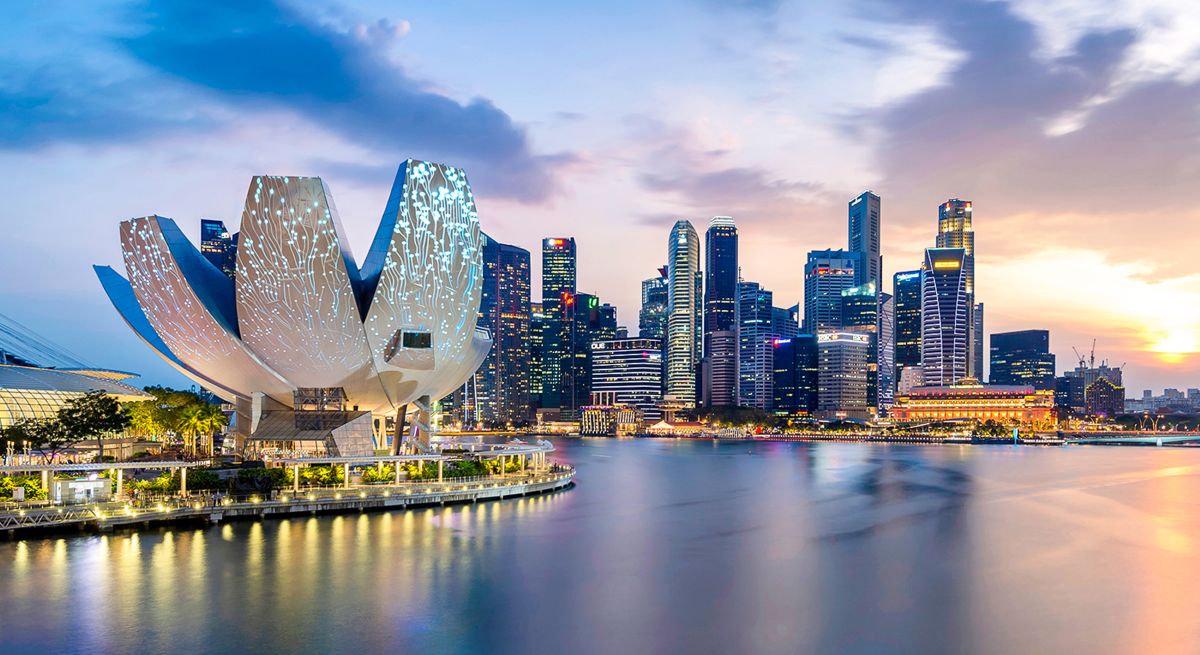
A typical example is Marina Bay. Just a few decades ago, this area was still a coastal alluvial land. But with a vision and bold development strategy, the Singapore government has turned Marina Bay into a global-scale financial - commercial - tourism center.
In Japan, Tokyo Bay has long been a key trade and industrial gateway of Japan, where a chain of urban - seaport - logistics connecting Tokyo with Yokohama and Kawasaki is formed.
Meanwhile, San Francisco Bay is associated with the birth of Silicon Valley - the world's leading technology capital, converging giant technology corporations and thousands of innovative startups.
These examples show that living spaces rich in ecological values, open connectivity potential, superior planning quality, and the intersection of international knowledge, technology, and finance flows have turned bays into "economic empires", and at the same time into the cradle of globally influential innovation.
And under the lens of Eastern culture, "water convergence" places are also the most prosperous land, easy to attract wealth and create prosperity. These are also fertile lands prioritized by the elite for the goal of long-term settlement and accumulation of wealth.
From global rules to Vietnam's opportunities: Revealing a new "prosperity bay
In Vietnam, the law of development associated with the sea is also clearly shown. The largest economic centers of the country all have close links with important sea axes.
In the South, Ho Chi Minh City is developing strongly thanks to its seaport system and international trade network. Meanwhile, in the North, the Hai Phong - Quang Ninh area with its chain of international seaports and large-scale industrial and economic parks has formed a top growth corridor in the country.
To date, when the coastal development poles of the North and South have all reached maturity, the vision of the future begins to expand to the Central region - where there is still much room for space, landscape and marine economic potential.
In that picture, Da Nang stands out the most as a transit center of the East-West economic corridor, connecting Vietnam with Laos, Thailand and Myanmar. In particular, the Northwest of Da Nang is being oriented to become the next growth pole as many national and international-scale plans and infrastructure are being implemented simultaneously.
Besides the nearly 1.8 billion USD Lien Chieu super seaport and the international financial center in Da Nang that has just been put into operation, the Northwest region also benefits greatly from the Da Nang Free Trade Zone (FTZ). According to the approved project, the FTZ has a scale of about 1,881 hectares with many functional areas for production, logistics, trade - services and innovation.
In the world, the appearance of FTZs has always been a catalyst to stimulate the economy in general and real estate in particular to "fly forward". For example, in the period 2002 - 2008, during the period of strong FTZ expansion, housing prices in Dubai increased by an average of 20-25%/year, leading to an increase in FDI capital into real estate by more than 500%. Resort, commercial, and entertainment complexes spring up densely, turning Dubai into a symbol of luxury in the world.
The miracle is also repeated in Hainan (China). After being upgraded to FTZ in 2018, Hainan Island has attracted more than 340 FDI projects in just 3 years, with total committed capital exceeding 8 billion USD.
According to Ms. Pham Thi Mien, Deputy Director of the Vietnam Real Estate Market Evaluation Research Institute, FTZ is expected to attract huge investment capital for Da Nang and lead to significant housing demand from experts and high-quality workers.
It is expected that the workforce and experts working in FTZ functional areas may reach 40,000 people by 2030 and about 137,000 people by 2050, creating a large demand for high-quality living spaces in the surrounding area," Ms. Mien assessed.
Welcoming the new era of development of Da Nang, at the heart of the Northwest region, a new "prosperity bay" is gradually emerging.
Hai Van Bay - a project developed by Vinhomes - is spread over a scale of more than 512ha, possessing a rare location, converging "five-tier wonders", with majestic mountains, pristine green forests, legendary pass peaks, cool streams in the great forest and turquoise sea bays. The project is also planned with a world-class all-in-one utility system, meeting all needs from accommodation to resorts, entertainment, sports and health care...
Vinhomes Hai Van Bay, therefore, is not only a high-class coastal residence space but also aims to become a gathering point for the community of experts, entrepreneurs and international intellectuals, contributing to promoting the knowledge economy in Da Nang in the next decade.
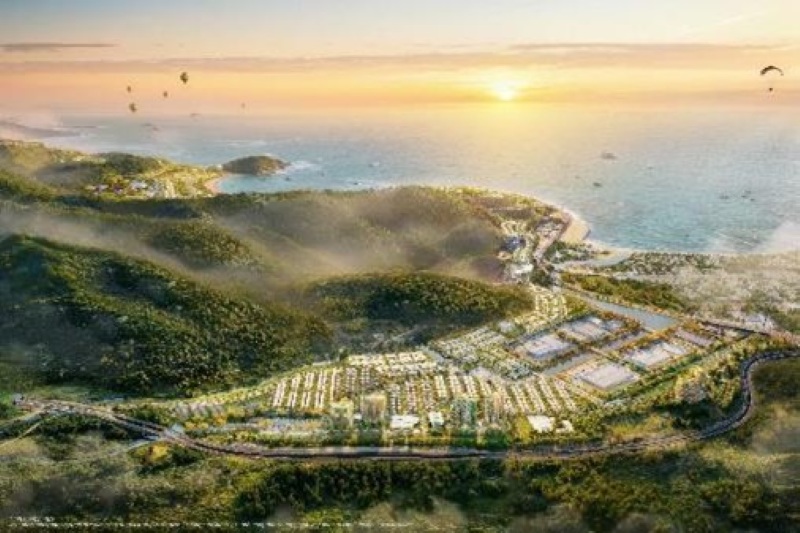
In the paradise bay at the foot of "the most majestic city in the world", another chapter of the global "law of prosperity" is beginning to be written. And when the trend of living "luxury hideaway in nature" - luxury amidst original nature reigns, Vinhomes Hai Van Bay will be the most livable city in the most livable city in Vietnam, a gathering point for international elites.