
The message was given by the World Bank for Women (Women's World Banking - WWB) at the seminar "Promoting the growth of micro-enterprises owned by women through effective financial capital", co-organized by VPBank and WWB on April 17, 2026 in Hanoi.
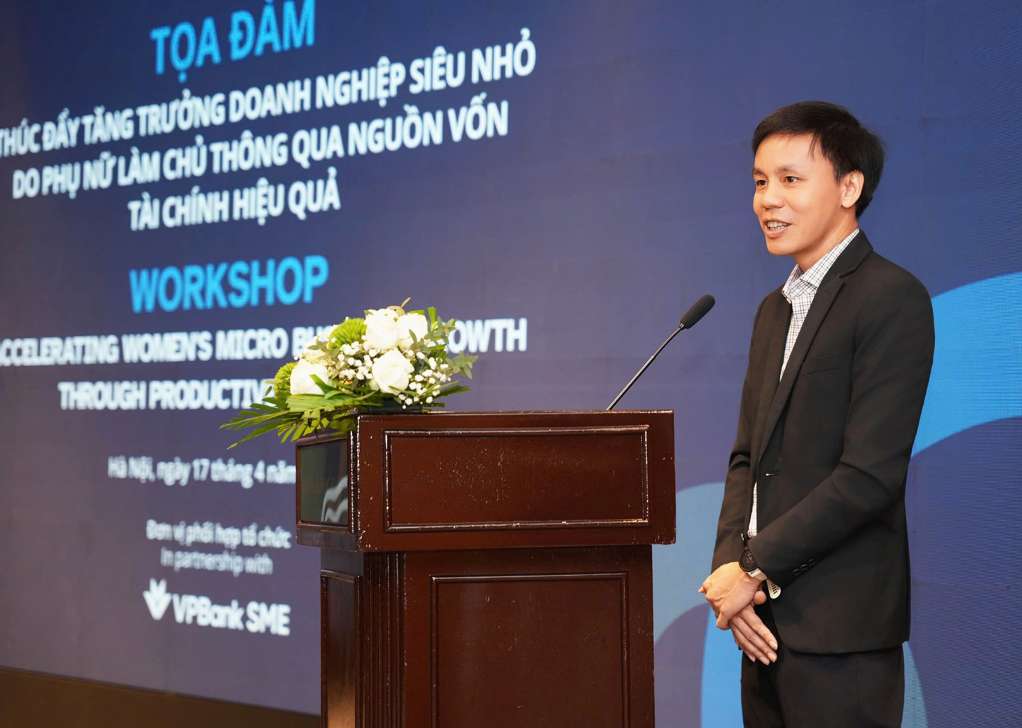
At the seminar, Mr. Dao Gia Hung, Director of SME Business Customer Division, VPBank, said that women starting and running businesses are an important force contributing to improving the resilience of households, creating jobs and promoting sustainable growth in Vietnam.
Through cooperation with many stakeholders, including Women's World Banking, we have transformed deeper understanding of customers into practical financial solutions that are more suitable for practical needs. This helps VPBank improve its capacity to serve businesses owned by women, while creating sustainable business value for the bank" - Mr. Hung said.
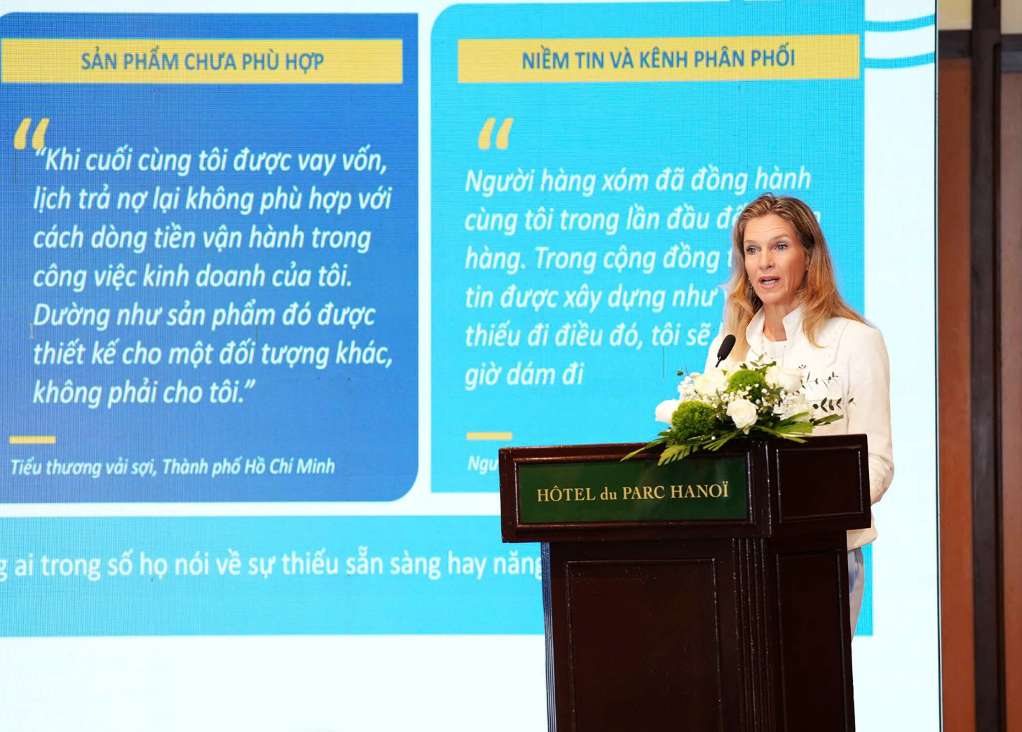
According to Ms. Angelique Timmer, WWB Regional Director for Southeast Asia, micro-enterprises owned by women play an important role in Vietnam's growth story. However, many financial solutions today still do not truly reflect the way women build, operate and develop their businesses.
Our Women-centered Design approach shows that female entrepreneurs cannot be seen as a homogeneous customer group. Credit institutions need to develop solutions based on deep understanding of customers, while ensuring feasibility in deployment and commercial efficiency, to both better serve women-owned businesses and support portfolio growth sustainably," Ms. Angelique Timmer recommended.
According to Ms. Angelique Timmer, the seminar is a space to connect research evidence, customer understanding and market dialogue, thereby contributing to transforming financial inclusion goals into specific, practical and scalable actions.
It is estimated that women currently own about 20% of micro, small and medium enterprises (MSMEs) officially registered in Vietnam. However, this figure still does not fully reflect the actual economic role of women, because a large proportion of businesses owned by women are still operating in the form of informal or individual business households. This shows that women are contributing significantly more to the economy than what official figures show.
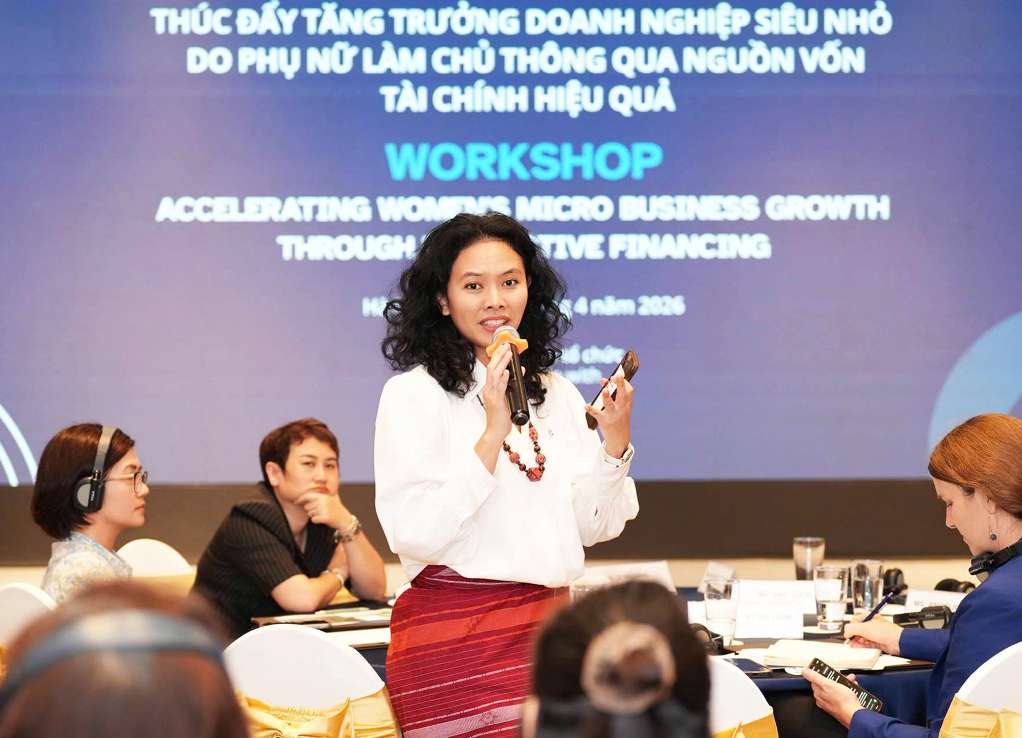
Information at the "Investment Connection Forum: Capital for Growth" held in Ho Chi Minh City last March said that currently about 60% of the financial needs of small and medium-sized enterprises have not been met, equivalent to a financial gap of about 24 billion USD. According to experts, narrowing this gap not only opens up significant growth room for credit institutions, but can also contribute tens of billions of USD to Vietnam's GDP by 2030 if comprehensive finance and economic participation of women are promoted more strongly.
Participating businesses also highly appreciated the efforts of credit institutions in developing flexible financial solutions, especially unsecured products being implemented. At the same time, businesses also expect banks, including VPBank, to continue to innovate and develop more superior financial products and solutions, suitable to the specific operations and increasingly diverse needs of women-owned businesses.
From research and practical implementation, the seminar gave three main orientations. First, micro-enterprises owned by women are a potentially rich segment but still have limited access to appropriate finance, which should be considered a focus in the customer development strategy of credit institutions.
Second, the "Women-centered Design" approach shows that a common model cannot be applied to all female customers. Credit institutions need to build products based on specific understanding of behavior, needs and real barriers, such as information restrictions, low levels of reliability, complex and different profile requirements in transaction habits.
Third, for effective large-scale deployment, a testing process is needed, using data and long-term investment in internal capacity. This is the foundation to both support women's sustainable business development and help credit institutions grow their portfolios and create spillover effects on the economy.


