
The first tons of "black gold" of the Fatherland at that time not only put Vietnam on the list of oil exporting countries but also brought the first dollars, helping the country overcome difficulties and begin the "Renovation" process.
On November 27, 1961, Oil Exploration Group 36 under the General Department of Geology was established. Oil and gas exploration in the North was deployed strongly and synchronously despite extremely difficult and deprived conditions when the country was in the most fierce stage of the war for national liberation.
After the country was reunified, on September 3, 1975, the General Department of Petroleum and Gas of Vietnam was established. Oil and gas exploration work across the country began to be promoted: In the North, exploration and evaluation of potential structures in the Red River Basin continued. In the South, after the country was reunified, technical staff quickly accessed and studied geological documents and results of exploration wells conducted before 1975 with special attention to discoveries in the Dua structure in the Nam Con Son Basin and the Bach Ho structure in the Cuu Long Basin.
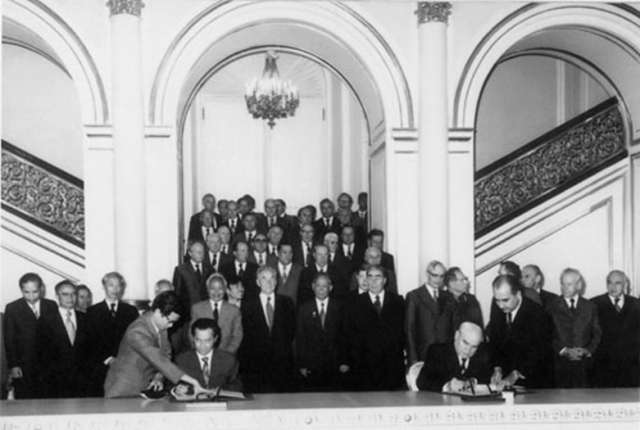
Next, on June 19, 1981, the Intergovernmental Agreement between the Union of Soviet Socialist Republics and the Socialist Republic of Vietnam on the establishment of the Vietsovpetro Joint Venture was signed, marking the birth of Vietsovpetro - the largest oil and gas exploration and exploitation operator in Vietnam to date.
Implementing the Agreement, the two sides urgently carried out preparations so that on November 19, 1981, Vietsovpetro would officially come into operation, start studying geological documents, and build facilities to serve the work of searching, exploring and exploiting oil and gas on the continental shelf of South Vietnam.
In February 1983, the research team of the Scientific Research and Design Center of the Vietsovpetro Joint Venture Enterprise compiled and analyzed a large amount of geological and geophysical information on the structure of Bach Ho, and at the same time built a structural map of the roof of the useful reservoir belonging to the lower Miocene, Oligocene sediments and on the surface of the basement rock; at the same time, determined the geological structure of the structure. The experts discovered that the tectonic destructions previously expected to exist, with the characteristic of separating the structure into small blocks, actually did not exist, so it was possible to adjust the order as well as the volume of geological exploration work. It turned out that one of the structures planned to be drilled (called structure number 3) did not exist at all, and the Ba Vi structure needed further study and was not ready for exploration drilling. Therefore, according to the idea of the Joint Venture Enterprise's Board of Directors, to implement the "1985 Program" it is necessary to focus on work at the two fields Bach Ho and Rong, so it is necessary to drill 4 more exploratory wells.
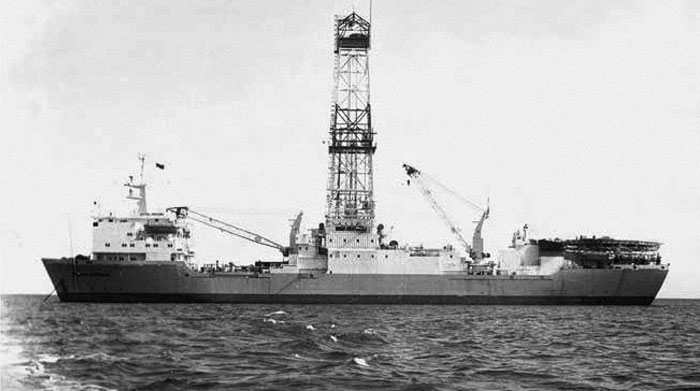
The drilling vessel Mikhail Mirchink was contracted for the period from January to June 1984 to drill the exploration well No. 5-BT in the Bach Ho structure. The result was the discovery of oil in the lower Miocene layers once again. The well was drilled to a depth of 2,782 - 2,826 m and received the first oil flow of 26.2 m3 per day, in addition to 2,600 m3 of gas and 5 m3 of formation water.
May 24, 1984 is considered the day the first industrial oil flow was discovered at Bach Ho field and on November 6, 1984, Vietsovpetro launched the MSP-1 fixed drilling rig base at Bach Ho field.
On February 27, 1985, the Mikhail Mirchink began drilling at the Dragon structure. The well stopped at a depth of 2,571m because it had penetrated almost all the sedimentary crust and almost reached the basement rock. A stream of oil gushed up during the well test. Thus, in May 1985, thanks to the first well, the Dragon field was discovered.
On June 26, 1986, the first commercial ton of crude oil was exploited at Bach Ho field on the continental shelf of Vietnam, from the MSP-1 rig, officially opening a new industry of the country - the oil and gas exploitation industry. In just over 5 years, the oil and gas workers at Vietsovpetro have turned the tons of oil in "books" and in the imagination of geologists into real tons of oil, from underground, brought to the technological system to collect, transport, process into tons of commercial oil, export and bring back valuable foreign currency for the country.
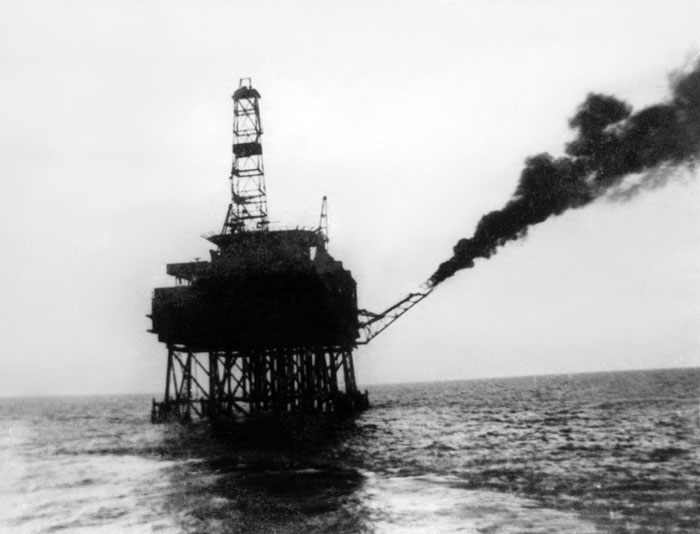
Joy exploded, spreading from Vung Tau to the whole country. During the period when the country was still facing many difficulties, the decision to focus resources to invest in the Oil and Gas industry had reaped its first sweet fruits.
In 1988, Vietsovpetro discovered a high-yield oil layer from fractured granite basement in Bach Ho field with a self-extruding oil flow reaching 407 tons/day and night and this field is ranked among the fields with the largest oil and gas reserves in Southeast Asia. After Bach Ho, many new oil fields in the basement such as Rong, Rang Dong, Hong Ngoc... were discovered and put into operation. The discovery and exploitation of oil and gas in fractured granite basement is an achievement of great scientific and economic value, greatly changing the traditional oil and gas exploration objects. These achievements have put Vietnam on the list of oil and gas producing countries in the world, marking a solid step forward, affirming a promising future for the Vietnamese oil and gas industry.
Since the first oil exploitation event in 1986, the crude oil production of Vietsovpetro Joint Venture has continuously increased: in 1990, it reached the milestone of exploiting the 5 millionth ton of oil, in 1992 - 10 million tons of oil, in 1993 - 20 million tons of oil, in 1997 - 50 million tons of oil, in 2001 - 100 million tons of oil, in 2005 - 150 million tons of oil, in 2012 - 200 million tons of oil. These are huge steps forward for a joint venture with an initial investment capital of only 1.5 billion USD. And by 2024, Vietsovpetro Joint Venture will have reached the output milestone of 250 million tons of oil, affirming its position as a leading unit in oil and gas exploration and exploitation, making a great contribution to economic growth, national energy security, and consolidating the traditional friendship and comprehensive strategic partnership between Vietnam and the Russian Federation.
To date, the Vietnamese Oil and Gas industry has exploited about 450 million tons of oil domestically, bringing many great benefits, serving socio-economic development, ensuring energy security for the Fatherland. However, looking back nearly 40 years ago, when the first ton of commercial oil was exploited, it not only realized the great Uncle Ho's wish of a country "having sea, there must be oil" but also was a fulcrum to help Vietnam enter the period of "renovation" in a strong, comprehensive way, developing to the point of having "foundation, potential, position and international prestige" as today.


