
6 months of suffering from prolonged abdominal pain and metrorrhagia
Ms. Nguyen Thi Tra (38 years old, residing in Phu Quoc special zone, An Giang) had undergone 3 cesarean sections. From about 6 months ago, she began to experience dull and increasing abdominal pain, especially severe pain during menstruation, accompanied by prolonged menstruation. These symptoms made her often tired and worried.
On the evening of January 12, due to severe abdominal pain, she went to Vinmec Phu Quoc General Hospital. Through clinical examination combined with in-depth ultrasound, doctors discovered a fluid buildup at the location of the old cesarean section scar.
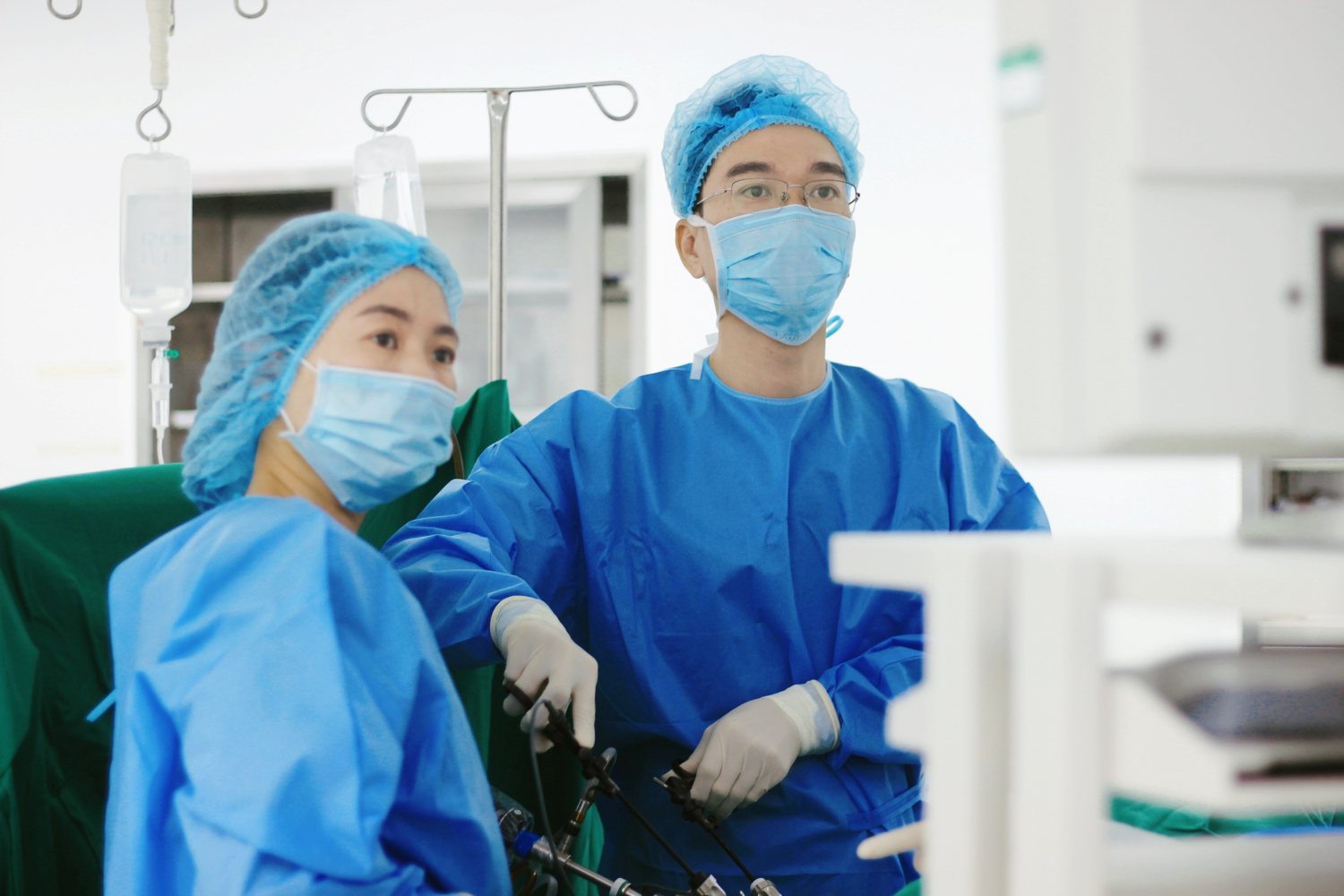
After consultation, the doctor diagnosed the patient with a scar defect in the cesarean section wound. This is a condition where the scar in the lower segment of the uterus after the cesarean section is not tightened, forming a "scar pocket" - where menstrual blood and fluid easily stagnate, causing pain, inflammation and prolonged menstrual disorders.
In particular, this disease is often difficult to detect if only examined routinely, especially for patients who have had cesarean sections many times, and the structure of the uterus and pelvic area has changed significantly. Accurate diagnosis requires close coordination between obstetricians and gynecologists and diagnostic imaging.
After comprehensively assessing the patient's health condition, the doctors decided to choose laparoscopic surgery to repair the scar for Ms. Tra instead of traditional open surgery.
Endoscopic surgery helps preserve scarred uterus
The surgery was performed on the morning of January 13, directly performed by BSCKI Vuong Ngoc Linh (Department of Obstetrics and Gynecology) with an anesthesia and resuscitation team. According to Dr. Linh, the biggest challenge of the case is the patient's history of three cesarean sections. Because after many surgeries, the patient's uterine muscle at the scar site is usually thin, only a few millimeters, accompanied by fibrosis. Nearby organs such as the bladder and intestines may stick to the uterus, increasing the risk of injury during intervention.
Cesarean section scars are deep in the uterine muscle, and cannot be treated simply. Surgeons must accurately determine the boundary between healthy tissue and bad scar tissue. If not treated thoroughly, the defective sac will continue to accumulate fluid and relapse symptoms. If intervention is excessive, the risk of uterine perforation or damage to adjacent organs is very high," said Dr. Linh.
Instead of open surgery with a large incision on the abdominal wall, doctors used an endoscopic camera system and specialized instruments to insert into the abdominal cavity through very small incisions. Under clear magnification images, the entire scar tissue was completely removed. Then, the uterine wall was sewn and restored in many layers, reconstructing a solid muscle structure, helping the uterus heal well and reduce the risk of recurrence.
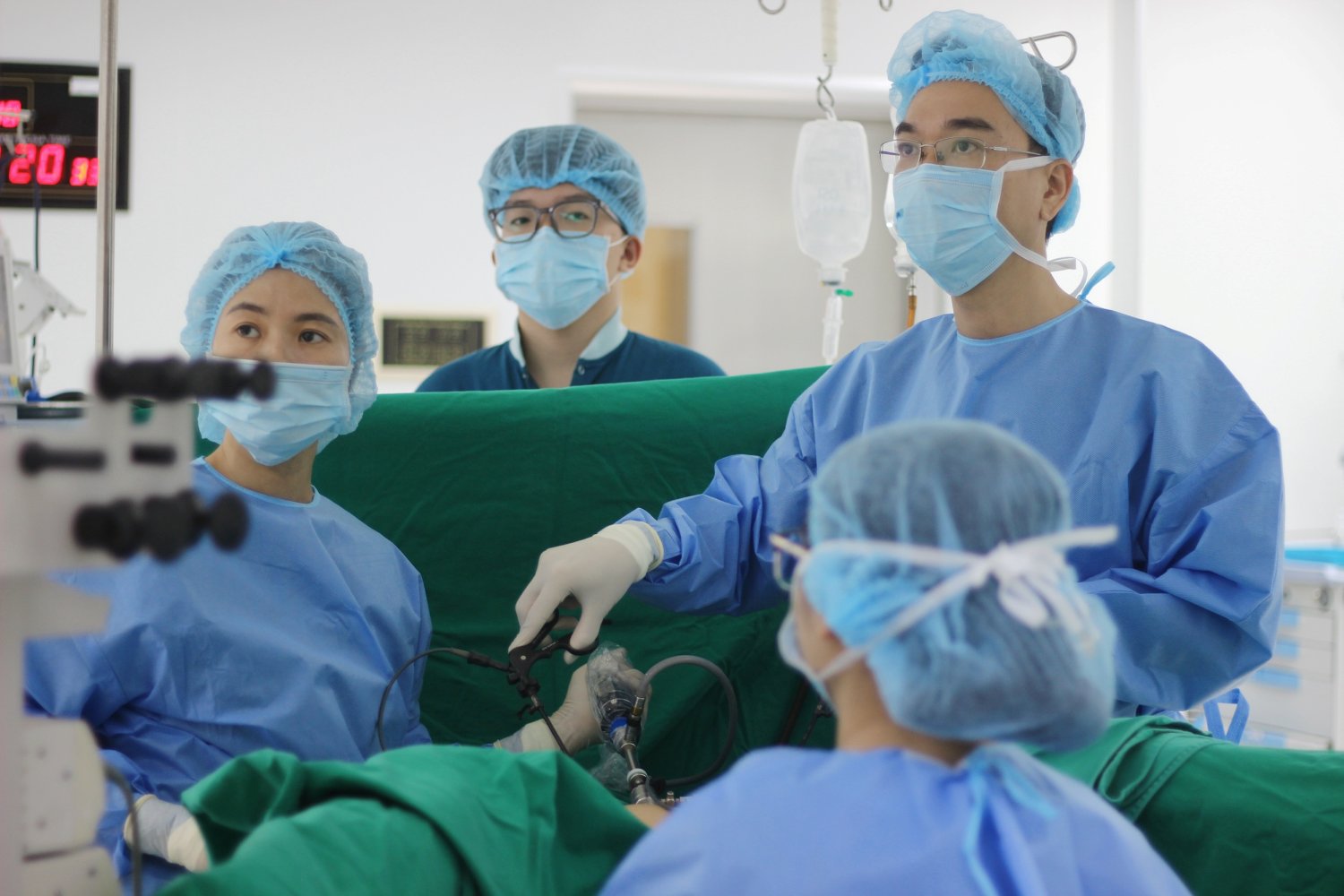
In addition, Ms. Tra had fluid buildup at the surgical wound for 6 months, causing this area to be at risk of infection. Therefore, doctors must completely treat the fluid buildup and inflamed tissues to ensure that after stitching, the uterus can heal in the best way, avoiding post-operative infection or abcess formation.
The Vinmec Phu Quoc medical team has successfully performed sophisticated endoscopic techniques, helping the patient's scarred uterus return to a healthy state using the least invasive method," said Dr. Linh.
After surgery, the patient recovered quickly, the surgical wound was dry, and there was no unusual vaginal bleeding. After only one day, Ms. Tra could walk gently and live normally. On the morning of January 15, after more than two days of hospitalization, the patient was discharged with stable health.
According to experts, cesarean section scars are becoming an increasingly common disease as the rate of cesarean sections increases. If not treated properly, the disease can cause chronic pain, recurrent infections and long-term effects on women's quality of life.
Usually, laparoscopic scar removal surgery is only performed in central hospitals due to its complexity and requires experienced surgeons. In addition, sewing uterine restoration on a fibrous tissue background also requires high techniques to ensure that the sewing wound is sufficiently firm, not ruptured, and capable of tolerating dilation if the patient is pregnant next time.
The success of the surgery at Vinmec Phu Quoc shows that minimally invasive laparoscopic surgery can completely effectively treat complex obstetric complications, even in patients who have had cesarean sections many times. Not only eliminating lesions, this method also helps preserve and regenerate the uterus, bringing long-term benefits to the patient's physical and mental health.
The case also affirmed the professional capacity, multi-specialty coordination and the ability to master high technology of Vinmec Phu Quoc's team of doctors, helping people on the island access quality medical services right in the locality, without needing transfer.


