
SJC gold bar price
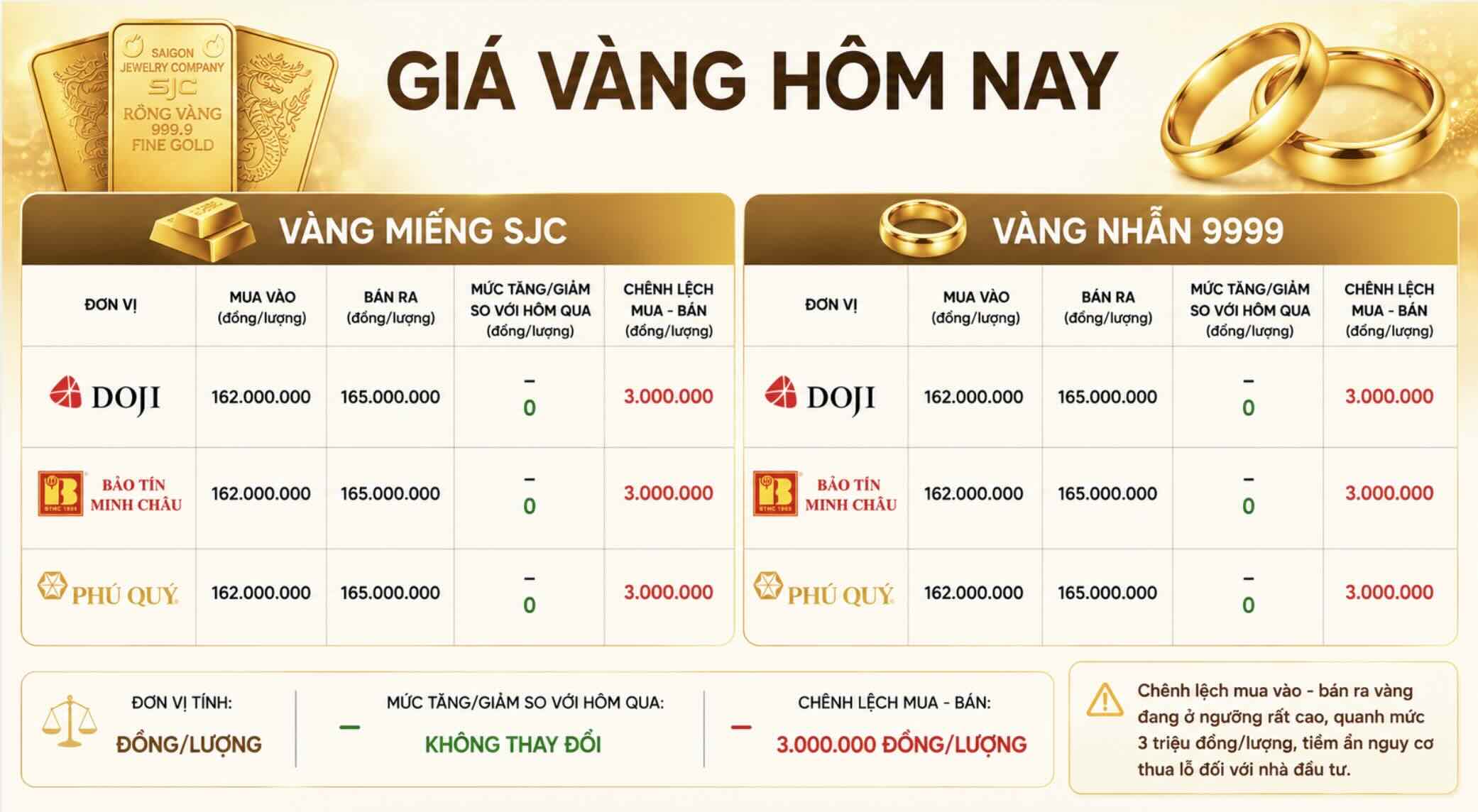
As of 7:20 PM, SJC gold bar prices were listed by DOJI at the threshold of 162-165 million VND/tael (buying - selling), unchanged in both buying and selling directions. The difference between buying and selling prices is at the threshold of 3 million VND/tael.
SJC gold bar prices were listed by Bao Tin Minh Chau at the threshold of 162-165 million VND/tael (buying - selling), unchanged in both buying and selling directions. The difference between buying and selling prices is at the threshold of 3 million VND/tael.
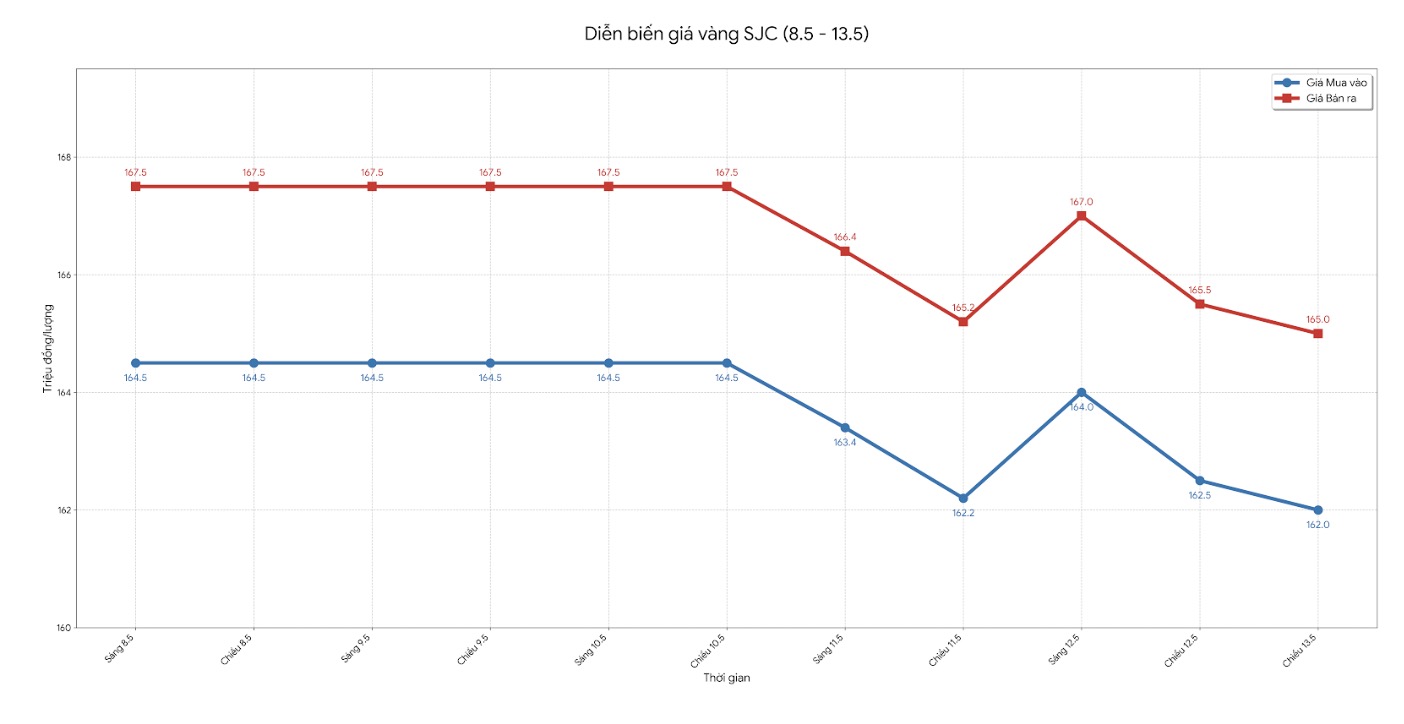
Phu Quy Jewelry Group listed SJC gold bar prices at the threshold of 162-165 million VND/tael (buying - selling), unchanged in both buying and selling directions. The difference between buying and selling prices is at the threshold of 3 million VND/tael.
9999 gold ring price
As of 7:20 PM, DOJI listed gold ring prices at the threshold of 162-165 million VND/tael (buying - selling), unchanged in both buying and selling directions. The difference between buying and selling prices is at the threshold of 3 million VND/tael.
Bao Tin Minh Chau listed the price of gold rings at the threshold of 162-165 million VND/tael (buying - selling), unchanged in both buying and selling directions. The difference between buying and selling prices is at the threshold of 3 million VND/tael.
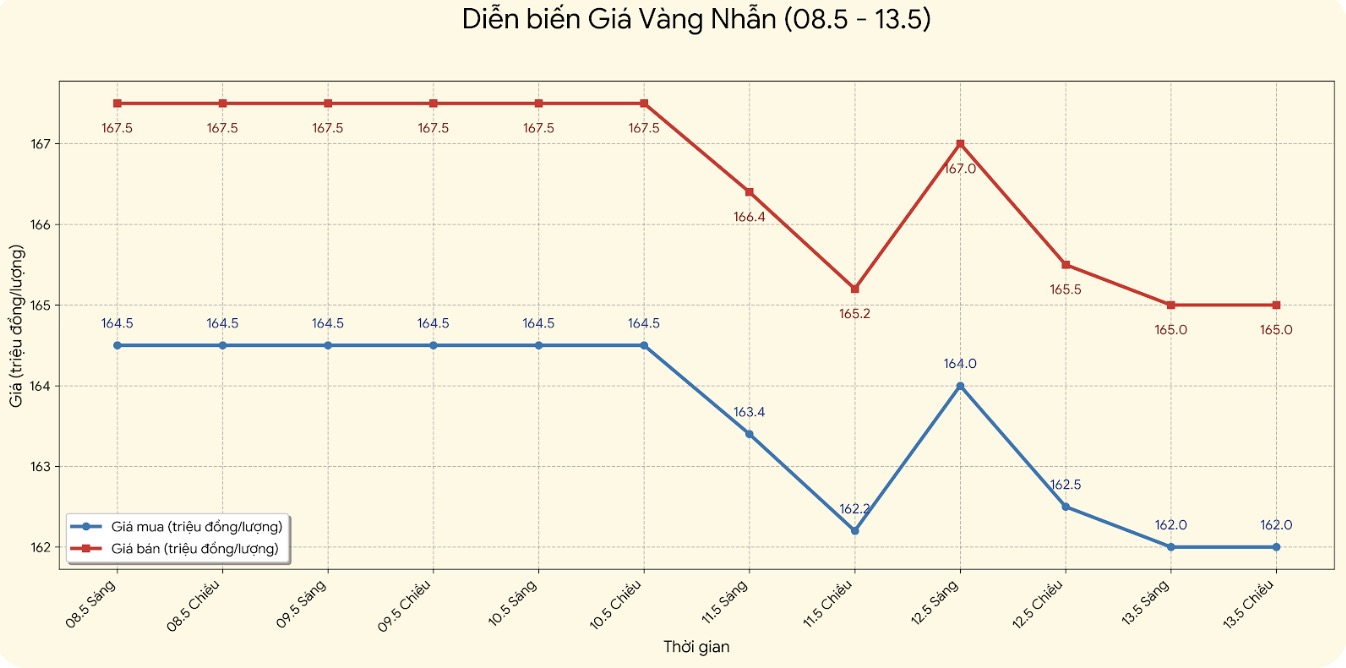
Phu Quy Gold and Gems Group listed gold ring prices at the threshold of 162-165 million VND/tael (buying - selling), unchanged in both buying and selling directions. The difference between buying and selling prices is at the threshold of 3 million VND/tael.
The buying - selling price difference of gold is at a very high level, around 3 million VND/tael, posing a risk of losses for investors.
World gold price
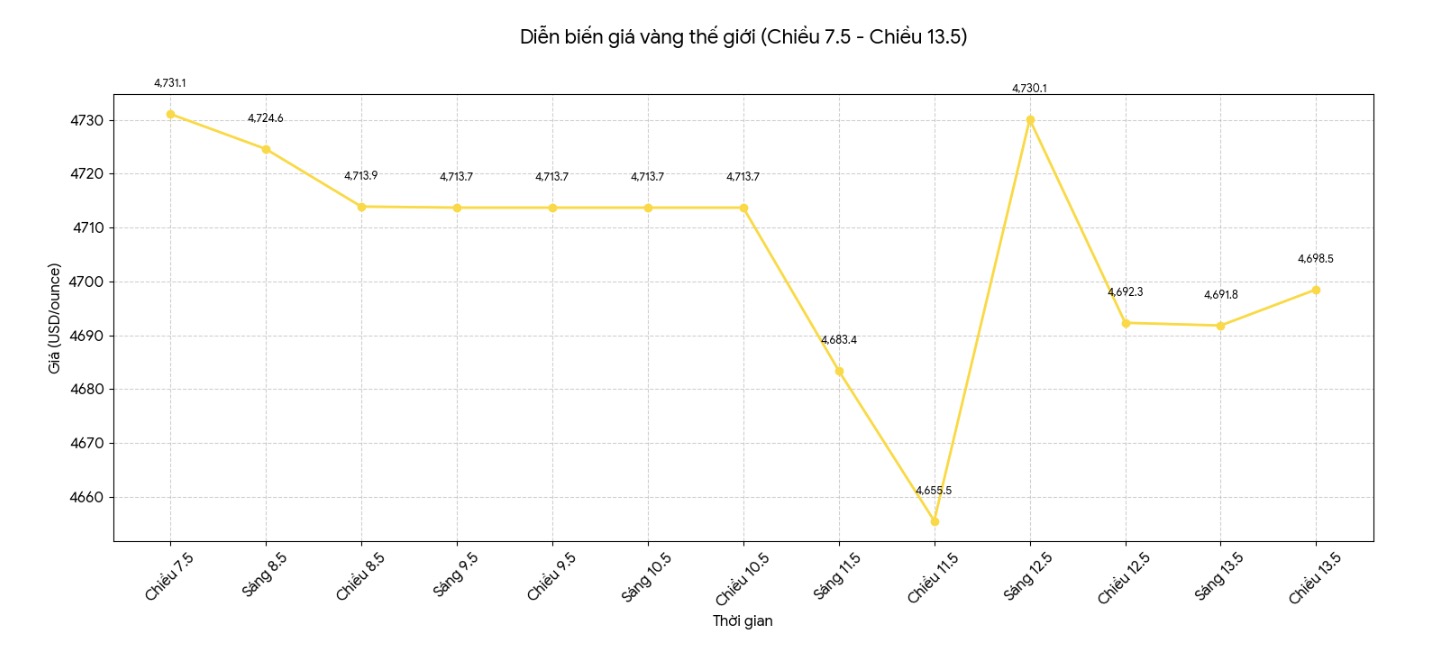
At 7:20 PM, world gold prices were listed around the threshold of 4.699 USD/ounce, almost flat compared to the previous day.
Gold price forecast
World gold prices fluctuate around the threshold of 4,700 USD/ounce.
According to Kitco, tensions in the Middle East and the risk of disruption of oil supply through the Strait of Hormuz are causing energy prices to remain high. This increases global inflationary pressure, pulling US bond yields and the USD up, thereby creating pressure on precious metals.
Just released data shows that the US producer price index (PPI) in April increased the most in 4 years. Previously, the consumer price index (CPI) also recorded the highest increase in 3 years. This development caused the market to reduce expectations about the possibility that the US Federal Reserve (Fed) will soon cut interest rates this year.
Expert Carlo Alberto De Casa of Swissquote said that gold prices are still in a period of accumulation around the 4,700 USD/ounce range as the market needs more time to absorb new inflation data from the US.
Many opinions believe that gold is being affected in opposite directions. On the one hand, the precious metal is still supported by safe haven demand in the face of geopolitical instability. On the other hand, the sharp increase in oil prices has raised concerns about prolonged inflation, causing interest rates to possibly remain high longer - a disadvantage for non-performing assets like gold.
In the opposite direction, silver continues to attract speculative cash flow as prices maintain a better upward trend than gold. HSBC recently raised its forecast for the average silver price in 2026 to $75/ounce, citing the weakening USD supporting the precious metal. However, the bank also noted that the room for further increase in silver may no longer be too large because the current price level is already high.
Technically, experts believe that the 4,774-4,792 USD/ounce zone is an important resistance level for gold. If this zone is surpassed, gold prices may move towards higher levels. Conversely, the 4,660-4,680 USD/ounce zone currently plays a short-term supporting role for the market.
Gold price data is compared to the previous day.
See more news related to gold prices HERE...


