
SJC gold bar price
As of 5:40 PM, SJC gold bar prices were listed by DOJI at the threshold of 162-165 million VND/tael (buying - selling), down 1.3 million VND/tael in both buying and selling directions. The difference between buying and selling prices is at the threshold of 3 million VND/tael.
SJC gold bar price was listed by Bao Tin Minh Chau at the threshold of 162-165 million VND/tael (buying - selling), down 1 million VND/tael in both buying and selling directions. The difference between buying and selling prices is at the threshold of 3 million VND/tael.
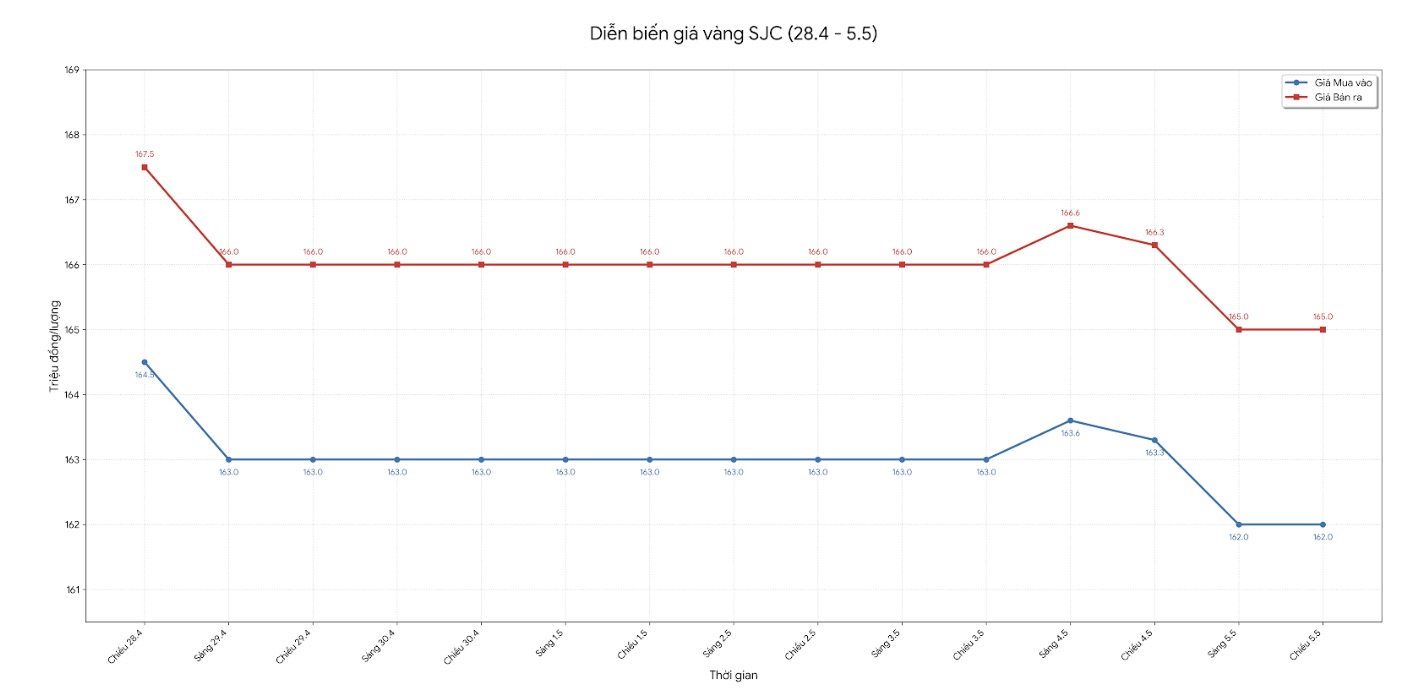
Phu Quy Jewelry Group listed SJC gold bar prices at the threshold of 162-165 million VND/tael (buying - selling), down 1.3 million VND/tael in both buying and selling directions. The difference between buying and selling prices is at the threshold of 3 million VND/tael.
9999 gold ring price
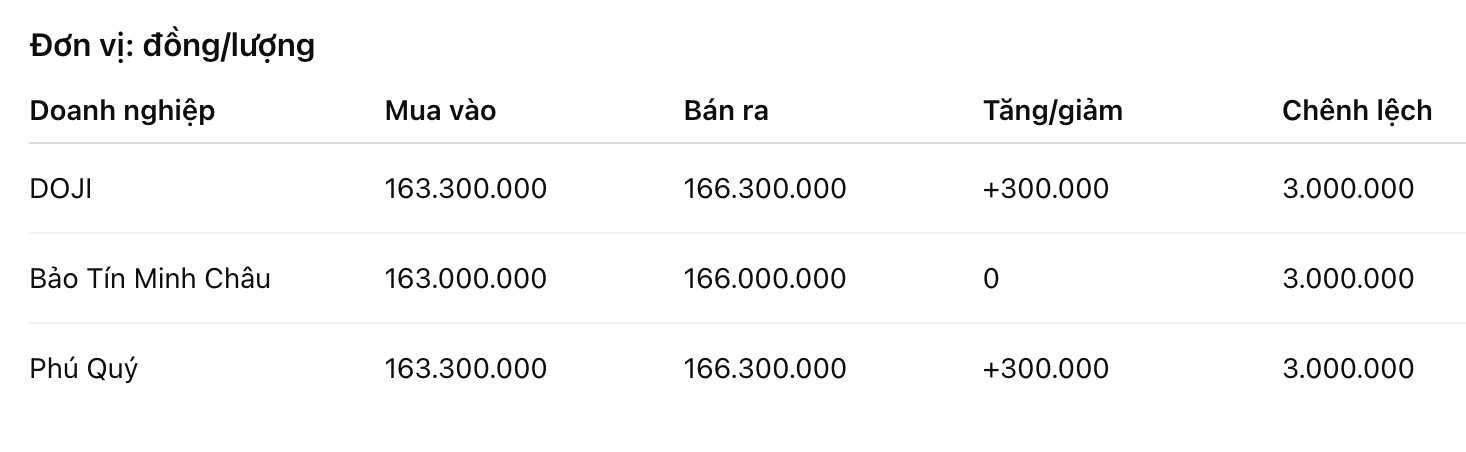
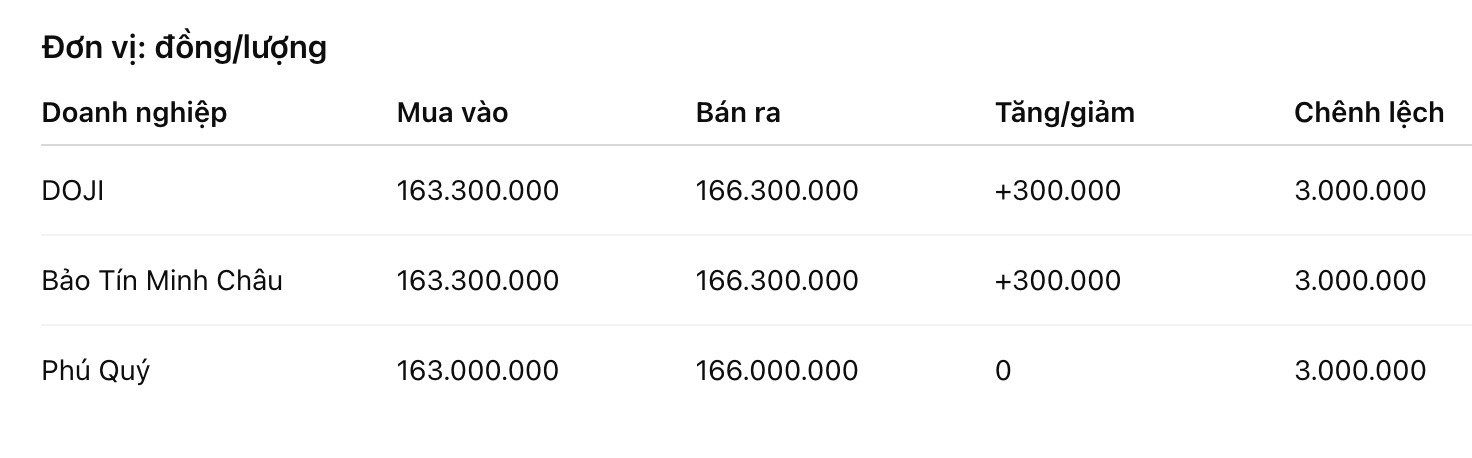
As of 5:40 PM, DOJI listed gold ring prices at the threshold of 162-165 million VND/tael (buying - selling), down 1.3 million VND/tael in both buying and selling directions. The difference between buying and selling prices is at the threshold of 3 million VND/tael.
Bao Tin Minh Chau listed gold ring prices at the threshold of 162-165 million VND/tael (buying - selling), down 1.3 million VND/tael in both buying and selling directions. The difference between buying and selling prices is at the threshold of 3 million VND/tael.
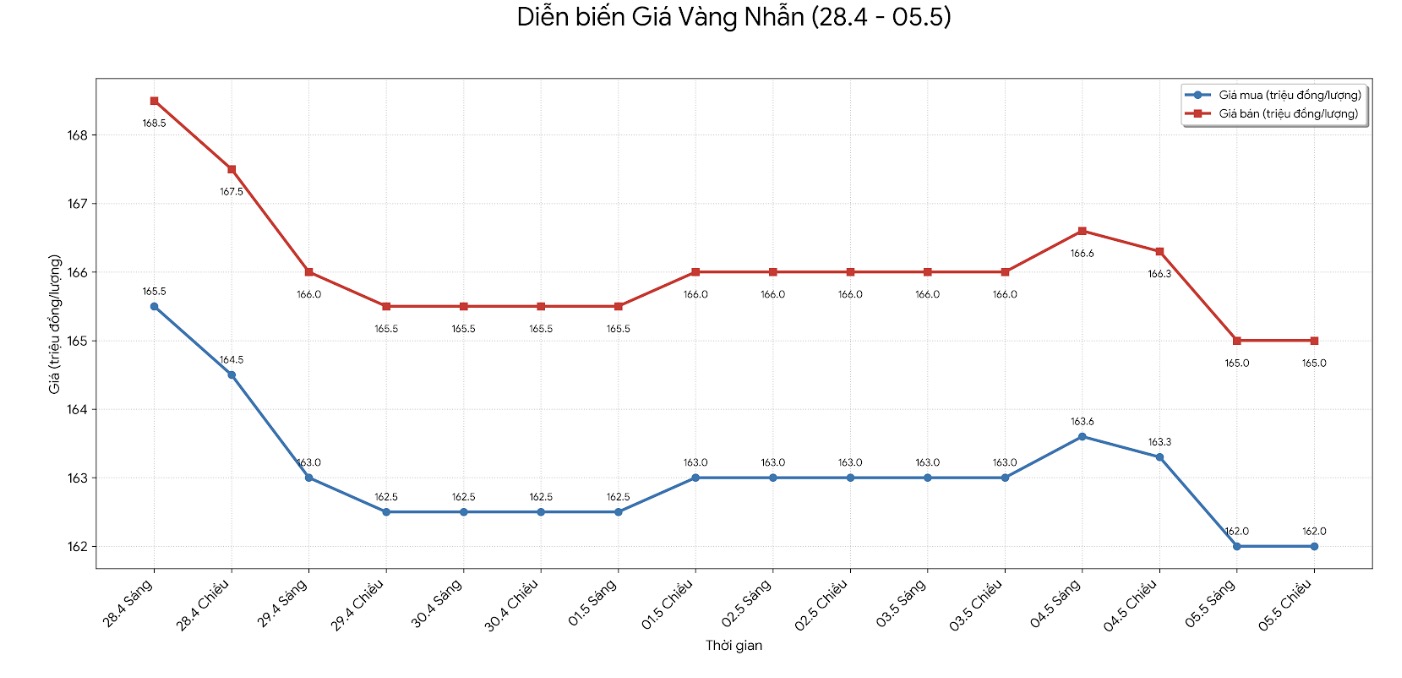
Phu Quy Jewelry Group listed gold ring prices at the threshold of 162-165 million VND/tael (buying - selling), down 1 million VND/tael in both buying and selling directions. The difference between buying and selling prices is at the threshold of 3 million VND/tael.
Currently, the buying - selling price difference of gold is at a very high level, around 3 million VND/tael, posing a risk of losses for investors.
World gold price
At 5:40 PM, world gold prices were listed around 4,552.2 USD/ounce, up 8.1 USD compared to the previous day.
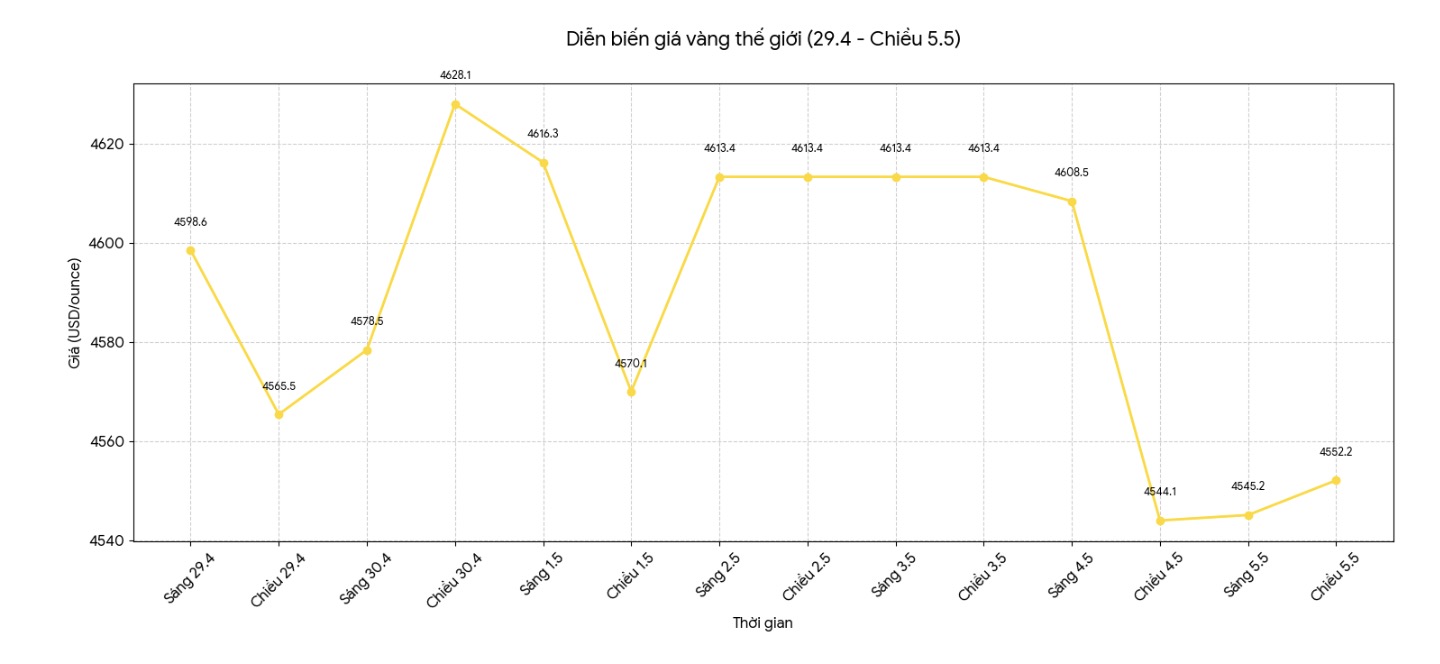
Gold price forecast
World gold prices are being affected in opposite directions. Although geopolitical risks have not cooled down, the precious metal is still weakening in the short term due to rising US bond yields, stronger USD and rising oil prices, raising concerns about inflation.
In the first session of the week, spot gold prices at one point retreated to around 4,513 USD/ounce, down more than 2%, while silver also lost over 3%. This development reflects that cash flow is withdrawing from non-performing assets in the context of high cost of capital. The yield of 10-year US bonds increased to nearly 4.44%, along with the USD index going up, creating significant pressure on the precious metals market.
US economic data continues to strengthen expectations of prolonged high interest rates. Factory orders in March increased by 1.5%, exceeding forecasts, while the manufacturing PMI index remained above the expansion threshold for the fourth consecutive month. These signals weakened expectations that the US Federal Reserve (Fed) would soon ease policy.
In the opposite direction, escalating geopolitical tensions in the Middle East, especially around the Strait of Hormuz, pushed Brent oil prices above 113 USD/barrel. This factor increased inflationary pressure and indirectly made the market lean towards the scenario of interest rates remaining high for longer.
Mr. Bart Melek - Global Commodity Strategy Director at TD Securities - said that the latest developments "raise concerns about inflation and signal quite'hawkish' interest rates," thereby adversely affecting gold in the short term. According to him, although gold still plays a risk hedging role, a high interest rate environment makes the precious metal less attractive.
Technically, gold prices are fluctuating in a sensitive area. The support level is close to around 4,500 USD/ounce, if broken, it can pull the price deeper back to 4,450 USD/ounce. In the opposite direction, the 4,530-4,568 USD/ounce area is considered an important resistance; if surpassed, gold prices may head towards the 4,600 USD/ounce mark.
In the short term, the market will closely monitor US labor data and signals from the Fed to determine trends. Gold prices are likely to continue to fluctuate strongly, depending on the developments of interest rates, the USD and oil prices.
Gold price data is compared to the previous day.
The world gold and silver market operates through two main pricing mechanisms. The first is the spot market, where the buying and selling and immediate delivery prices are listed. The second is the futures market, where prices are set for future delivery.
Due to the impact of year-end position restructuring and market liquidity, the December gold futures contract is currently the most actively traded contract on the CME exchange.
See more news related to gold prices HERE...


