
SJC gold bar price
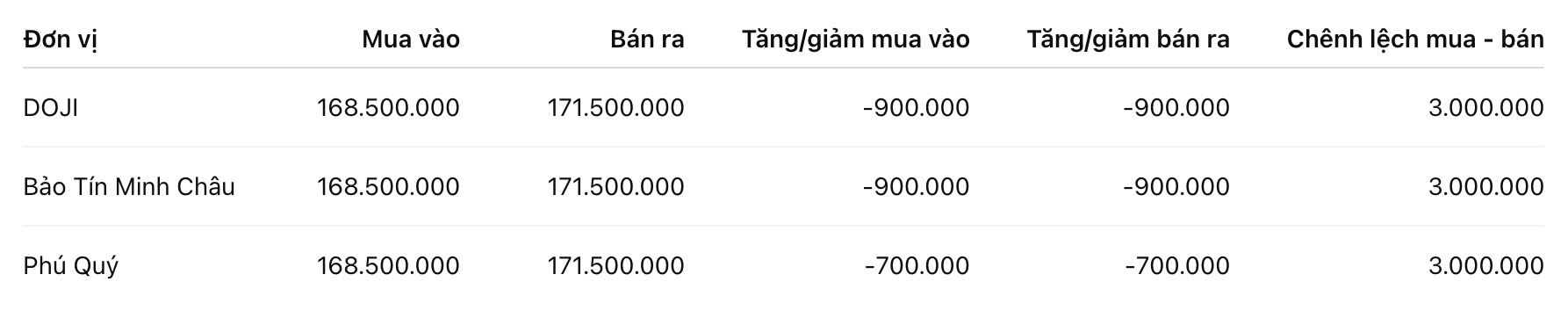
As of 6:00 AM on April 14, SJC gold bar prices were listed by DOJI at the threshold of 168.5-171.5 million VND/tael (buying - selling), down 900,000 VND/tael in both buying and selling directions. The difference between buying and selling prices is at the threshold of 3 million VND/tael.
SJC gold bar price was listed by Bao Tin Minh Chau at the threshold of 168.5-171.5 million VND/tael (buying - selling), down 900,000 VND/tael in both buying and selling directions. The difference between buying and selling prices is at the threshold of 3 million VND/tael.
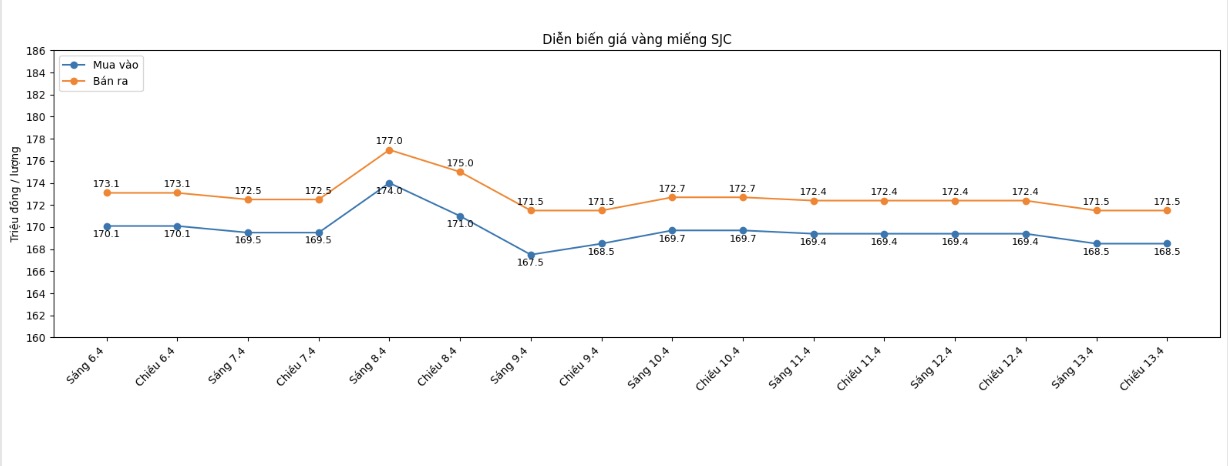
Phu Quy Jewelry Group listed SJC gold bar prices at 168.5-171.5 million VND/tael (buying - selling), down 900,000 VND/tael in both buying and selling directions. The difference between buying and selling prices is at 3 million VND/tael.

9999 gold ring price
As of 6:00 AM on April 14, DOJI listed the price of gold rings at the threshold of 168.5-171.5 million VND/tael (buying - selling), down 900,000 VND/tael in both buying and selling directions. The difference between buying and selling prices is at the threshold of 3 million VND/tael.
Bao Tin Minh Chau listed the price of gold rings at the threshold of 168.5-171.5 million VND/tael (buying - selling), down 900,000 VND/tael in both buying and selling directions. The difference between buying and selling prices is at the threshold of 3 million VND/tael.
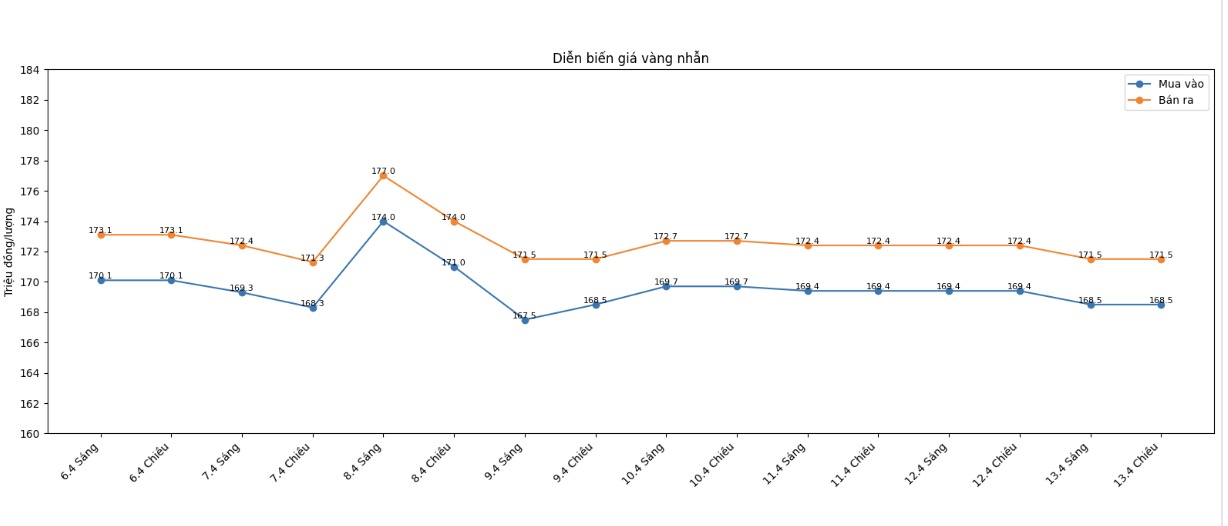
Phu Quy Jewelry Group listed the price of gold rings at the threshold of 168.5-171.5 million VND/tael (buying - selling), down 700,000 VND/tael in both buying and selling directions. The difference between buying and selling prices is at the threshold of 3 million VND/tael.
Currently, the buying - selling price difference of gold is at a very high level, around 3 million VND/tael, posing a risk of losses for investors.
World gold price
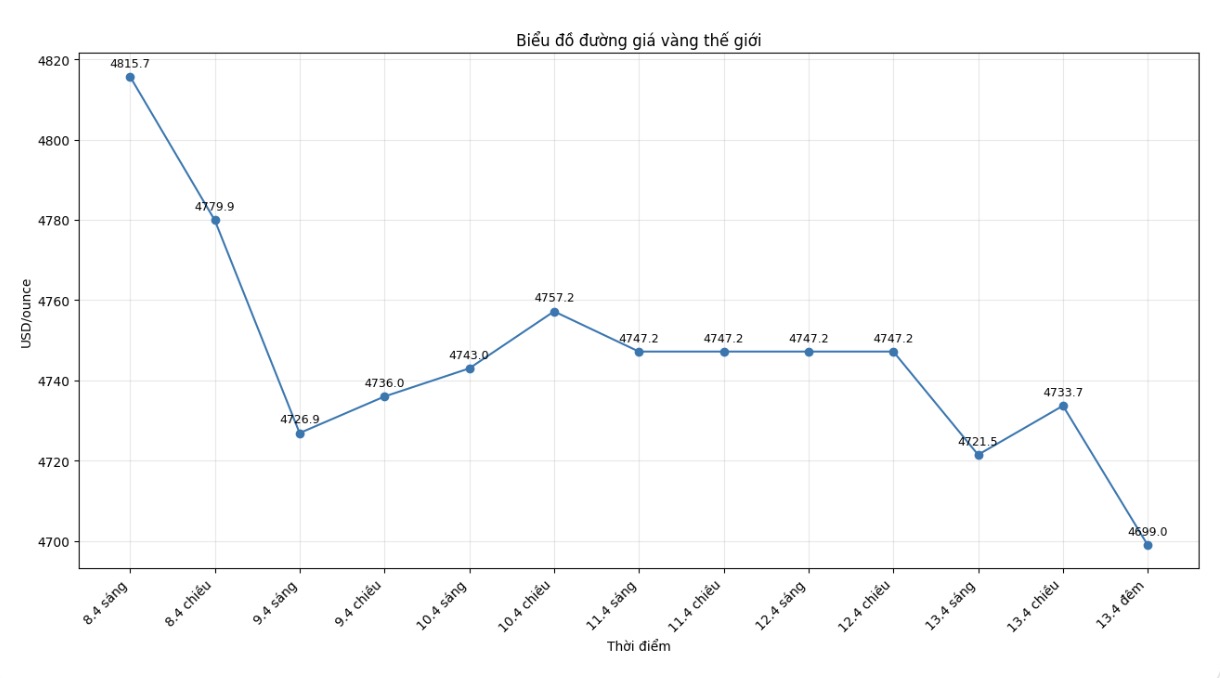
At 10:10 PM on April 13, world gold prices were listed around the threshold of 4.699 USD/ounce, down 48.2 USD.
Gold price forecast
According to Kitco, gold and silver prices fell after peace talks between the US and Iran at the end of the week failed, raising concerns about complex inflation, thereby putting pressure on global gold and silver demand.
The latest developments on the war in the Middle East show that the fragile ceasefire between the US and Iran seems to be still being maintained, at least at the present time.
However, US President Donald Trump declared that his country would blockade the Strait of Hormuz after peace talks with Iran in Islamabad collapsed last weekend.
According to the Managing Director of the International Monetary Fund (IMF), after the war, prices will remain high for a while longer. Quoting Kristalina Georgieva, Bloomberg said that global prices will need time to return to levels before the war broke out between the US, Israel and Iran, even if the ceasefire is maintained.
It will take time, yes, and more time for areas that are experiencing more serious disruptions" - Georgieva said in CBS's Face the Nation program broadcast on Sunday, ahead of this week's spring meetings of the IMF and the World Bank.
That's why we have to remember the asymmetry of this shock" - she also reiterated that the IMF will lower its global growth forecast due to the impact of the war in Iran - "We will have to adjust downwards, and the level of adjustment will depend on two factors: the duration of the conflict and the speed at which things can return to the same level of production as before".
Technically, the next price increase target of speculators on the June gold futures market is to create a closing level exceeding the strong resistance zone of 5,000 USD/ounce.
The next near-term price reduction target of the selling side is to pull the futures contract price below the solid technical support zone of 4,500 USD/ounce.
The first resistance level is seen at 4,800 USD/ounce, followed by the peak of last week at 4,888 USD/ounce. The first support level is at 4,700 USD/ounce, followed by the overnight low at 4,626 USD/ounce.
Gold price data is compared to the previous day.
The world gold and silver market operates through two main pricing mechanisms. The first is the spot market, where the buying and selling and immediate delivery prices are listed. The second is the futures market, where prices are set for future delivery.
Due to the impact of year-end position restructuring and market liquidity, the December gold futures contract is currently the most actively traded contract on the CME exchange.
See more news related to gold prices HERE...


