SJC gold bar price
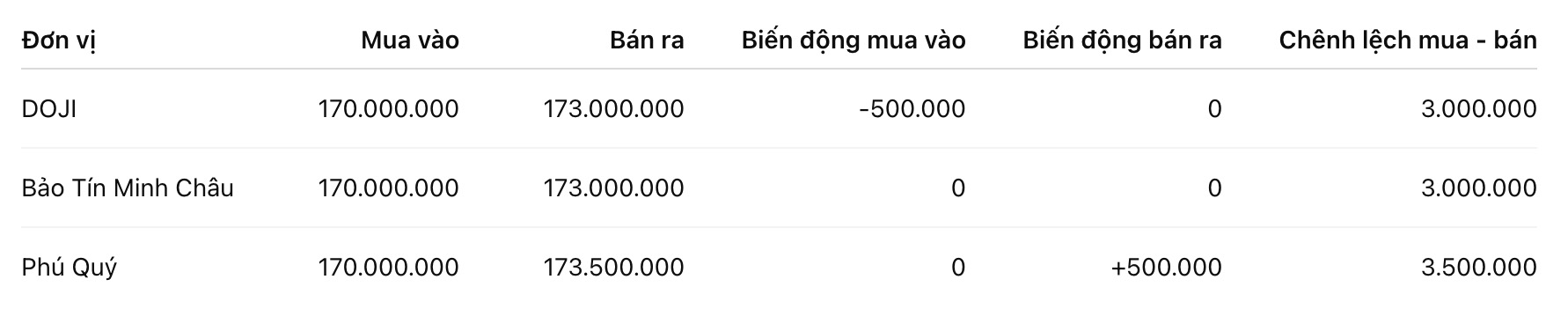
As of 6:00 AM, SJC gold bar prices were listed by DOJI at 170-173 million VND/tael (buying - selling), down 500,000 VND/tael on the buying side and unchanged on the selling side. The difference between buying and selling prices is at 3 million VND/tael.
SJC gold bar prices are listed by Bao Tin Minh Chau at 170-173 million VND/tael (buying - selling), unchanged in both buying and selling directions. The difference between buying and selling prices is at 3 million VND/tael.
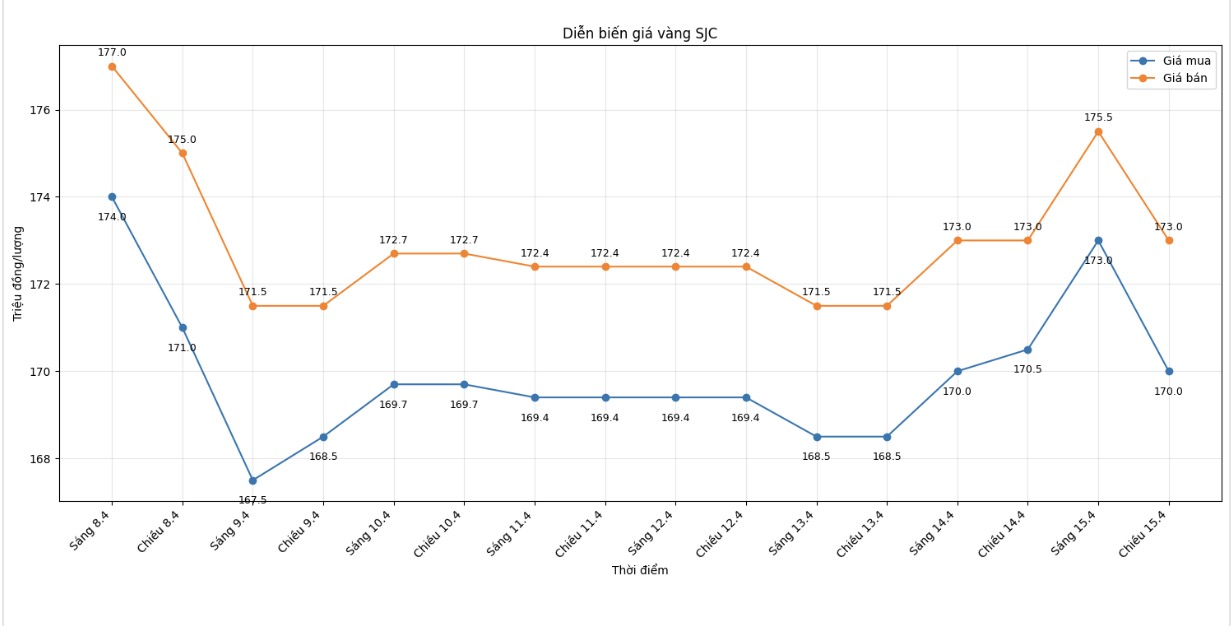
Phu Quy Jewelry Group listed SJC gold bar prices at 170-173.5 million VND/tael (buying - selling), unchanged in the buying direction and increased by 500,000 VND/tael in the selling direction. The difference between buying and selling prices is at 3.5 million VND/tael.
9999 gold ring price
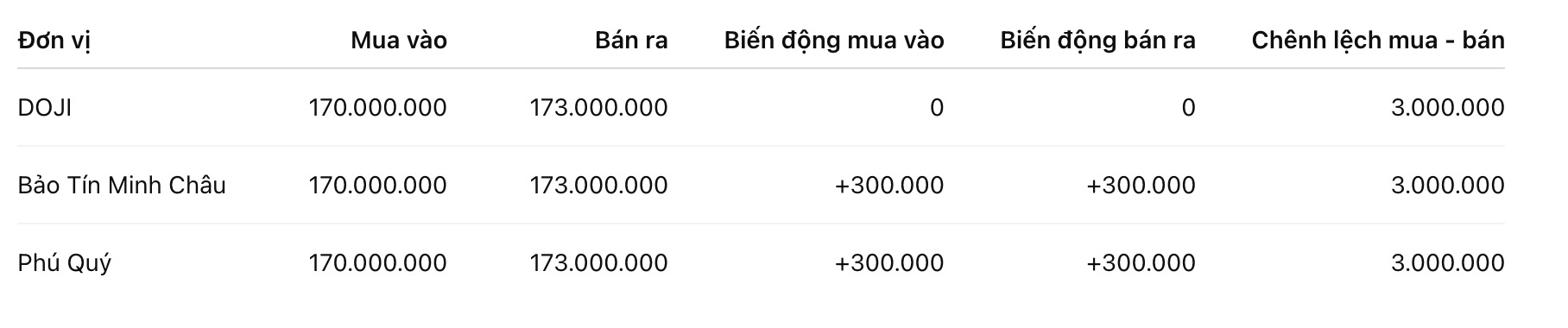
As of 6:00 AM, DOJI listed the price of gold rings at 170-173 million VND/tael (buying - selling), unchanged in both buying and selling directions. The difference between buying and selling prices is at 3 million VND/tael.
Bao Tin Minh Chau listed the price of gold rings at 170-173 million VND/tael (buying - selling), an increase of 300,000 VND/tael in both buying and selling directions. The difference between buying and selling prices is at 3 million VND/tael.
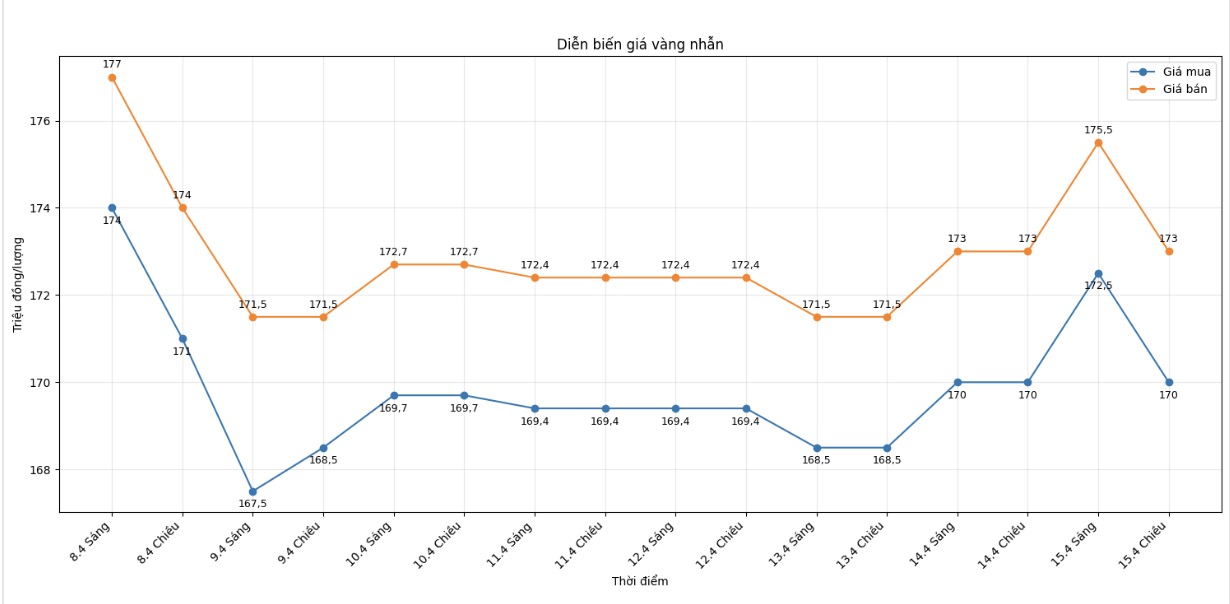
Phu Quy Jewelry Group listed the price of gold rings at 170-173 million VND/tael (buying - selling), an increase of 300,000 VND/tael in both buying and selling directions. The difference between buying and selling prices is at 3 million VND/tael.
Currently, the buying - selling price difference of gold is at a very high level, around 3 million VND/tael, posing a risk of losses for investors.
World gold price
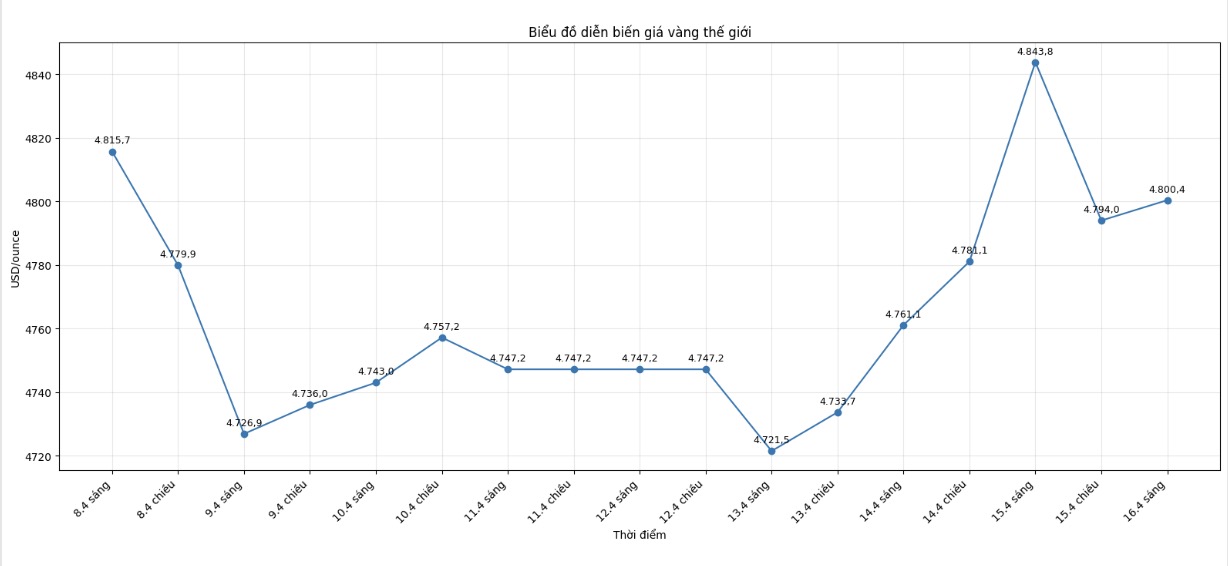
At 0:16 AM, world gold prices were listed around the threshold of 4,800.4 USD/ounce, down 10.4 USD compared to the previous day.
Gold price forecast
According to Kitco, gold prices slightly decreased after hitting a 3-week high the night before. Market developments show that short-term profit-taking activity is increasing, although price supporting factors are still present.
In the middle of Wednesday's trading session (US time), gold and silver prices fluctuated in opposite directions in the context of the market continuing to fluctuate strongly.
According to analysts, profit-taking pressure from short-term futures traders is the main factor causing gold prices to weaken after the precious metal just set a 3-week high last night.
However, the gold and silver markets still received some supporting information. Bloomberg said that hedge funds are becoming more and more pessimistic about the USD.
The prospect of resuming negotiations between the US and Iran, along with the possibility of reaching a peace agreement, has caused the greenback to almost lose all gains due to previous geopolitical tensions.
Bloomberg's USD index fell 1.9% in April, after rising 2.4% in March, when the US and Iran began discussing the possibility of resolving the conflict.
Bloomberg quoted the opinion that the weakening trend of the USD in the medium term is becoming increasingly clear, especially compared to key currencies such as euro, Japanese yen and Swiss franc.
Sharing the same view, Professor Kenneth Rogoff of Harvard University believes that the USD is still overvalued. According to him, the greenback may be about 20% higher than its real value and such overvaluation periods will often lead to a 5- to 6-year correction cycle.
Technically, experts believe that buyers on the June gold futures market are aiming to bring the closing price above the strong resistance level of 5,000 USD/ounce.
In the opposite direction, the short-term goal of the selling side is to pull the price down below the important support zone of 4,500 USD/ounce.
The nearest resistance levels are currently at 4,895.4 USD/ounce, followed by 4,950 USD/ounce. Meanwhile, the first support levels are determined at 4,800 USD/ounce and 4,750 USD/ounce.
In outside markets, Nymex WTI crude oil prices rose to around 92.5 USD/barrel. The USD index weakened slightly, while the yield on 10-year US Treasury bonds is currently around 4.25%.
Gold price data is compared to the previous day.
The world gold and silver market operates through two main pricing mechanisms. The first is the spot market, where the buying and selling and immediate delivery prices are listed. The second is the futures market, where prices are set for future delivery.
Due to the impact of year-end position restructuring and market liquidity, the December gold futures contract is currently the most actively traded contract on the CME exchange.
See more news related to gold prices HERE...