
SJC gold bar price
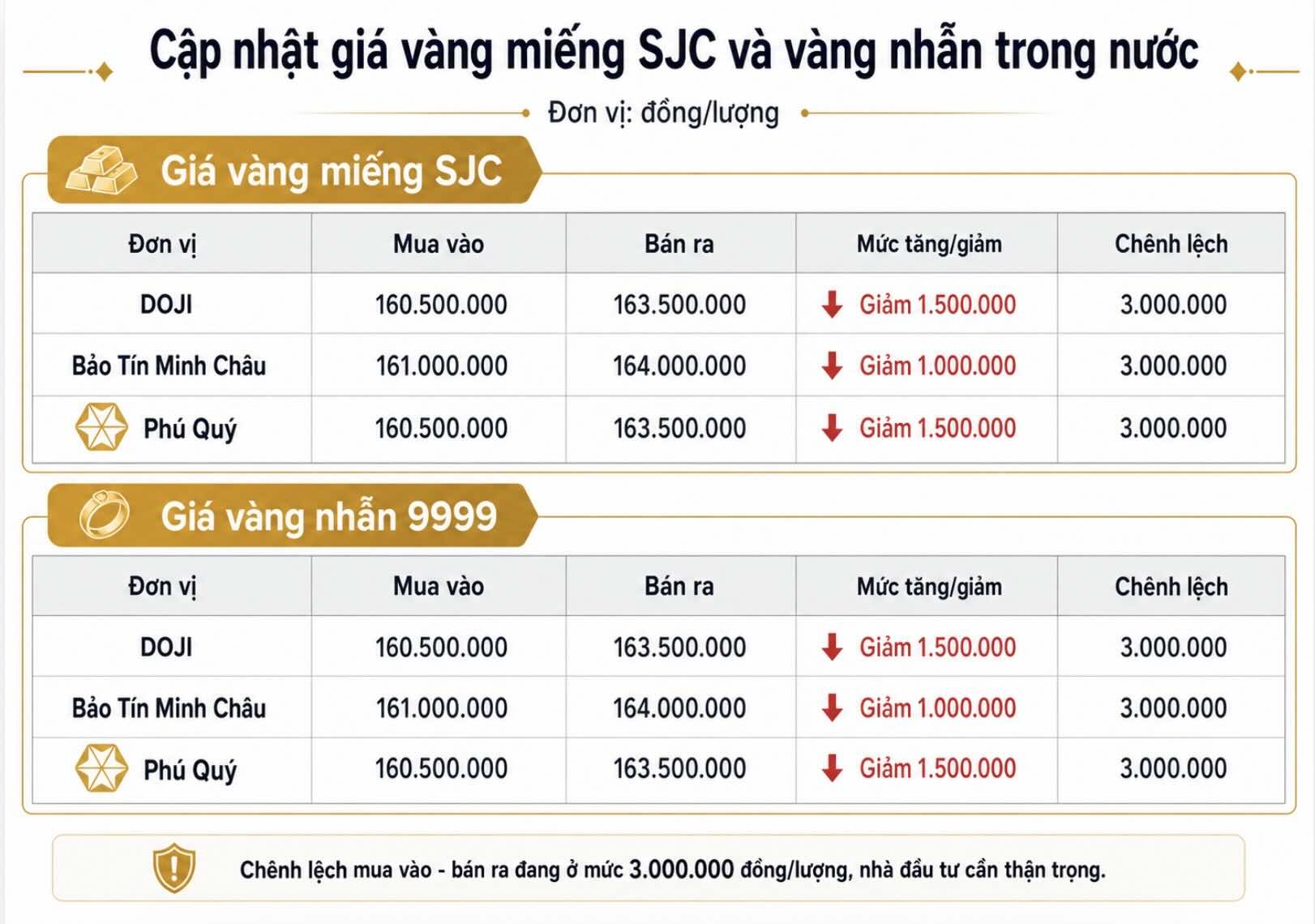
As of 6:00 AM on May 16, SJC gold bar prices were listed by DOJI at the threshold of 160.5-163.5 million VND/tael (buying - selling), down 1.5 million VND/tael in both buying and selling directions. The difference between buying and selling prices is at the threshold of 3 million VND/tael.
SJC gold bar price was listed by Bao Tin Minh Chau at the threshold of 161-164 million VND/tael (buying - selling), down 1 million VND/tael in both buying and selling directions. The difference between buying and selling prices is at the threshold of 3 million VND/tael.
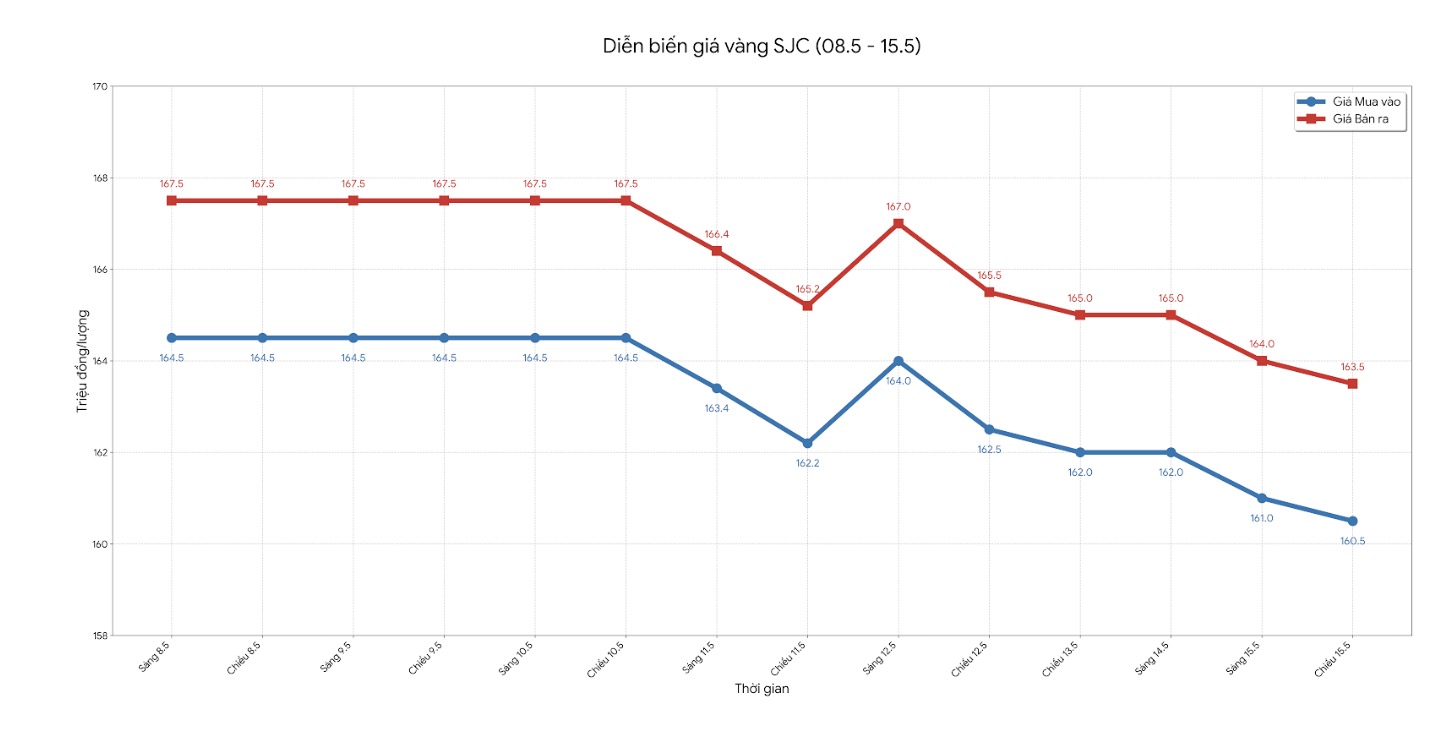
Phu Quy Jewelry Group listed SJC gold bar prices at 160.5-163.5 million VND/tael (buying - selling), down 1.5 million VND/tael in both buying and selling directions. The difference between buying and selling prices is at 3 million VND/tael.
9999 gold ring price
As of 6:00 AM, DOJI listed the price of gold rings at 160.5-163.5 million VND/tael (buying - selling), down 1.5 million VND/tael in both buying and selling directions. The difference between buying and selling prices is at 3 million VND/tael.
Bao Tin Minh Chau listed gold ring prices at the threshold of 161-164 million VND/tael (buying - selling), down 1 million VND/tael in both buying and selling directions. The difference between buying and selling prices is at the threshold of 3 million VND/tael.
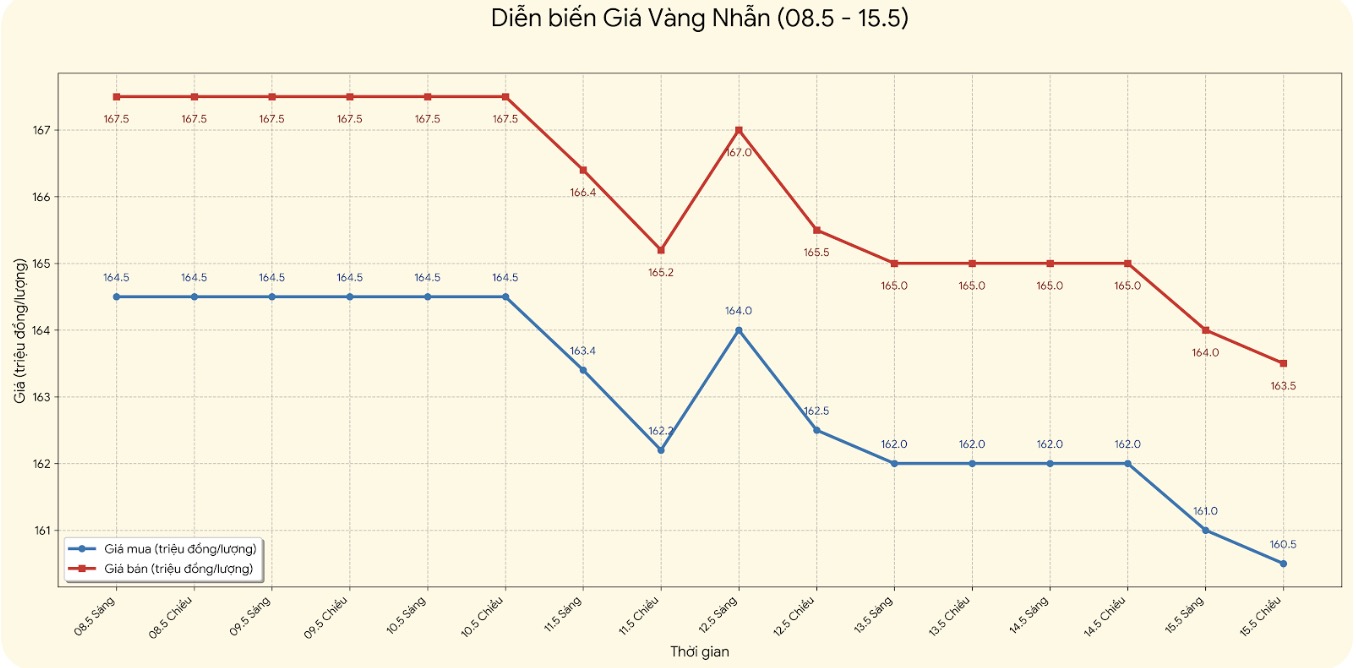
Phu Quy Gold and Gems Group listed the price of gold rings at 160.5-163.5 million VND/tael (buying - selling), down 1.5 million VND/tael in both buying and selling directions. The difference between buying and selling prices is at 3 million VND/tael.
The buying - selling price difference of gold is at a very high level, around 3 million VND/tael, posing a risk of losses for investors.
World gold price
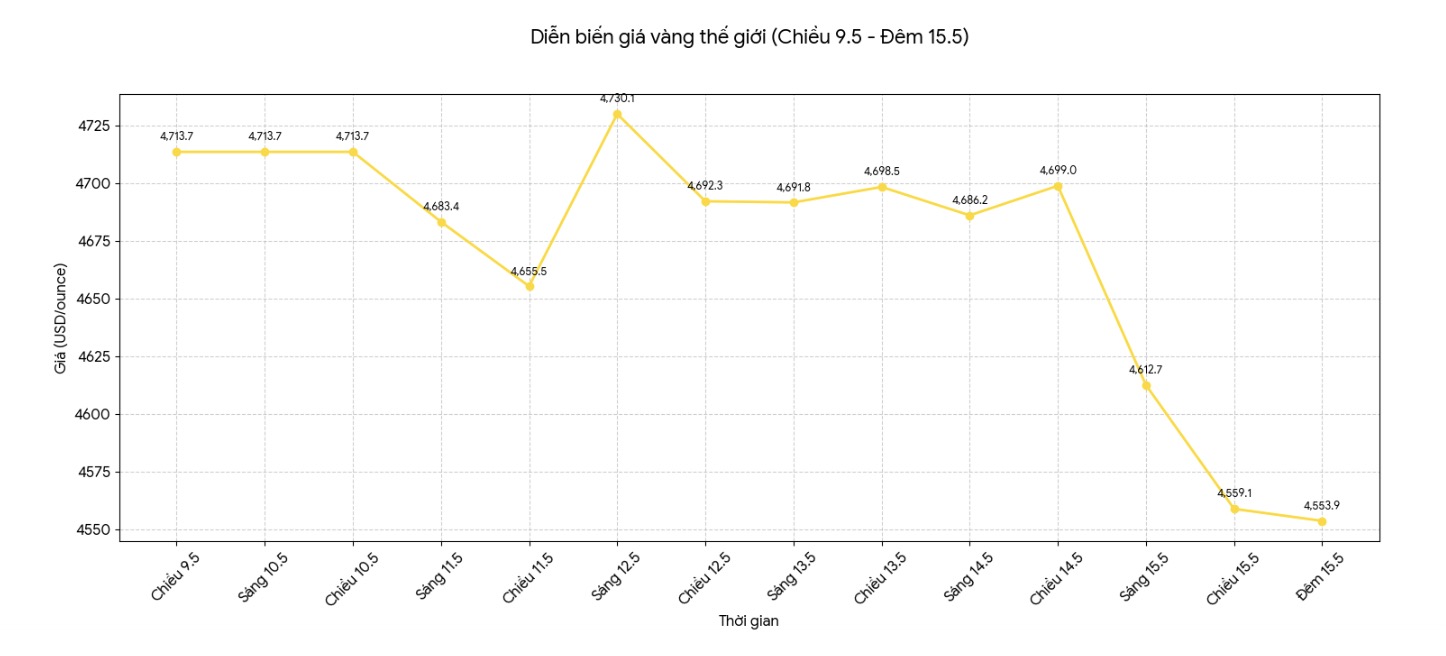
At 9:30 PM on May 15, world gold prices were listed around the threshold of 4,553.9 USD/ounce, down 125.9 USD compared to the previous day.
Gold price forecast
World gold prices continue to face strong downward pressure as the USD recovers, US Treasury bond yields rise, and fears of inflation from rising oil prices overwhelm safe-haven demand.
Spot gold at times retreated to around 4,550 USD/ounce, down more than 2%. Silver also fell sharply, showing widespread selling pressure on the precious metals market.
Gold's decline lasted for the fourth consecutive session, after a series of US inflation data this week made investors more cautious with the prospect of the US Federal Reserve (Fed) soon reducing interest rates. Consumer price indexes, production prices and import prices all reinforced the notion that price pressure has not cooled down significantly.
In that context, the yield of 10-year US Treasury bonds fluctuated around 4.5%, increasing the opportunity cost of holding gold - a non-performing asset.
Another factor putting pressure on gold is oil prices. Although tensions related to the Strait of Hormuz still partially support defense demand, WTI oil prices exceeding 100 USD/barrel and Brent approaching 109 USD/barrel have raised concerns about prolonged inflation. When expectations of interest rates remaining at a higher level for longer increase, gold often faces disadvantages.
In the opposite direction, geopolitical instability is still a factor that can limit the decline of precious metals. The Strait of Hormuz continues to be seen as a major variable for energy, inflation and the financial market. Transport flows through this region have not returned to normal, causing investors to still maintain part of their safe-haven demand.
Technically, the 4.541 USD/ounce zone is being considered a near support threshold for gold. If it penetrates this zone, the price may fall further back to around 4.503 USD/ounce, or even lower. Conversely, to improve the short-term trend, buyers need to pull the price back above the resistance zone of 4,605-4,637 USD/ounce.
According to analysts, the outlook for gold prices is currently quite volatile. Gold is still supported by geopolitical risks and defensive needs, but pressure from the USD, bond yields and expectations of the Fed holding high interest rates may cause prices to remain volatile in the short term.
Gold price data is compared to the previous day.
The world gold and silver market operates through two main pricing mechanisms. The first is the spot market, where the buying and selling and immediate delivery prices are listed. The second is the futures market, where prices are set for future delivery.
Due to the impact of year-end position restructuring and market liquidity, the December gold futures contract is currently the most actively traded contract on the CME exchange.
See more news related to gold prices HERE...


