
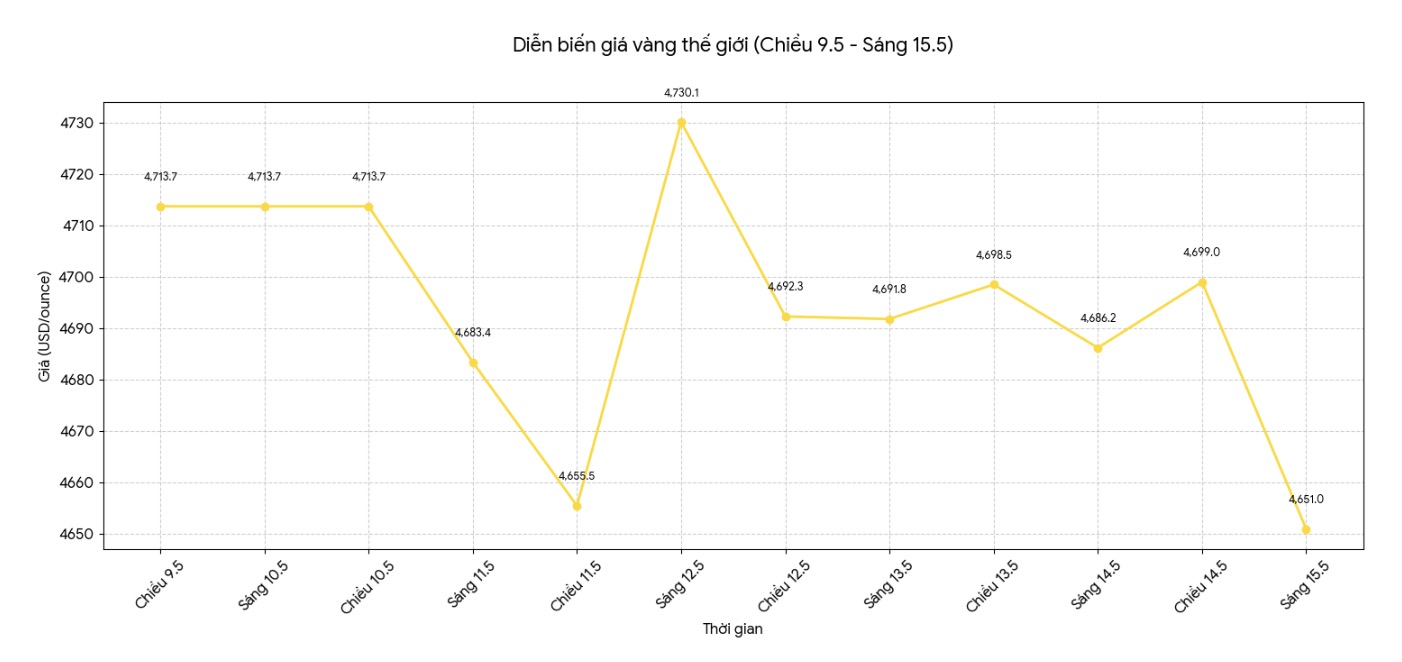
According to Kitco, the global commodity market is being strongly affected by tensions in the Middle East. While oil prices surged due to concerns about supply disruptions, gold prices adjusted down sharply after a previous period of hot growth.
Mr. James Steel - chief metal analysis expert at HSBC (one of the world's largest banking and financial services corporations) - said that the current developments do not mean that gold is losing its "safe haven" role, but reflect liquidity pressure in the financial market.
According to Mr. Steel, gold demand in China is still very strong. The difference between domestic gold prices in China and world gold prices is currently around 20 USD/ounce, showing that domestic buying power is maintained high, mainly from financial institutions.
He said that recent regulatory reforms in China and India have paved the way for insurance companies and asset management funds to accumulate physical gold. In addition, the People's Bank of China (PBoC) also continued to buy 8.1 tons of gold in the most recent month.
Assessing the plunge of gold after hitting a peak around 5,400 USD/ounce at the end of January, Mr. Steel said that the market had previously increased too sharply when speculative cash flow poured in massively.
There are many opinions that gold failed to play a safe haven role when prices fell amidst the escalating Iranian conflict. I think the opposite is true," Mr. Steel said.
According to HSBC experts, the sharp increase in oil prices has raised concerns about inflation, pulling bond yields and the USD up, while the stock market is weakening. In that context, investors need cash to compensate for losses in other markets and gold has become the most liquid asset.
Gold is like an insurance contract and in a period of strong volatility, investors have taken that'insurance contract' to exchange for cash" - Mr. Steel said.
HSBC also believes that the correlation between oil and gold prices has changed significantly compared to before. If in the 1970s and 1980s, the two types of assets often increased and decreased in the same direction, now this relationship is very weak, even sometimes reversing direction.
In addition, this bank believes that gold still plays an important role in the strategy of diversifying investment portfolios, especially in the context of geopolitical instability and the increasing trend of dedollarization globally.
HSBC's commodity strategy experts Willem Sels and Lucia Ku continue to maintain a positive view on gold in the medium and long term.
According to HSBC, although gold prices have recently been pressured by the strengthening USD and expectations of high interest rates, the fundamental factors supporting the market remain, including safe-haven demand, central bank gold buying activity and asset diversification demand from investment funds.
This bank believes that the current volatility is only short-term and gold is still an attractive asset in the context of the global financial market still unstable.


