
SJC gold bar price
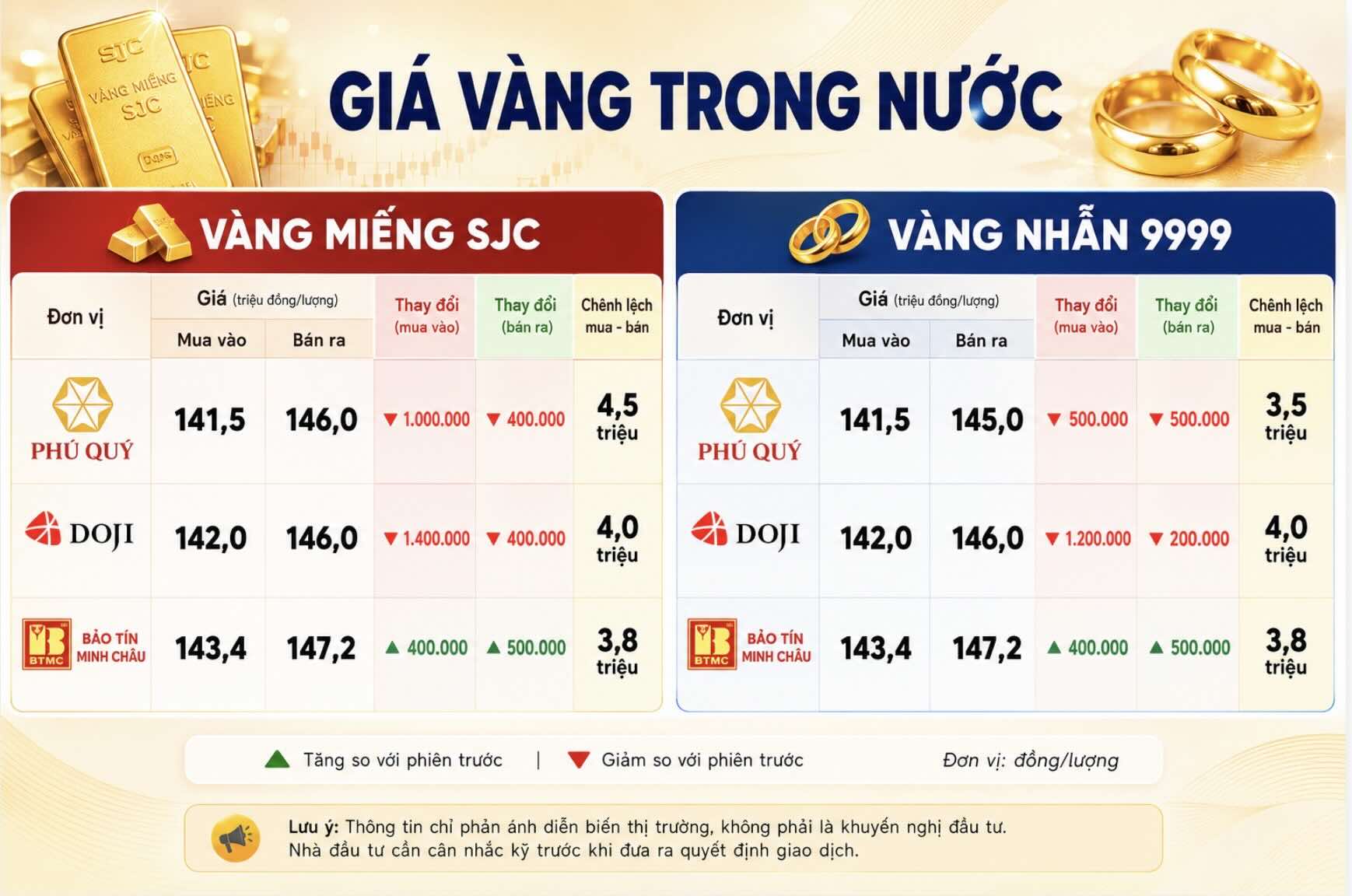
As of 6:00 AM, Phu Quy Jewelry Group listed SJC gold bar prices at 141.5-146 million VND/tael (buying - selling), down 1 million VND/tael on the buying side and down 400,000 VND/tael on the selling side. The difference between buying and selling prices is at 4.5 million VND/tael.
SJC gold bar price was listed by DOJI at 142-146 million VND/tael (buying - selling), down 1.4 million VND/tael on the buying side and down 400,000 VND/tael on the selling side. The difference between buying and selling prices is at 4 million VND/tael.
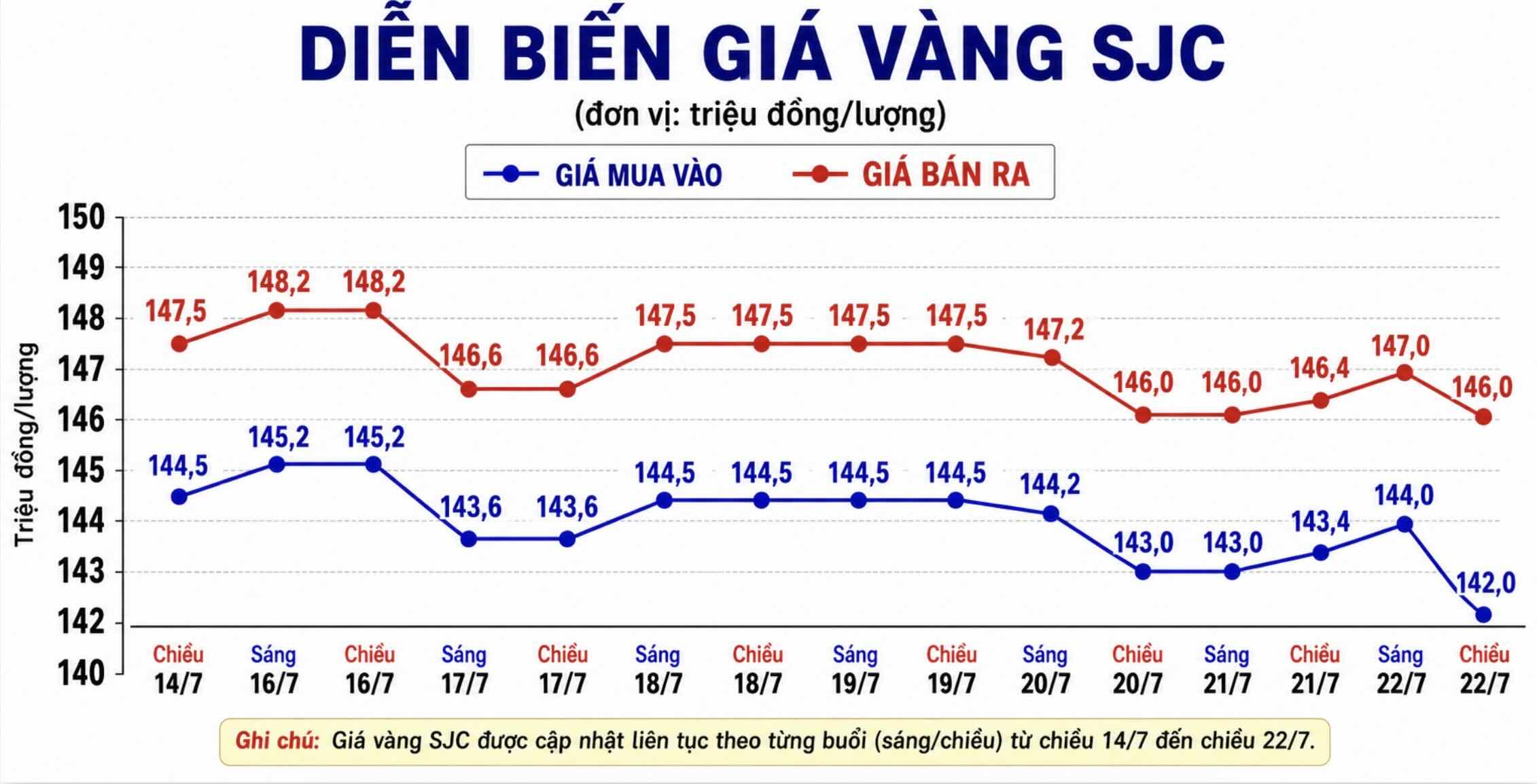
SJC gold bar price was listed by Bao Tin Minh Chau at the threshold of 143.4-147.2 million VND/tael (buying - selling), an increase of 400,000 VND/tael on the buying side and an increase of 500,000 VND/tael on the selling side. The difference between buying and selling prices is at the threshold of 3.8 million VND/tael.
9999 gold ring price
As of 6:00 AM, Phu Quy Gold and Gems Group listed the price of gold rings at 141.5-145 million VND/tael (buying - selling), down 500,000 VND/tael in both buying and selling directions. The difference between buying and selling prices is at 3.5 million VND/tael.
DOJI listed gold ring prices at 142-146 million VND/tael (buying - selling), down 1.2 million VND/tael on the buying side and down 200,000 VND/tael on the selling side. The difference between buying and selling prices is at 4 million VND/tael.
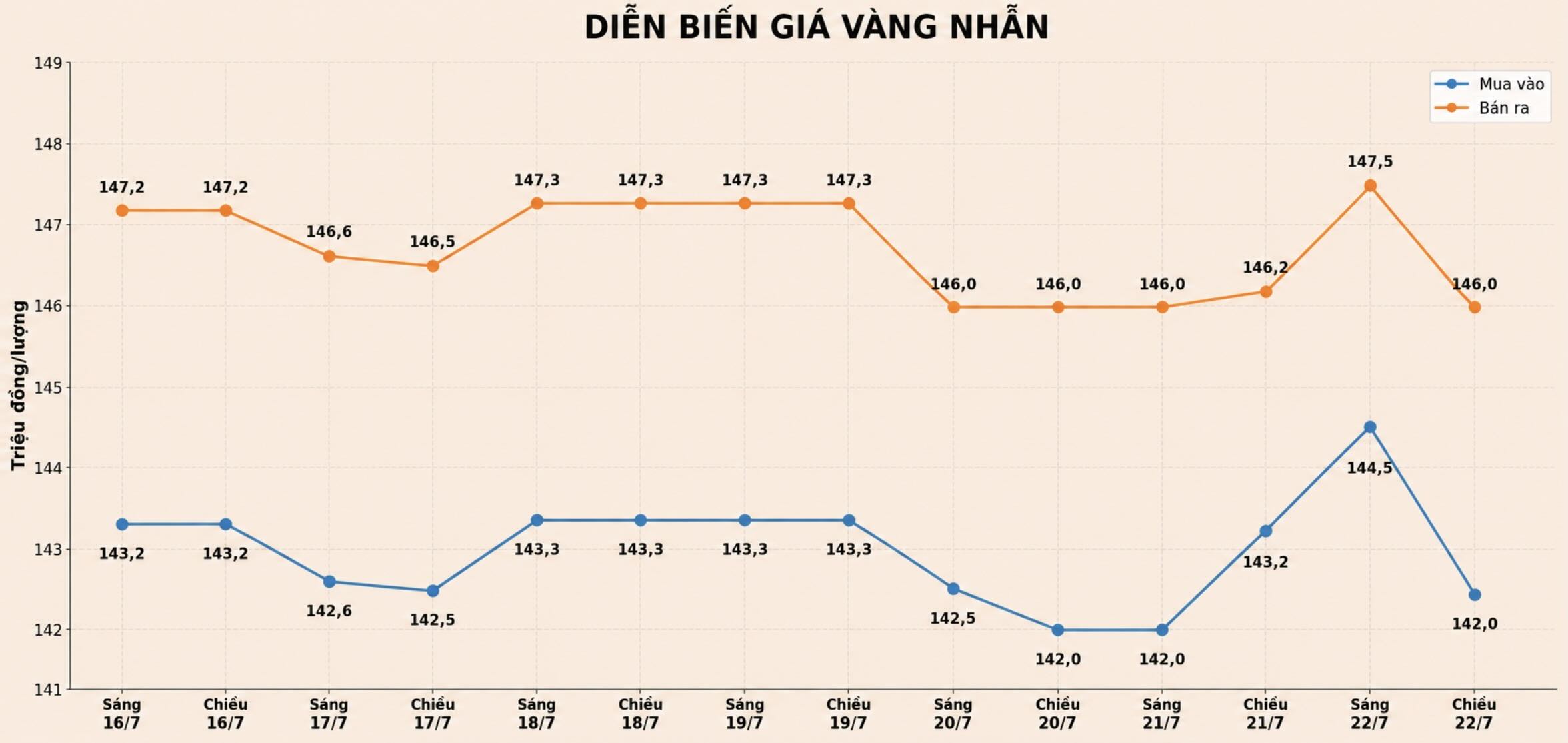
Bao Tin Minh Chau listed gold ring prices at the threshold of 143.4-147.2 million VND/tael (buying - selling), an increase of 400,000 VND/tael on the buying side and an increase of 500,000 VND/tael on the selling side. The difference between buying and selling prices is at the threshold of 3.8 million VND/tael.
World gold price
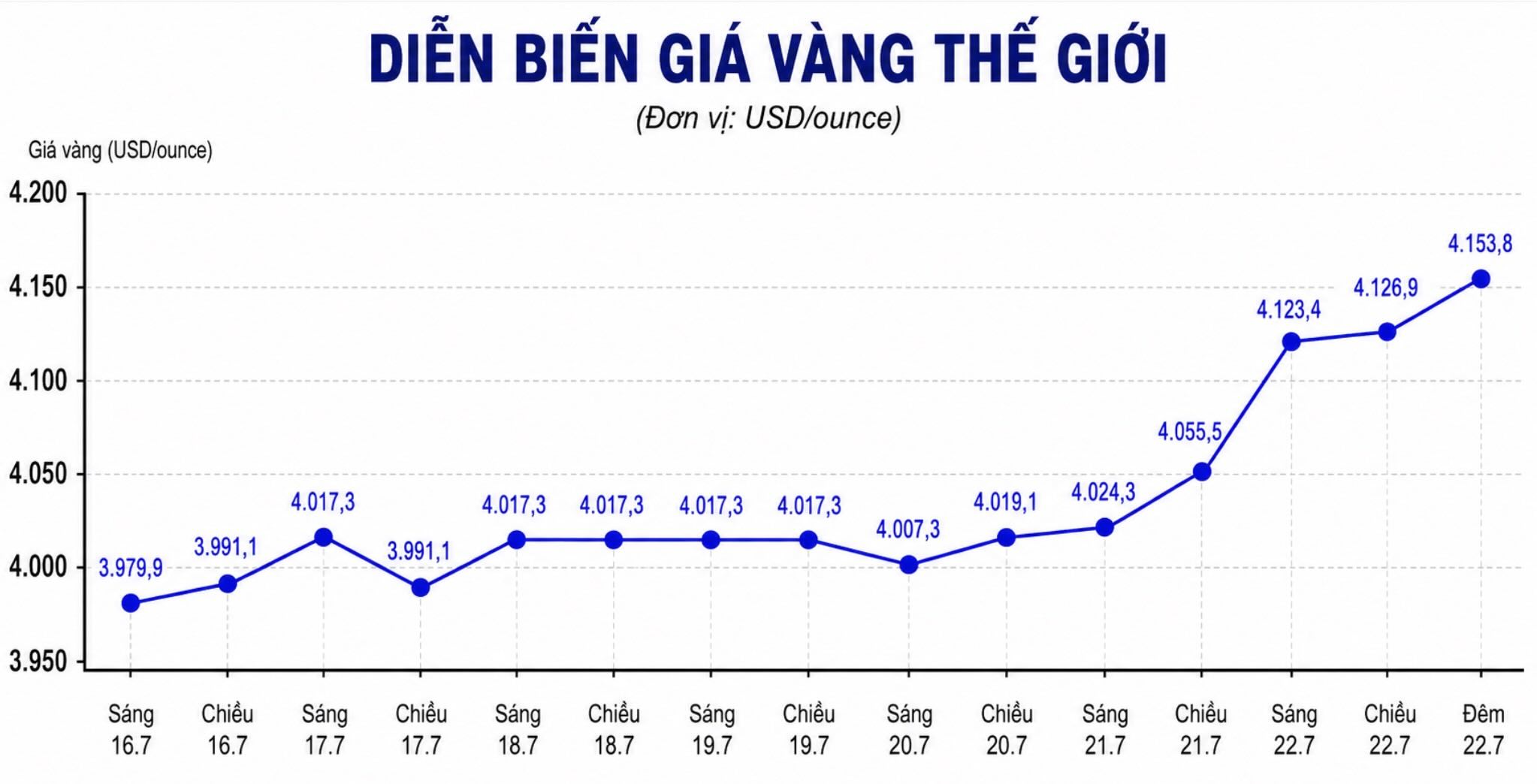
At 11:15 PM on July 22, world gold prices were listed around the threshold of 4,153.8 USD/ounce, up 88 USD.
Gold price forecast
World gold prices are maintaining a recovery momentum after surpassing the 4,100 USD/ounce zone, but short-term prospects are still affected by monetary policy, bond yields and geopolitical risks.
According to Schroders, the biggest pressure on gold in the next few months still comes from expectations that the US Federal Reserve (Fed) will maintain high interest rates. Although US inflation has somewhat eased, retail, job and manufacturing data still show that the economy has not weakened significantly. The market is therefore leaning towards the possibility that the Fed will keep interest rates unchanged in the next meeting, instead of soon switching to easing.
The yield of 10-year US government bonds is around 4.6% and the USD index near 101 points continues to limit the upward momentum of the precious metal. High oil prices also increase concerns about inflation, prolonging high interest rate risks.
In the opposite direction, gold still receives support from shelter demand and selling position closing activities. Tensions around the Strait of Hormuz and risks on maritime routes in the Red Sea increase defense demand.
In the short term, maintaining the 4.080 USD/ounce zone will help the recovery trend to be maintained. If it falls below the 4.050-4.040 USD/ounce zone, the upward momentum may weaken. The 4.040 USD/ounce zone is currently a noteworthy resistance level.
In the long term, Schroders believes that the gold buying demand of central banks continues to be an important foundation. The People's Bank of China continues to add gold to reserves despite high prices, showing that the precious metal continues to be considered a strategic asset. The proportion of gold in China's foreign exchange reserves is still low compared to many economies, so there is still room to buy more.
A survey by the World Gold Council (WGC) and the Official Monetary and Financial Institutions Forum (OMFIF) also shows that many central banks plan to increase their gold holdings.
Gold price data is compared to the previous day.
The information in the article only reflects market developments, not investment recommendations.
See more news related to gold prices HERE...


