
Gold prices no longer depend on USD
World gold prices are facing difficulties as they have repeatedly tried to hold the 5,000 USD/ounce mark amid geopolitical tensions between the US, Israel and Iran, which have strengthened the USD due to liquidity defense needs.
However, according to Mr. Robert Minter – ETF Strategy Director at ABRDN (an asset management company) – investors should not value gold based on traditional relations with the USD.
In an exchange with Kitco News, Mr. Minter said that the correlation between gold, interest rates and the USD has weakened since 2022 and is unlikely to return to the way it was before.
According to him, the factor that has a greater impact on the long-term trend of gold prices is the strong expansion of the balance sheets of central banks globally.
He said that since 1999, the balance sheet size of major central banks has increased by about 1,000%. In the same period, gold prices also increased at a similar rate.
This reflects the reality that the purchasing power of legal currencies is being eroded as governments continuously expand their monetary supply to support the economy.

Gold becomes a tool to protect purchasing power
According to Mr. Minter, more and more individual and institutional investors are interested in protecting assets against the decline in purchasing power.
Financial advisors noted that customers are increasingly questioning how to protect their investment portfolios when living costs increase.
In that context, commodities – especially gold – are seen as a tool to compensate for currency devaluation.
ABRDN experts believe that significant downward pressure on gold prices can only occur when countries sharply reduce public debt.
However, this is unlikely to happen in the current context when many large economies still have to maintain expanded fiscal policy.
According to him, countries using large legal tenders in the world have not yet implemented effective solutions to reduce public debt, thereby continuing to create a favorable environment for gold.
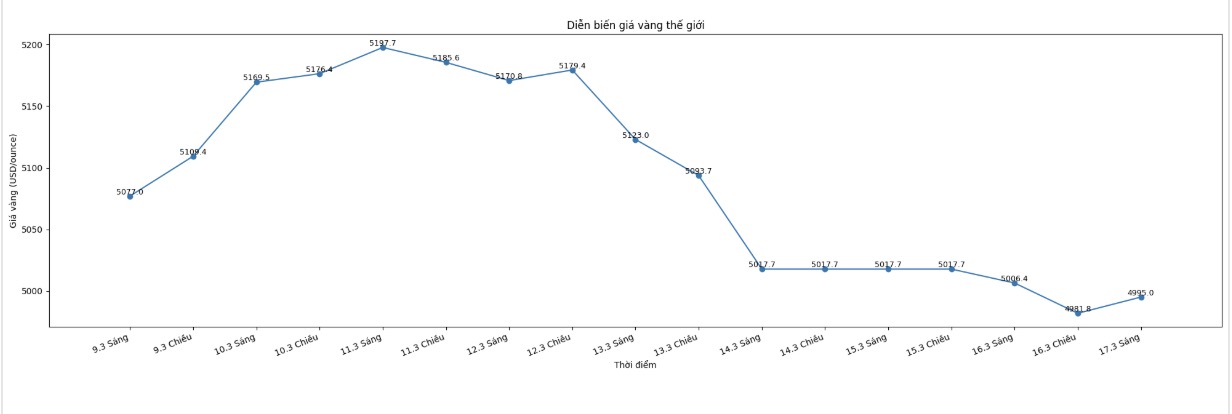
Central banks still actively buy gold
Gold buying demand from central banks continues to be an important supporting factor for the market.
Although last year's purchase volume decreased slightly to 863 tons, compared to more than 1,000 tons per year in the previous three years, the sharp increase in gold prices caused total actual spending by central banks to increase.
The average gold price last year was about 44% higher than the previous year, meaning governments had to spend about 25% more capital to maintain the gold buying rate.
According to Mr. Minter, this shows that the demand for gold hoarding of countries is not weakening at all.
Gold price may rise to 5,500 USD/ounce
In the context of increasing economic and geopolitical risks, experts predict that gold prices could reach about 5,500 USD/ounce in the next 12 months.
According to Mr. Minter, this is still a rather cautious forecast, because many investors are still outside the market after the strong increase in gold in recent years.
He believes that if gold prices continue to rise, outgoing cash flow may return, thereby creating more momentum for the long-term upward trend of this precious metal.


