
According to Axel Merk - founder and CEO of Merk Investments, gold investors should not assume that a US Federal Reserve (Fed) focusing more on controlling inflation will derail the long-term upward trend of this precious metal.
Although new Fed Chairman Kevin Warsh has signaled a tougher approach in monetary policy, Mr. Merk believes that short-term resistance to gold may eventually strengthen the long-term foundation of the market. This comes from reducing policy-induced instability and drawing investors back to the worsening US fiscal situation.
At the Fed's first press conference on Wednesday, Mr. Warsh considered the fight against inflation as a central pillar in his leadership term, while emphasizing the importance of price stability. The market views this statement in a tougher direction, as traders raise expectations about the possibility of interest rate hikes in the near future.
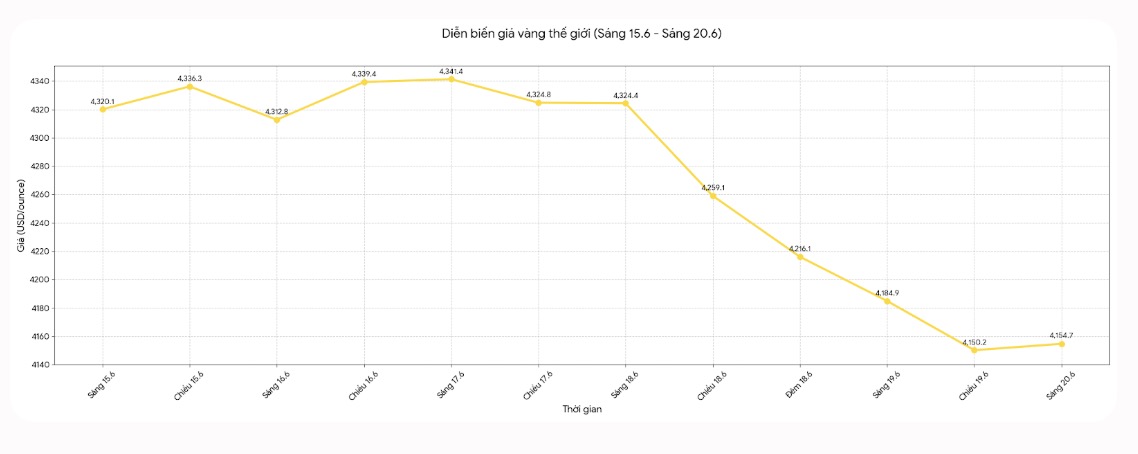
However, Mr. Merk believes that investors should not automatically see a tough Fed as an unfavorable factor for gold.
If other factors remain unchanged, Kevin Warsh is a drag on gold prices" - Mr. Merk said - "But I really think this will reduce volatility and that should be seen as a positive factor".
According to Mr. Merk, one of Mr. Warsh's most important reforms is the effort to reduce the Fed's dependence on policy orientation first and to make the financial market play a greater role in signaling economic conditions. He believes that many years of Fed over-communication and continuous policy signaling have distorted the market, while amplifying volatility.
The Fed always does what they have to do, but often with a very large delay and causing more damage," he said, "Even avoiding major mistakes has helped reduce volatility.
Besides creating unnecessary fluctuations in the market, Mr. Merk also pointed out that the Fed's economic forecasts and "dot plot" charts have never been accurate forecasting tools.
He added that for gold investors, reducing monetary policy instability could bring unexpected benefits.

Instead of focusing too much on each Fed statement, each forecast in the "dot plot" chart or each interest rate expectation, investors may begin to pay more attention to structural issues that are still strongly supporting gold, especially the growing debt burden of the US.
For gold advocates, whether good or bad, we are having unsustainable budget deficits" - Mr. Merk said - "The market should focus more on the fiscal aspect.
The above assessments are made in the context that many analysts continue to argue whether higher interest rates and high bond yields are significant barriers to gold prices. From a common perspective, rising yields will increase the opportunity cost of holding non-performing assets like gold.
However, Mr. Merk disagrees with the view that opportunity costs should be a decisive factor in whether investors hold precious metals or not.
He noted that gold plays many roles in the investment portfolio, including preserving purchasing power during periods of monetary instability and weakening fiscal situations.
I own gold for many reasons" - he said - "That's a story of preserving purchasing power.
Mr. Merk added that even if Mr. Warsh succeeds in restoring the credibility of monetary policy and making progress in controlling inflation, this process will take many years. He reiterated that former Fed Chairman Paul Volcker - who was widely recognized for his role in curbing inflation in the early 1980s - did not bring inflation to the desired level immediately.
In addition to the Fed's policy, Mr. Merk believes that part of the recent pressure on gold prices comes from geopolitical developments, especially the market's response to tensions related to Iran and the impact of this factor on oil prices, inflation expectations as well as real interest rates.
However, he predicts these relationships will gradually normalize over time.
I guess that correlation will be broken," he said, referring to the recent link between gold prices and oil prices, "I think that would be a very positive factor for gold.


