
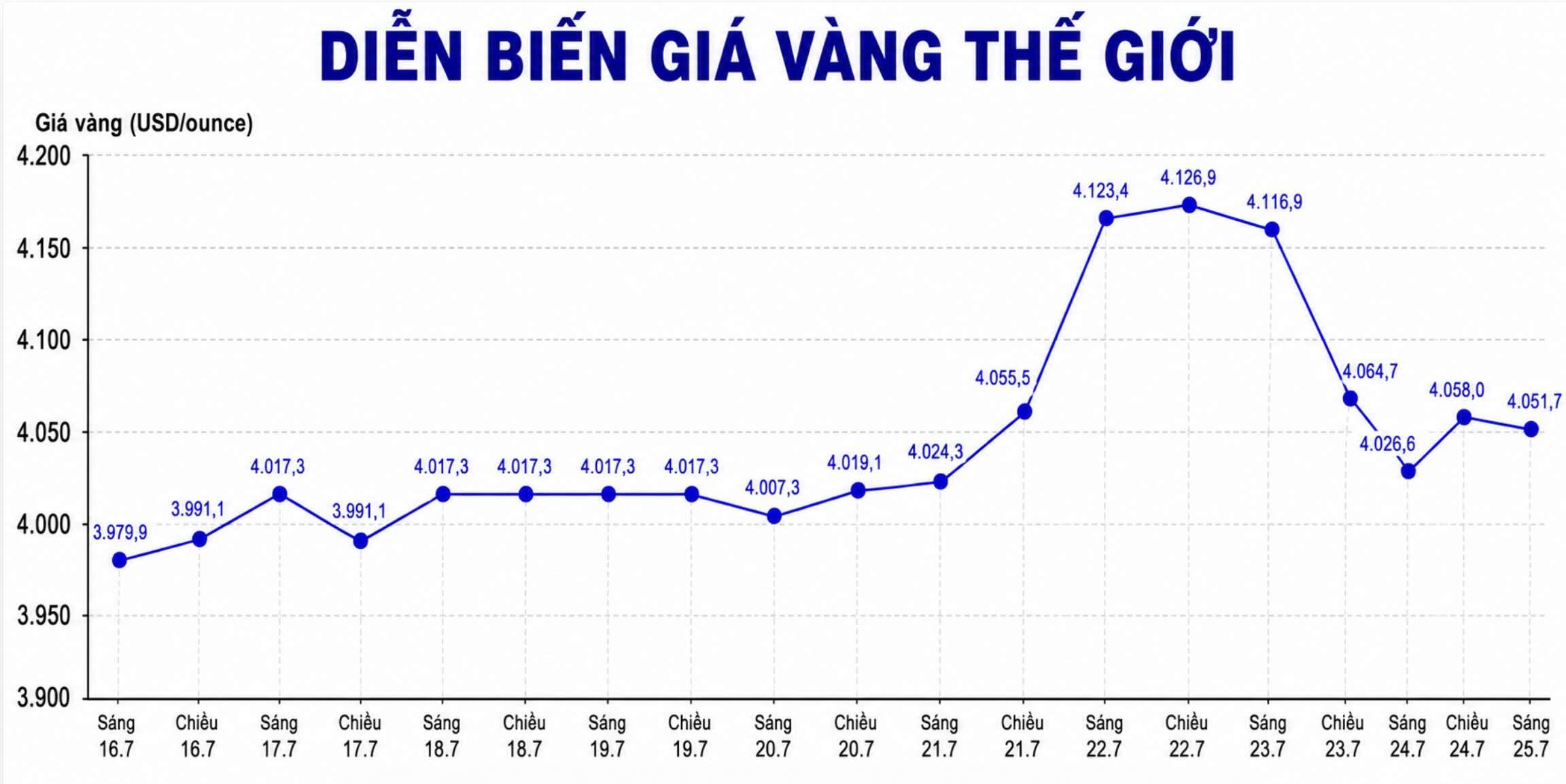
After a relatively quiet week of economic information, the gold market is preparing to enter a stage that may be decisive for the short-term price trend.
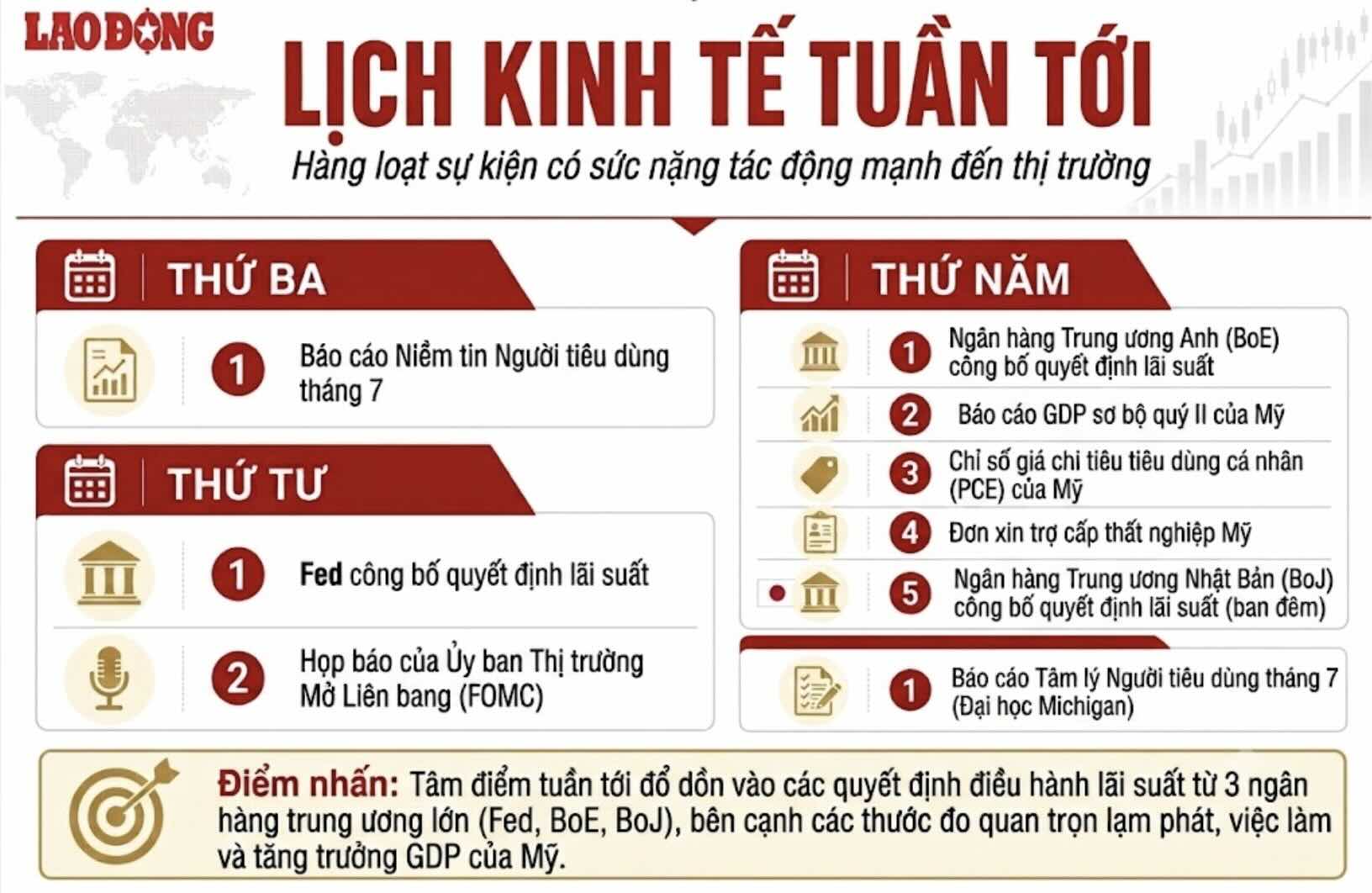
A series of important reports are expected to be released, including consumer confidence, GDP growth, the Price Index of Personal Consumption (PCE) and the number of unemployment claims in the US.
In addition, investors will closely monitor the monetary policy decisions of the US Federal Reserve (Fed), the Bank of England (BOE) and the Bank of Japan (BOJ).
Market focuses on Fed decisions
The first noteworthy piece of information this week is the US consumer confidence report for July, scheduled to be released on Tuesday morning.
This index reflects consumers' assessment of the current economic situation as well as prospects in the coming time. The report's results may affect US consumer expectations, economic growth and monetary policy.
The focus of the market will be on Wednesday afternoon, when the Federal Open Market Committee announces the interest rate decision, followed by the Fed press conference.
Not only deciding interest rates, the agency's message on inflation prospects, growth and policy orientations in the following months also has a strong impact on the USD, bond yields and gold prices.
Gold is often under pressure when interest rate expectations remain high, causing the USD and bond yields to rise. Conversely, softer signals about monetary policy may improve the attractiveness of the precious metal.
Therefore, any change in the Fed's assessment of the economy could cause gold prices to fluctuate significantly.
GDP and inflation could create major fluctuations
On Thursday, the market continued to receive a series of important information.
The Bank of England will announce its monetary policy decision in the morning. After that, the US will announce preliminary Q2 GDP figures, the PCE index and the weekly report on unemployment claims.
GDP data will provide an initial overview of the growth rate of the US economy in the second quarter. If growth is stronger than expected, the market may increase expectations that the Fed will continue to maintain its cautious policy.
Conversely, the clear signs of economic weakness may boost demand for gold as a risk hedging asset.
The PCE index is also noted because it is one of the important inflation measures used by the Fed in the process of building monetary policy.
A report shows that persistent price pressure may be detrimental to gold prices. Meanwhile, the signal of cooling inflation will create more basis for the market to expect loose monetary policy in the future.
At the same time, the number of unemployment claims will help investors further assess the health of the US labor market.
The monetary policy decision of the Bank of Japan announced later may also affect the foreign exchange market and global investment sentiment.
Gold prices face risky week
The trading week closed with a revised consumer sentiment report from the University of Michigan in July.
This data may add more information about inflation expectations as well as the views of US households on economic prospects.
With a dense schedule of announcements, gold prices are at risk of experiencing strong fluctuations. The market's reaction is not only dependent on individual reports but also influenced by how data changes Fed interest rate expectations.
If economic and inflation data send opposing signals, gold prices may struggle in a large range. In case the data consolidates a clear policy direction, the precious metal may form a new trend after this important trading week.
The article only updates market developments and economic data that may affect gold prices, not investment recommendations. Investors need to carefully consider information, assess risks and consider financial conditions before making a decision.


