
According to Mr. Charlie Morris - Investment Director (CIO) and founder of ByteTree, the gold rally is likely to continue in 2026, even as Bitcoin, artificial intelligence (AI) and technology stocks may enter the correction phase. Notably, the weakening of the cryptocurrency market could also become a supporting factor for silver prices in the coming time.
ByteTree is the unit that builds the BOLD index, combining Bitcoin and gold according to the risk allocation method. On that basis, the 21Shares BOLD ETP fund is listed in many European markets.
The core theory of the BOLD index is that gold and Bitcoin are two alternative assets with low correlation, so balancing the portfolio between these two assets brings a big advantage in the long term.
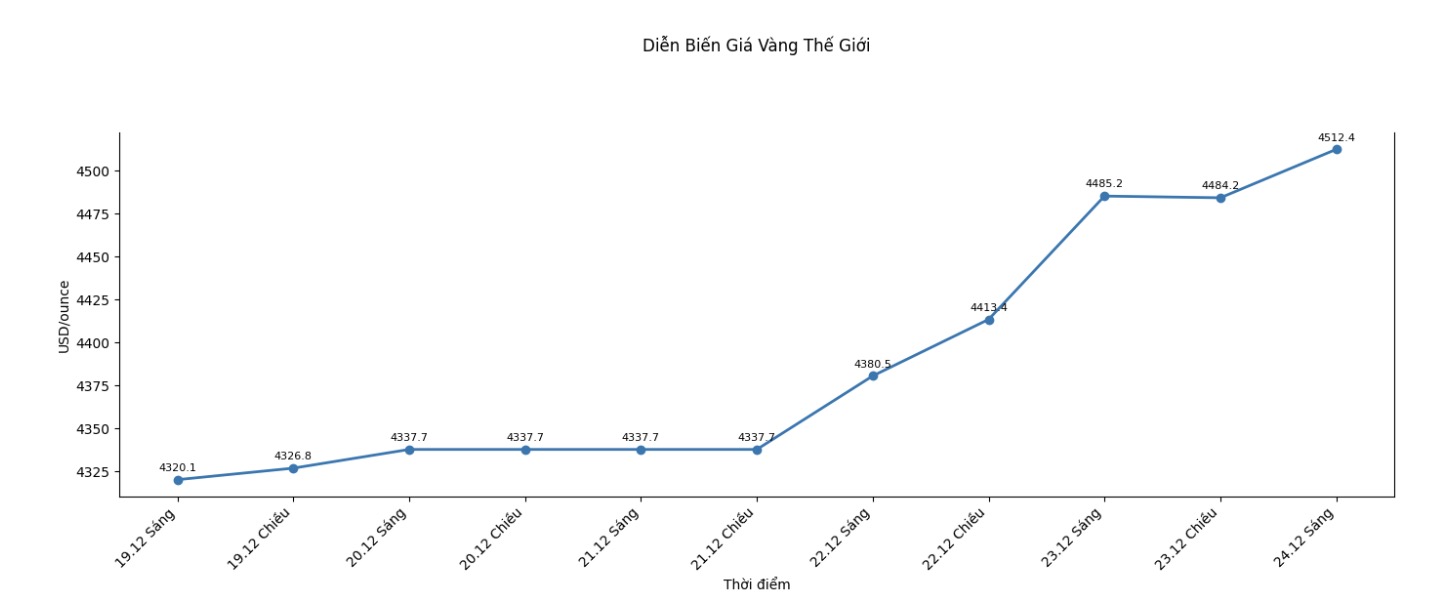
Mr. Morris said he is still very optimistic about the long-term outlook for both Bitcoin and gold. Five years ago, when the precious metals market had not yet entered its current strong uptrend, he predicted that gold prices could reach $7,000/ounce by 2030 - a figure that was considered beyond imagination at that time. However, with gold prices having risen by about $2,500 in just the past five years, this forecast is increasingly taken seriously.
Normally I dont often give price forecasts, but in 2020 I did. And now, it doesn't look as silly as it was before, Morris told Kitco News.
According to him, his initial thesis was based on expectations of long-term inflation in Western economies increasing from about 2% to 4%, along with governments continuously loosening currencies. In reality, currency inflation has occurred, although consumer inflation has not yet broken out strongly. However, he believes this is just a matter of time.
With the current long budget deficit, it is difficult for that huge cash flow not to flow into the real economy and cause inflation. Sooner or later, this will happen, he said.
Regarding the relationship between Bitcoin and gold, Mr. Morris emphasized that these two assets do not compete directly with each other. Gold is a reserve asset of the real world, while Bitcoin is a reserve asset of the internet world, he explained.
Accordingly, gold prices are often associated with factors such as bond yields and real interest rates, while Bitcoin fluctuates with technology stocks and internet-related assets.
Unlike many people who follow the Supplementary Bitcoins Sect, Mr. Morris does not believe that Bitcoin will soon become a reserve asset of central banks.
Its almost impossible, at least in my lifetime. That role still belongs to gold, he said.
From this perspective, the long-term investment strategy that Mr. Morris proposed is quite clear: Hold both gold and Bitcoin, because these two assets often take turns leading the market.
As gold cools down, Bitcoin tends to break out, and vice versa. They take turns taking turns, he commented.
Currently, according to him, Bitcoin is in a state of "over-selling", while gold and silver are in the "over-buy" zone. This clearly reflects the contrast in investor psychology: One side is very "hot", the other side is forgotten.
However, in the long term, he still believes that both gold and Bitcoin have room for growth, as the participation of institutional and individual investors is still low.
Organizing investors are still lacking in gold. As for Bitcoin, the allocation in traditional portfolios is almost zero, he said.
As for silver, Mr. Morris said that this metal could benefit in the short term from the correction of the cryptocurrency market.
Previously, speculative cash flow left silver to run to digital assets. When that fever subsided, silver received attention again, he commented. However, he also noted that silver should only be viewed as a cyclical investment asset.
You dont need to own silver for a long time, you just rent it. Gold and Bitcoin are the assets to hold, he concluded.
From a market perspective, Mr. Morris believes that the Western public's skepticism about the role of gold is a positive signal.
Only when everyone agrees that gold is an obvious choice will the peak really come true. And that has not happened yet, he said.
In Vietnam, Bitcoin and other cryptocurrencies have not been recognized as a legal payment method and are not protected by law. Investors need to be cautious, avoiding risks from strong price fluctuations and fraud related to cryptocurrency.


