
The biggest risk in the short term: Oil prices and inflation
In the latest research report on the precious metals market, Mr. Bart Melek - Head of Commodity Research at TD Securities investment bank (investment banking department under TD Bank Group - one of the largest financial groups in North America), warned investors that gold prices are likely to retreat deeply below the 3,900 USD/ounce mark before hitting a bottom in the current downward correction.
However, this expert also emphasized that the cooling down of gold will create a strategic buying opportunity, because the long-term price increase cycle of this market has not yet ended.
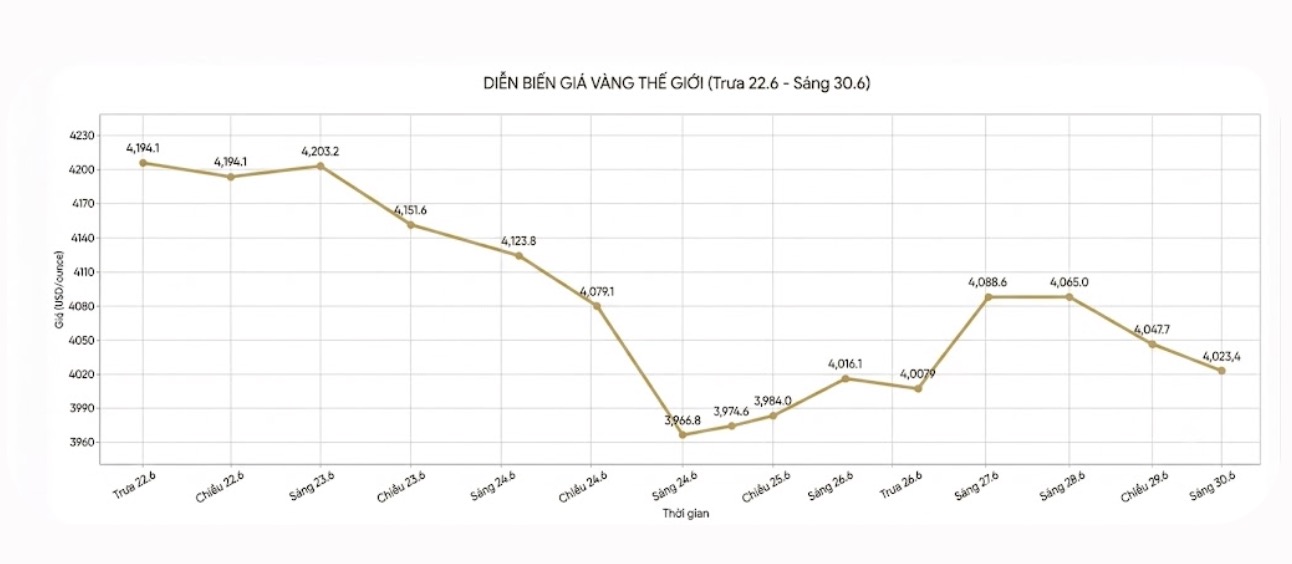
According to Mr. Melek, the biggest risk to gold in the short term is still oil prices - a factor that is forecast to continue to ignite inflationary pressure.
The disruption in the Strait of Hormuz is eroding inventory to a historic low, leading to a major risk that the crude oil market, which is being oversold, may recover strongly" - he wrote in the report - "We believe that Brent oil can still reach the 90-110 USD/barrel mark, raising inflation expectations and strengthening the policy tightening trend of central banks. This will increase the opportunity cost for holding gold".
Despite recent peace talks, the conflict in the Middle East has not yet ended as Iran and the US continuously have airstrikes in retaliation against each other. Brent crude oil is currently trading above the 73 USD/barrel mark, up more than 1% in the day.
Mr. Melek added that even if the peace agreement is maintained and oil begins to circulate freely again through the Strait of Hormuz, the market still needs time to stabilize and regenerate inventory to meet continuous consumption demand.
With the inverse correlation of gold against rising oil prices and a stronger USD, sustainable high energy prices could cause precious metal prices to continue to fall in the coming months. Markets may begin to assess the risk of widespread fuel shortages in many regions of the world. Even if oil flows resume today, these restrictions are still likely to occur" - expert Bart Melek said.

Bright future in 2027
Despite facing rising risks, Mr. Melek said that the gold market still has a solid foundation for strong recovery in 2027, with the target price potentially exceeding 5,300 USD/ounce.
Economic easing and curbed capital flows related to the war with Iran will ultimately create momentum to increase gold prices. Meanwhile, lower inflation expectations and the Fed shifting policy focus to the goal of maximizing employment, along with liquidity pumping measures that may be implemented to compensate for economic losses from energy supply shocks... will continue to support the precious metal to set new records" - a TD Securities expert predicted.
In particular, with the US public debt potentially reaching $40,000 trillion and the budget deficit continuing to remain high, concerns about financial repression and currency devaluation are at risk of re-emerging.
Although the Fed currently maintains a tough stance on the inflation problem, Mr. Melek believes that the current Commission does not have any figure willing to "break the inflation back" (fight inflation at all costs). This environment will boost safe-haven demand for gold.
The Fed is likely to be led by a Federal Open Market Committee (FOMC) with members with relatively moderate views in May 2026. They see the 2% inflation target as a guideline rather than a rigid limit that must be achieved at all costs," he analyzed.
This expert also believes that some investors and central banks may be concerned that the Fed will implement a form of quantitative easing to curb long-term yields and reduce funding costs. This means that US valuable papers (such as bonds) will find it difficult to fully offset the inflation risk for investors.
With the ability to closely track inflation in the long term thanks to the characteristics of labor costs and production capital, gold may become a safer and more attractive haven than Treasury bonds" - Mr. Melek concluded.


