
World gold prices continued to plummet in the trading session on July 17, as tensions in the Middle East pushed oil prices up, increasing concerns about inflation and strengthening expectations that the US Federal Reserve (Fed) will maintain a tight monetary policy for longer.
As of 10 am Vietnam time, spot gold prices fell 1.71% to 3,978.23 USD/ounce, after losing about 2% at one point and falling to the lowest level since July 1. Meanwhile, gold futures for August delivery slightly decreased by 0.22% to 3,983.40 USD/ounce.
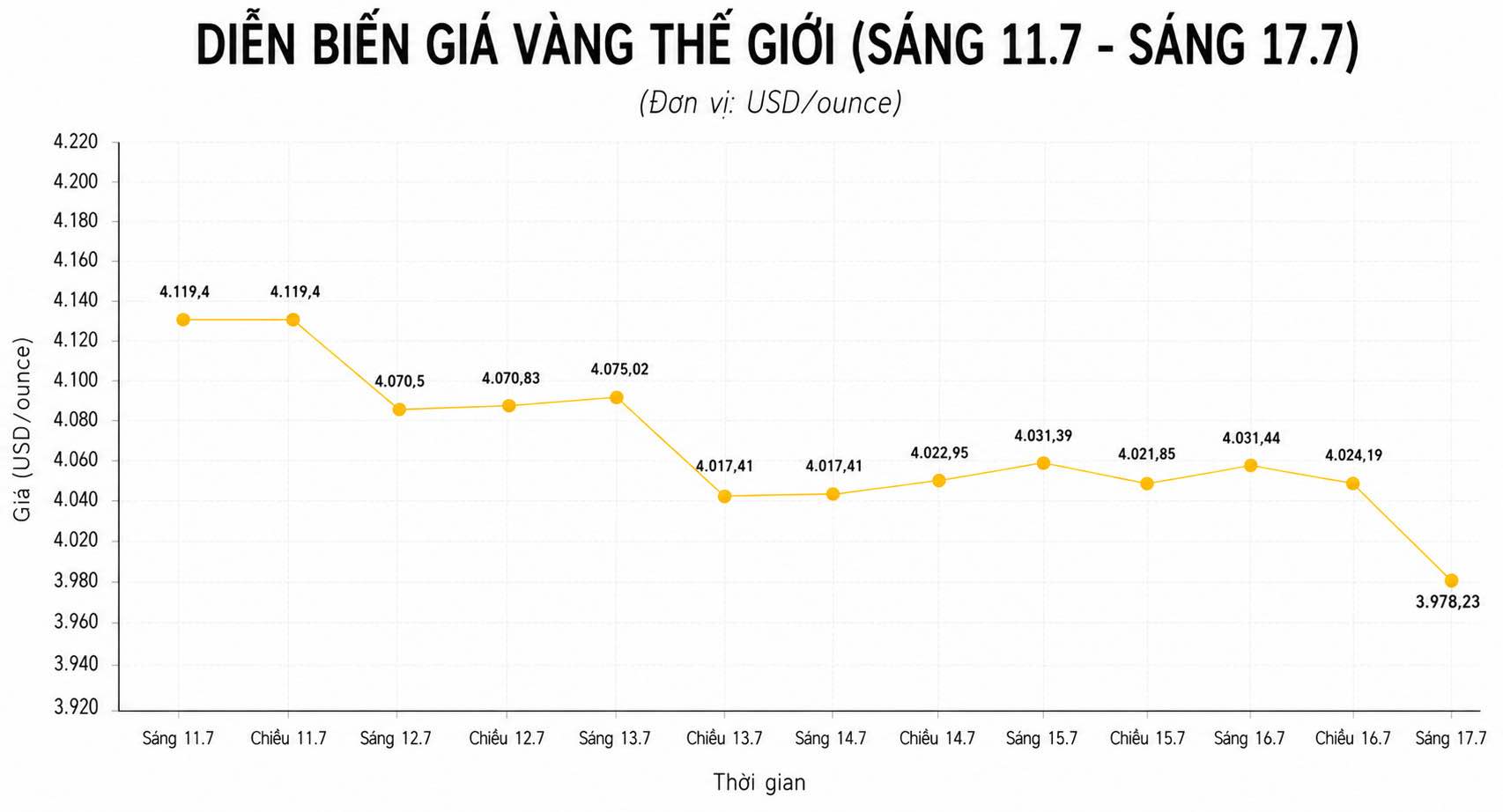
Selling pressure appeared as oil prices remained near a one-month high.
According to Bart Melek, Head of Commodity Strategy at TD Securities, rising oil prices are causing the market to expect US bond yields to continue to rise, even the Fed may raise interest rates right in the September meeting. This puts pressure on gold because the precious metal does not bring yields.
Data from CME FedWatch shows that the market currently values about 53% of the possibility that the Fed will raise interest rates in September.
At the same time, the yield on 10-year US Treasury bonds continued to rise, while the USD index increased by about 0.2%, making gold more expensive for buyers holding other currencies.
Previously, Fed Chairman Kevin Warsh reaffirmed the goal of bringing inflation back to the control level, although he did not send clear signals about the interest rate roadmap. Meanwhile, data released earlier this week showed that both consumer inflation (CPI) and the US producer price index (PPI) cooled down in June.
While the market is under pressure from macroeconomic factors, Bank of America (BofA) - a multinational bank - believes that gold's correction may continue but will not change the long-term upward outlook.
In the latest technical analysis report, Mr. Paul Ciana, technical analyst at BofA's Global Research division, said that gold may continue to test the support zone around 3,600 USD/ounce before forming a more solid bottom.
According to him, the current correction lasted only about 24 weeks, while the previous upward trend lasted for 121 weeks, showing that the correction process is still relatively short. On June 26, the gold price chart showed a technical death cross signal when the 50-day moving average cut below the 200-day moving average. Statistics from BofA show that since 1975, after this signal, gold prices have continued to fall after 40–50 trading sessions in about 67–70% of cases.
Therefore, the bank forecasts that gold is likely to still be under pressure in August and September.
However, BofA bank sees this as an opportunity for investors to gradually increase their positions. The bank recommends that they may start accumulating when the price falls below $4,000/ounce, and consider increasing the proportion if gold retreats to the $3,700–$3,600/ounce range.
Previously, BofA lowered its forecast for the average gold price in 2026 by 14% to 4,360 USD/ounce, but still maintained the view that gold prices could reach 6,000 USD/ounce in 2027. The bank also assessed that gold mining enterprises still maintain high profitability thanks to the current price level, with free cash flow and profit margins belonging to the most attractive group in the market.


