
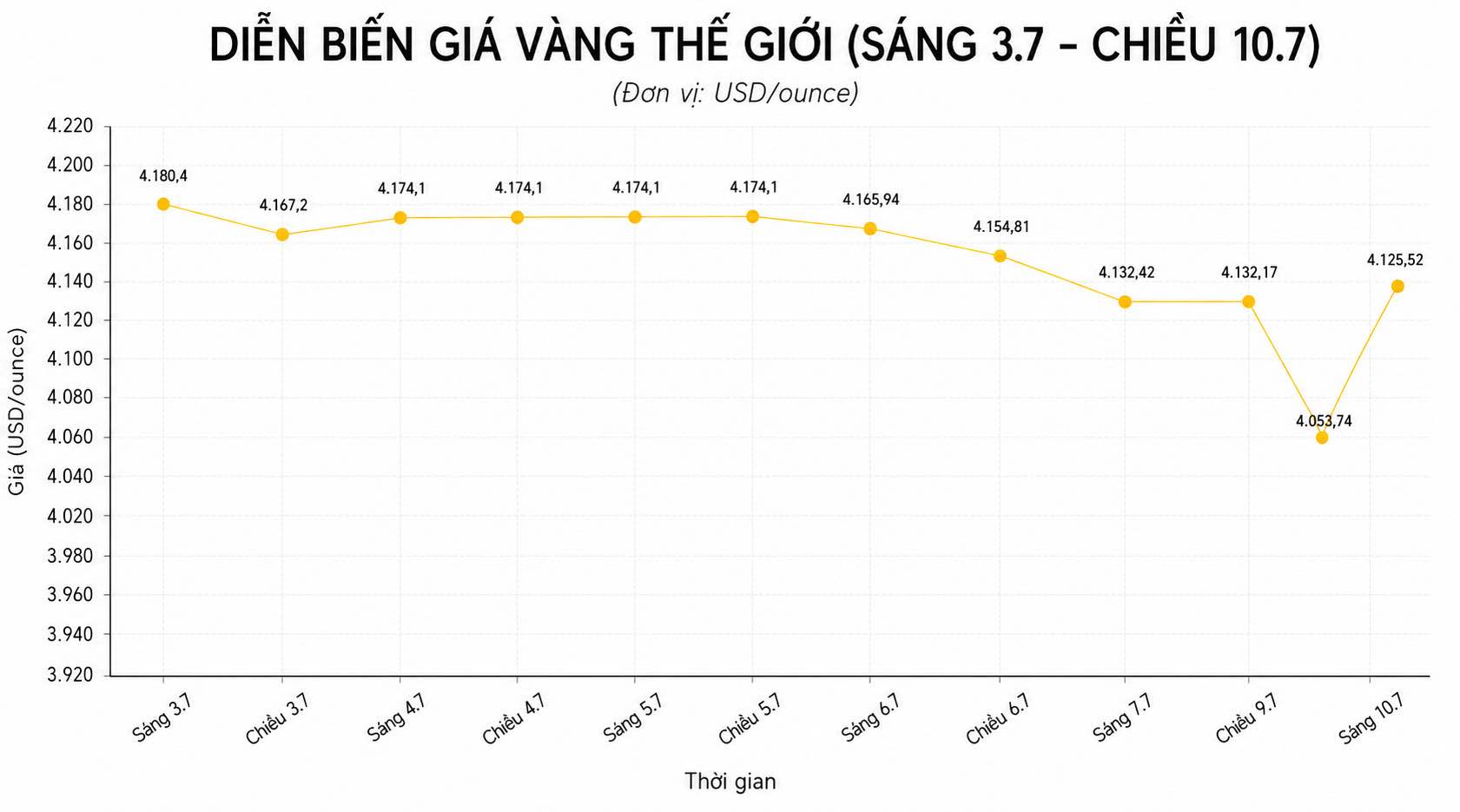
World gold prices fell nearly 1% in the first session of the week as tensions in the Middle East continued to escalate, pushing oil prices up and increasing concerns about inflationary pressure, thereby strengthening expectations that the US Federal Reserve (Fed) will maintain a tight monetary policy for a longer time.
As of 9:54 am Vietnam time, spot gold price decreased by 0.84%, to 4,070.83 USD/ounce, equivalent to the decrease of the previous week.
Global financial markets are under pressure as new developments in the Middle East raise concerns about the risk of energy supply disruptions. Brent oil prices rose to around 79.11 USD/barrel, while WTI oil traded around 74 USD/barrel, reflecting investors' cautious sentiment in the face of geopolitical risks.
Rising energy prices are seen as a factor that could increase inflationary pressure, giving the Fed more basis to maintain tight monetary policy. High interest rates often reduce the attractiveness of gold because the precious metal does not yield yields.
The minutes of the Fed's June policy meeting released last week showed that some policymakers had considered the possibility of continuing to raise interest rates, although they eventually decided to keep the current level. The minutes also reflected greater concerns about inflation while concerns about the labor market have somewhat eased.
In the opposite direction, the US labor market sent a cooling signal as the economy only created 57,000 jobs in June, significantly lower than market expectations. At the same time, figures for April and May were adjusted down a total of 74,000 jobs, while the unemployment rate remained at 4.2%. These figures once supported gold prices due to reducing expectations that the Fed would continue to raise interest rates in the short term.
However, US government bond yields remained high, while the USD appreciated amid expectations that inflation could be further pressured by the developments of the energy market. This continues to limit demand for gold as a non-performing asset.
This week, investors will focus on following the US consumer price index (CPI) report and the first hearing before Congress by Fed Chairman Kevin Warsh. These data and events are expected to provide more signals about the Fed's monetary policy outlook in the coming months.


