
According to Kitco, at 8:45 am US Eastern time, Iranian Foreign Minister Seyed Abbas Araghchi posted on social network X that the Strait of Hormuz was fully reopened to commercial ships during the ceasefire lasting.
Immediately after this announcement, the financial market reacted strongly, with gold prices and stock futures contracts simultaneously increasing.
A few minutes later, US President Donald Trump also posted a message on the Truth Social platform, in the context of the market's upward momentum continuing to expand.
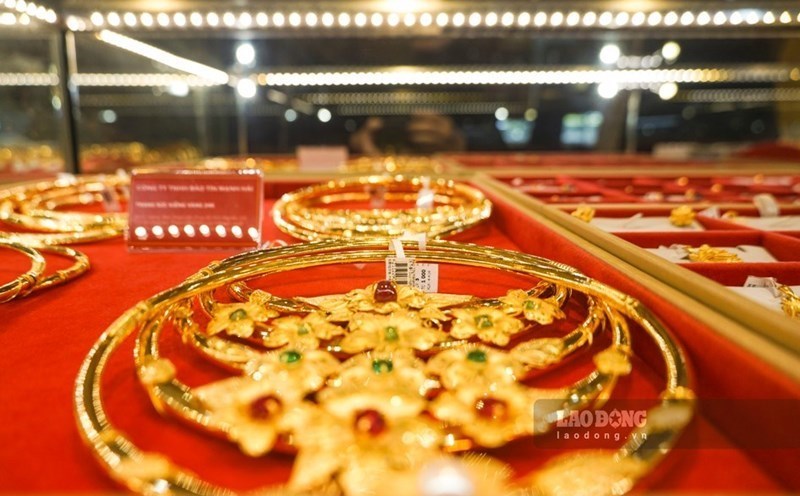
Before the time of the announcements related to the Strait of Hormuz, spot gold prices entered a strong upward trend when they surpassed the resistance level of 4,800 USD/ounce around 8:20 am Eastern time. Information about the reopening of this strategic shipping route continued to push precious metal prices up faster.
At one point, spot gold prices rose to the highest level of the day at 4,890.78 USD/ounce, just about 5 minutes after the information was announced.
In the opposite direction, crude oil prices are under strong downward pressure. The latest Nymex crude oil contract was recorded at 81.13 USD/barrel, down more than 14% in the day.
This development shows that the commodity market is particularly sensitive to geopolitical information related to the Middle East, especially moves that directly affect the Strait of Hormuz - one of the world's most important energy transport routes.
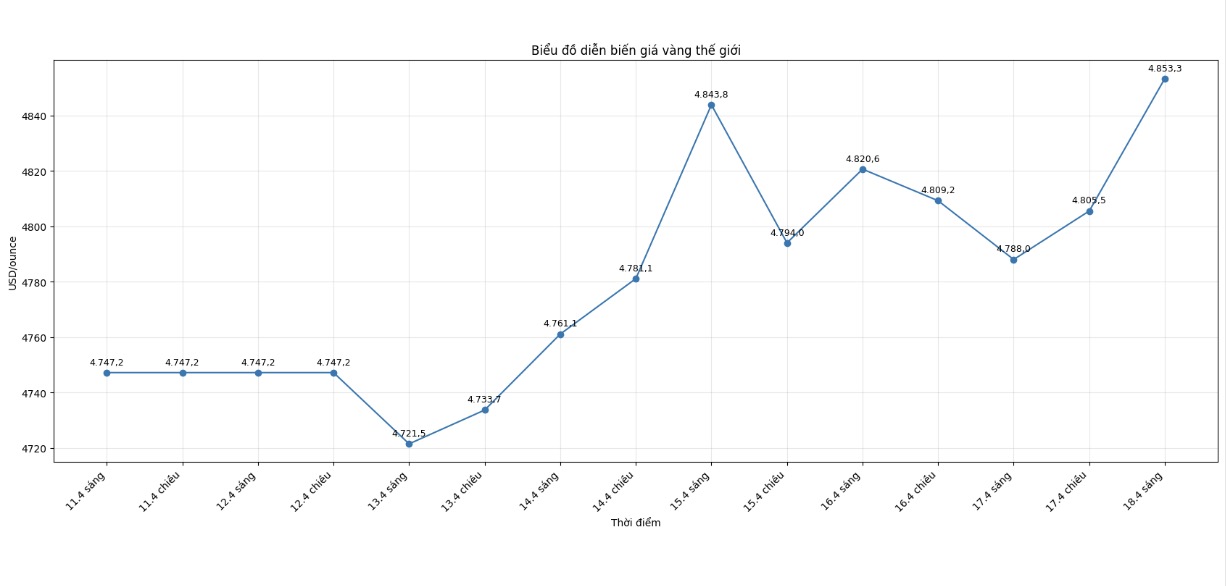
At the time of writing (3:00 AM on April 18 - Vietnam time), the spot world gold price was at 4,853.3 USD/ounce, while spot silver also increased sharply to 81.25 USD/ounce.
The world gold and silver market operates through two main pricing mechanisms. The first is the spot market, where the buying and selling and immediate delivery prices are listed. The second is the futures market, where prices are set for future delivery.
Due to the impact of year-end position restructuring and market liquidity, the December gold futures contract is currently the most actively traded contract on the CME exchange.


