
Price drops are not the only reason
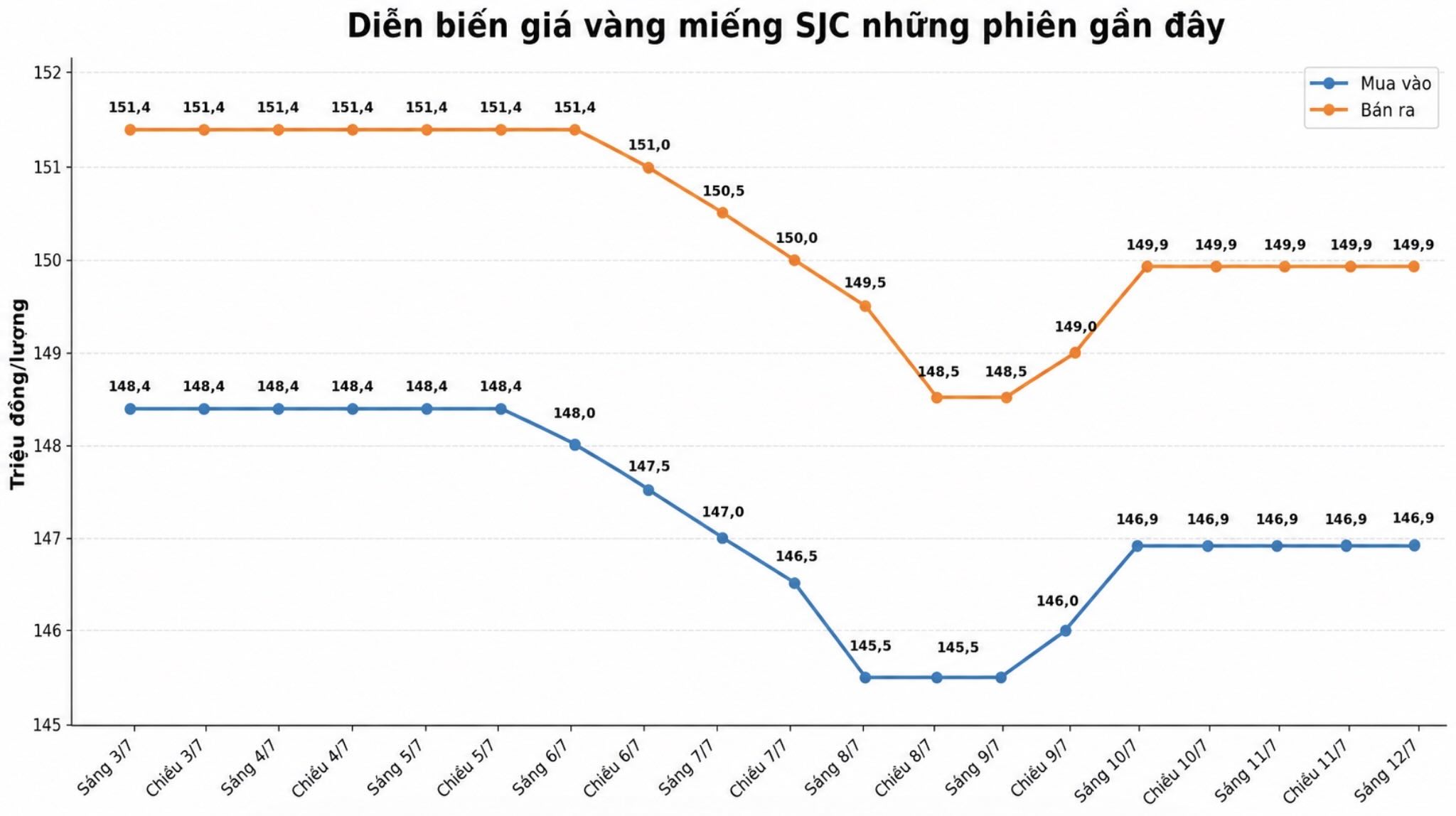
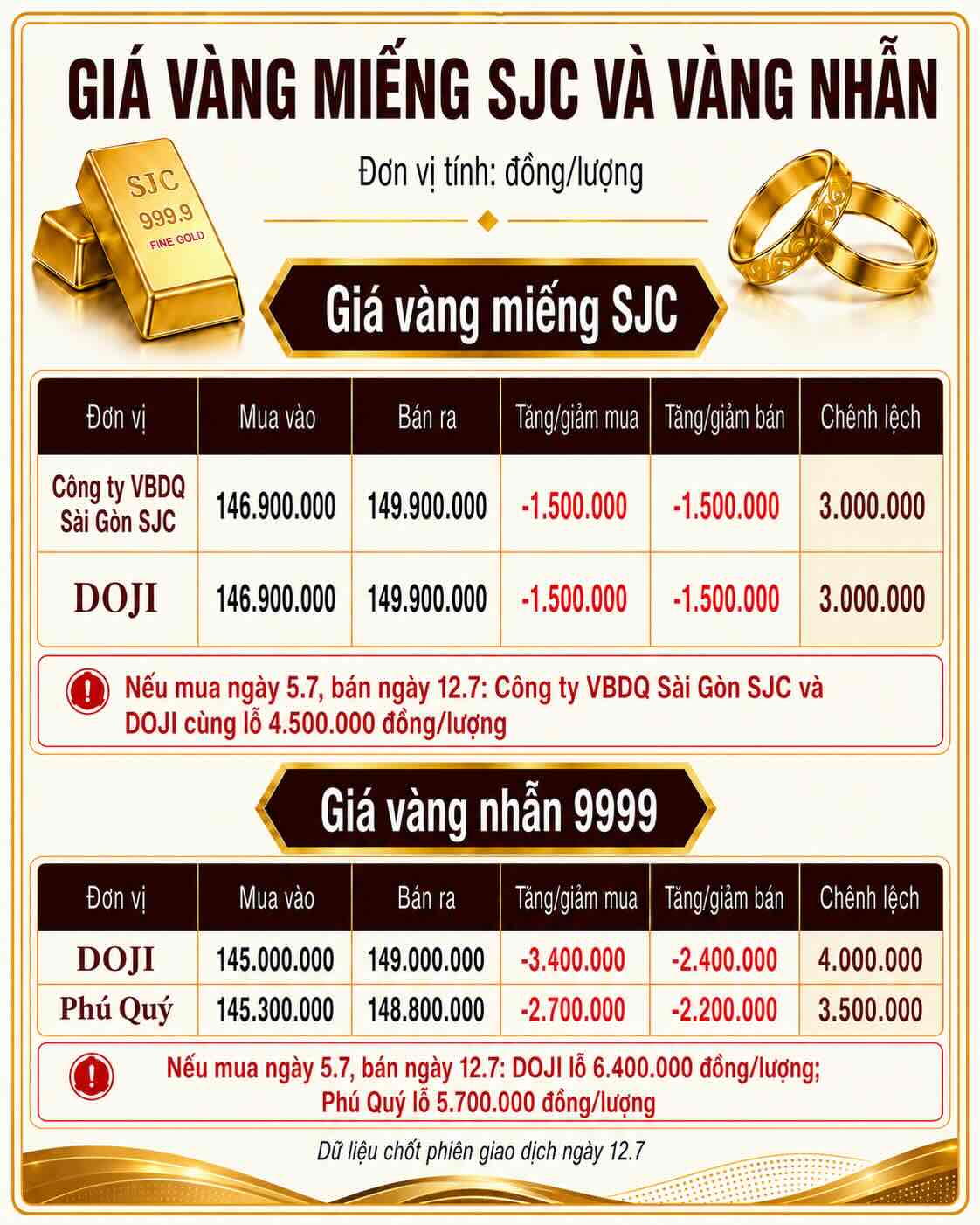
Closing the weekly trading session on July 12, Saigon Jewelry Company SJC and DOJI both listed SJC gold bar prices at 146.9-149.9 million VND/tael (buying - selling).
Compared to the last session of last week on July 5, SJC gold bar prices decreased by 1.5 million VND/tael in both directions. However, the actual loss of buyers did not stop at 1.5 million VND/tael.
The reason is that when buying gold, customers have to pay according to the selling price of the enterprise. When it comes to reselling, the enterprise only buys at the purchase price. The gap between these two price levels is currently up to 3 million VND/tael.
Accordingly, a person who buys SJC gold bars in the session on July 5th and resells them on July 12th must suffer a double impact: the market price decreases and the buying - selling difference. The total loss at Saigon SJC and DOJI Jewelry Company is both at 4.5 million VND/tael.
This shows that even if gold prices do not decrease, buyers can still record temporary losses equivalent to the difference between buying and selling prices. When gold prices go down, losses are amplified.
Gold rings lose up to 6.4 million VND/tael
With 9999 gold rings, the loss is even greater due to the sharp price drop and wide buying and selling range.
At the end of the week, DOJI listed the price of gold rings at 145-149 million VND/tael. Compared to July 5, the buying price decreased by 3.4 million VND/tael, while the selling price decreased by 2.4 million VND/tael. The difference between the two directions is up to 4 million VND/tael.
If buying gold rings at DOJI on July 5 with a selling price of about 151.4 million VND/tael and reselling on July 12 at a buying price of 145 million VND/tael, buyers will lose 6.4 million VND/tael.
In Phu Quy, the price of gold rings was listed at 145.3-148.8 million VND/tael. Buyers from last week and sellers in the July 12 session suffered a loss of about 5.7 million VND/tael.
This loss level clearly reflects the risk when investors buy gold during a period of strong price fluctuations. The buying-selling difference of 3.5-4 million VND/tael creates a very large "initial loss". Gold prices must increase at least equal to this difference for buyers to get closer to the breakeven point.
World gold prices fall, putting pressure
On the international market, gold closed the week at 4,119.4 USD/ounce, down 54.7 USD compared to a week ago.
The decline of world gold prices directly affects the psychology and adjustment trend of the domestic market. However, domestic gold prices are also affected by supply - demand, management policies and the difference due to each listed enterprise.
Therefore, the decrease in world gold prices does not completely correspond to the losses of domestic buyers. In many cases, the high buying-selling difference is the factor that causes losses to increase rapidly when investors need to sell gold in a short time.
Be careful and should not use financial leverage
The diễn biến (developments) last week continued to show that gold is not an investment channel that only increases in price. FOMO buyers, that is, fearing missing opportunities when prices are rising sharply, can easily buy in the right high price range.
When the market adjusts, panic psychology can cause investors to sell at unfavorable times and realize large losses. The risk is even higher for those who use borrowed money, credit cards or financial leverage to buy gold.
Loan interest expenses and the pressure to pay debts on time may force investors to sell gold even though prices have not recovered. At that time, losses come not only from price fluctuations and buying-selling differences but also include capital costs.
Before buying gold, investors need to clearly define their holding targets, investment time and risk tolerance. Monitoring the buying price, selling price and the difference between the two directions at the same time is no less important than forecasting price trends.
In the context of strong market fluctuations, investors should not pour all capital into gold, do not use borrowed money and avoid chasing purchases just because prices are increasing. Dividing the amount of money, buying at different times and maintaining a reserve fund can help limit risks.
The information in the article is only intended to provide a perspective on market developments, not investment recommendations. Investors need to consider their financial capacity, holding targets, and risk acceptance before making a decision.


