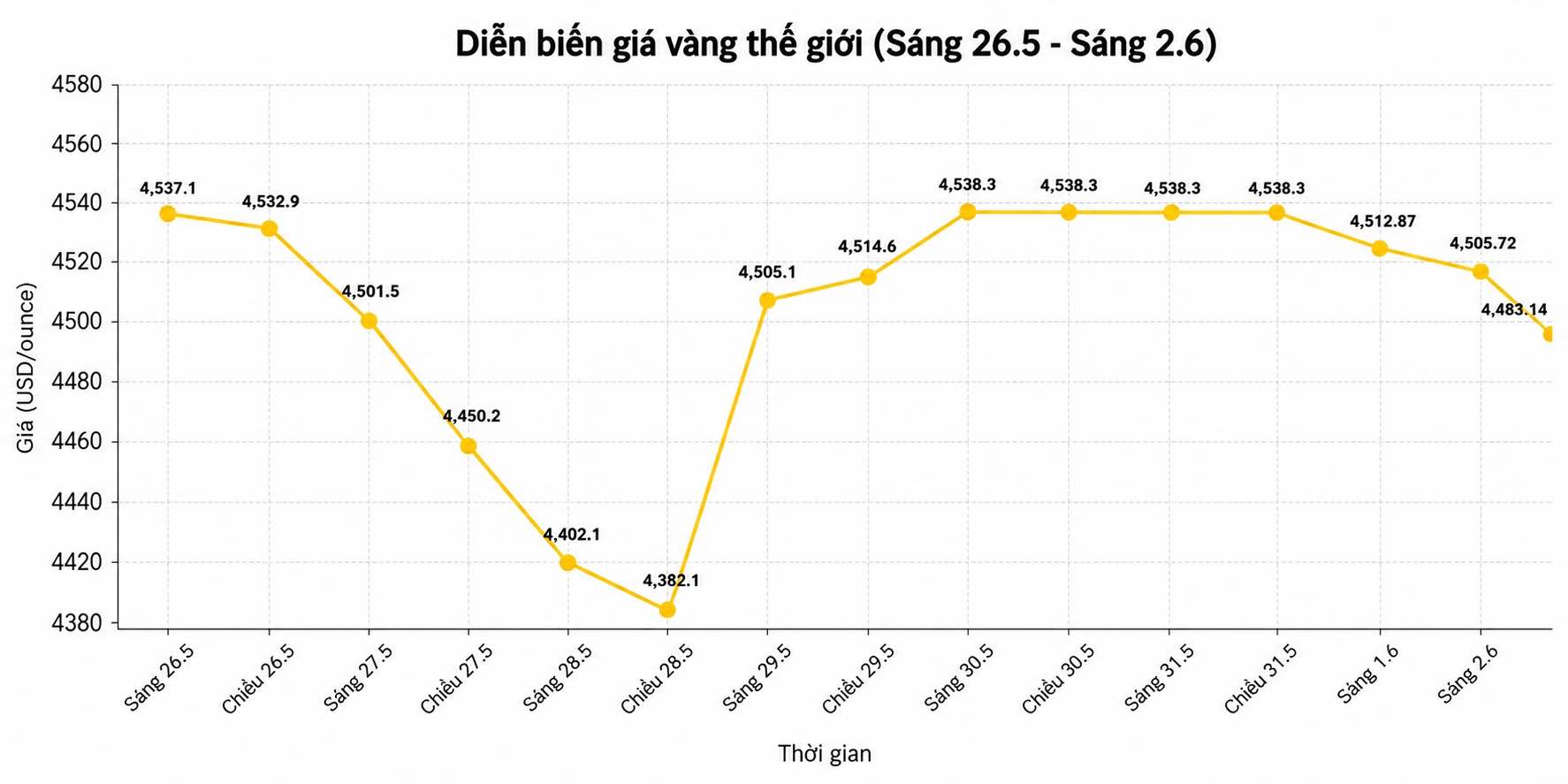
Gold prices maintained a downward trend as mixed signals from the US and Iran raised doubts about the possibility of reaching a diplomatic solution to the prolonged conflict, while increasing concerns about inflation and the risk of prolonged trade disruptions.
The precious metal traded around the threshold of 4,490 USD/ounce after falling more than 1% in the previous session. Amid renewed fighting near the Strait of Hormuz, US President Donald Trump said negotiations with Iran are still being conducted "with rapid speed", contrary to previous statements from Tehran about suspending dialogue and completely closing this strategic maritime route.
Mr. Trump and Israeli Prime Minister Benjamin Netanyahu also provided different information about a phone call related to the war situation in Lebanon. This shows disagreements and ambiguity in efforts to end the conflict that have lasted for four months, while causing a global energy crisis.
This uncertainty caused the financial market to fluctuate sharply in the first session of the week. Oil prices recorded the largest increase in about a month, while bond yields and the USD both went up, reducing the attractiveness of gold because this precious metal is valued in the greenback.
Brent oil prices remained below the 95 USD/barrel mark on Tuesday, after falling last week thanks to expectations that the parties could reach a peace agreement.
Experts Ryan McKay and Bart Melek of TD Securities commented:
The energy market is likely to maintain a state of tight supply and high prices even if an agreement is signed. This shows that macroeconomic factors that are putting pressure on precious metals will not disappear soon.
Gold prices have fallen sharply since the conflict broke out at the end of February and are still about 15% lower than before the war. However, in recent weeks, the precious metal has mainly fluctuated in a narrow range.
If energy transportation and trade through the Strait of Hormuz are fully restored, global inflationary pressures could cool down, thereby increasing the possibility of central banks easing monetary policy. This is a positive factor for gold because low borrowing costs often support non-interest assets.
However, the US Federal Reserve (Fed) may be less pressured to cut interest rates after the US manufacturing sector in May recorded the fastest growth rate in four years. This is also the fifth consecutive month of growth for the manufacturing sector, according to data released on Monday.
Ms. Rhona O'Connell - Market Analysis Director for Europe, Middle East, Africa (EMEA) and Asia at StoneX Financial Ltd. - believes that gold price outlook still largely depends on developments in the Middle East.
Although there has been some progress, core issues have not been resolved. Therefore, gold prices are likely to continue to fluctuate in the sideways zone and tend to decrease slightly due to interest rate expectations.
As of 9:29 am Vietnam time, spot gold prices slightly decreased by 1% to 4,483.14 USD/ounce. Silver prices increased by 0.4% to 75.12 USD/ounce. Platinum and palladium also simultaneously increased in price. Meanwhile, the Bloomberg Dollar Spot Index almost went sideways after increasing by 0.3% in the previous session.