SJC gold bar price
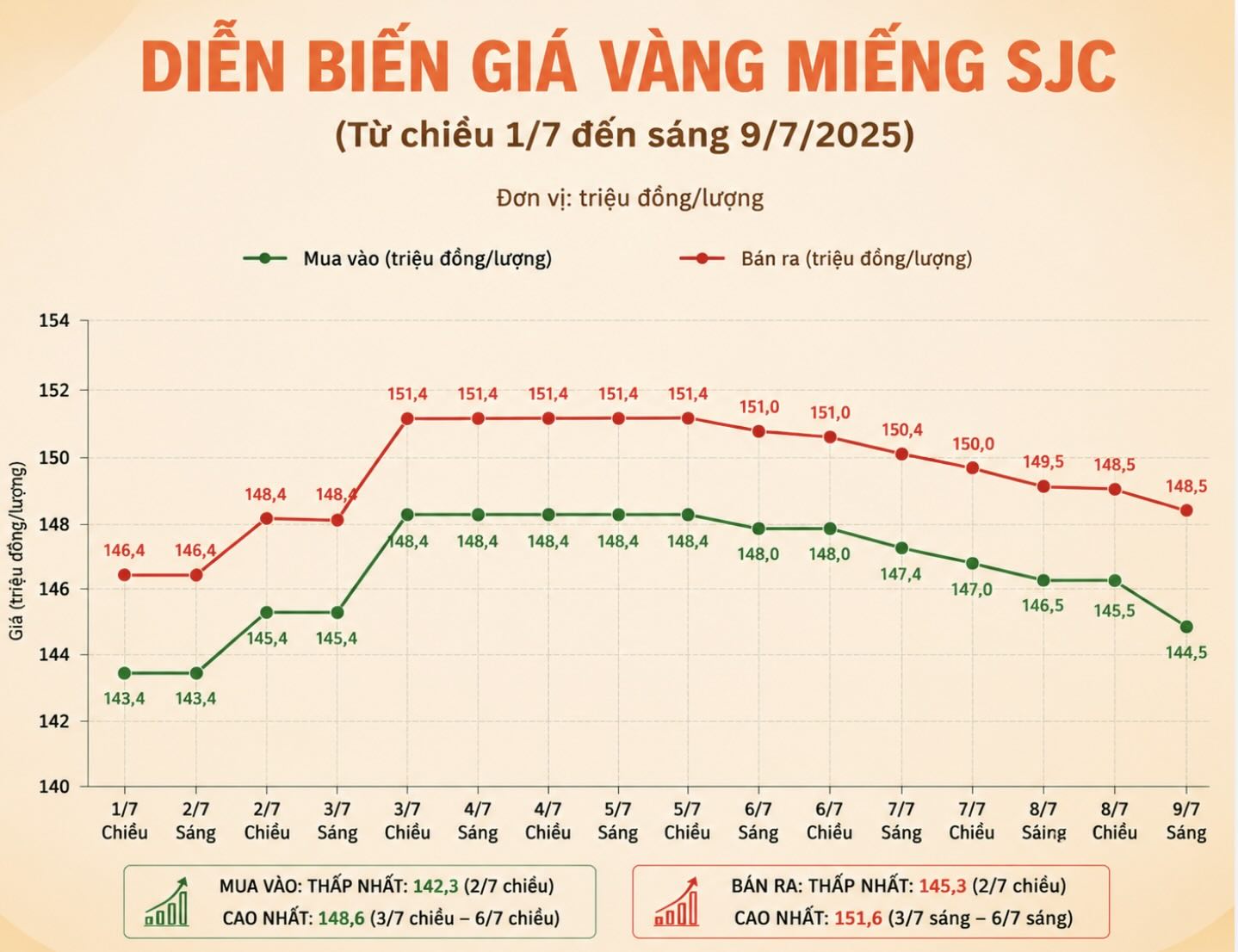
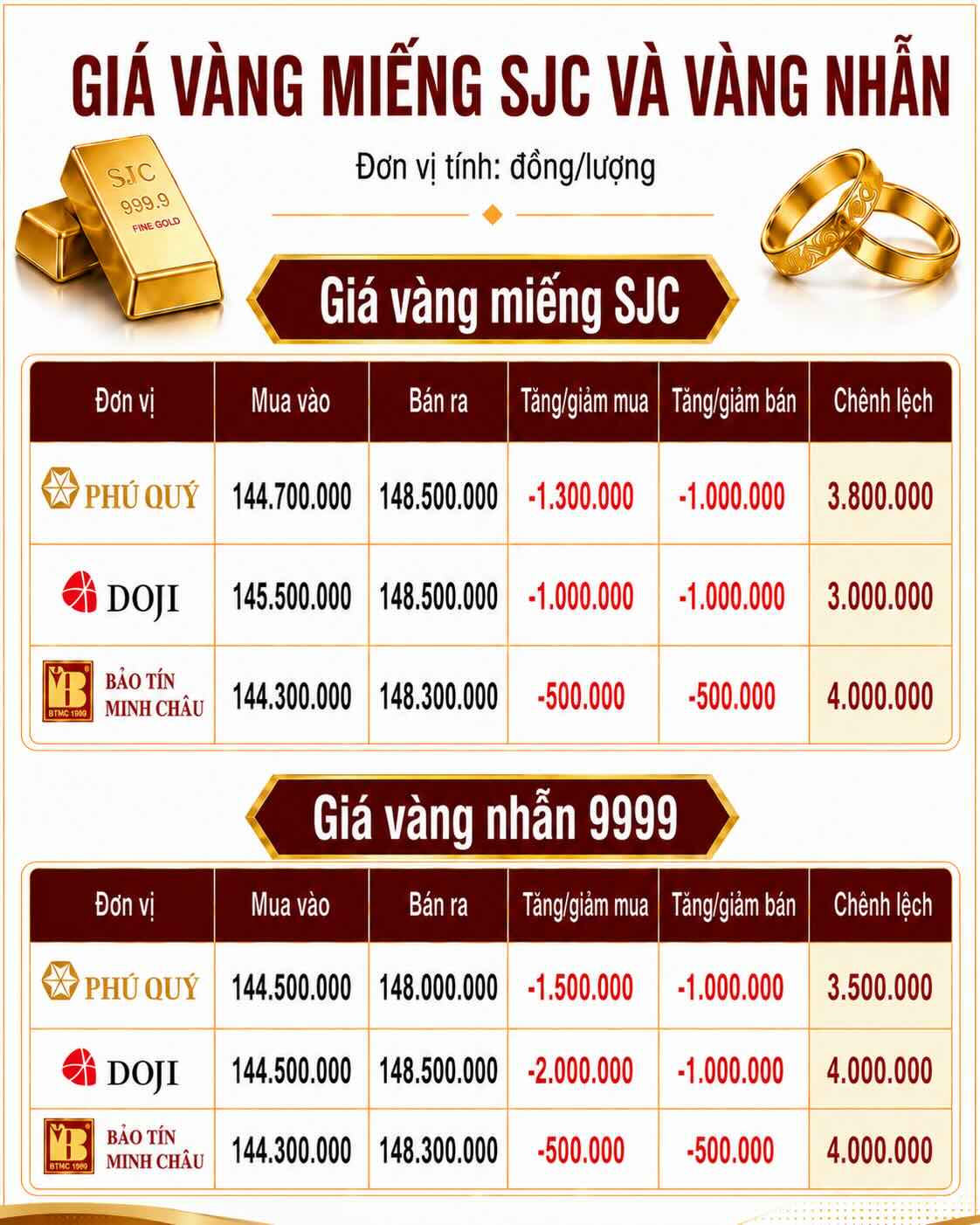
As of 9:10 am, Phu Quy Gold and Gems Group listed SJC gold bar prices at the threshold of 144.7-148.5 million VND/tael (buying - selling), down 1.3 million VND/tael on the buying side and down 1 million VND/tael on the selling side. The difference between buying and selling prices is at the threshold of 3.8 million VND/tael.
At the same time, SJC gold bar prices were listed by DOJI Group at the threshold of 145.5-148.5 million VND/tael (buying - selling), down 1 million VND/tael in both buying and selling directions. The difference between buying and selling prices is at the threshold of 3 million VND/tael.
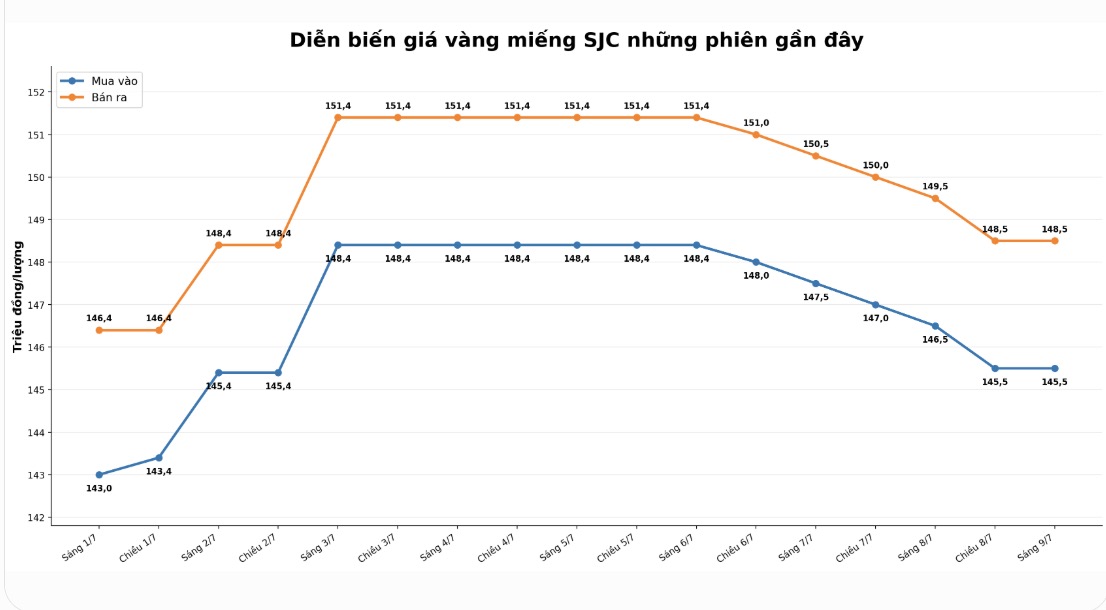
Bao Tin Minh Chau listed SJC gold bar prices at 144.3-148.3 million VND/tael (buying - selling), down 500,000 VND/tael in both buying and selling directions. The difference between buying and selling prices is at 4 million VND/tael.
9999 gold ring price
As of 9:10 am, Phu Quy Gold and Gems Group listed the price of gold rings at 144.5-148 million VND/tael (buying - selling), down 1.5 million VND/tael on the buying side and down 1 million VND/tael on the selling side. The difference between buying and selling prices is at 3.5 million VND/tael.
DOJI Group listed gold ring prices at the threshold of 144.5-148.5 million VND/tael (buying - selling), down 2 million VND/tael on the buying side and down 1 million VND/tael on the selling side. The difference between buying and selling prices is at the threshold of 4 million VND/tael.
Bao Tin Minh Chau listed the price of gold rings at 144.3-148.3 million VND/tael (buying - selling), down 500,000 VND/tael in both buying and selling directions. The difference between buying and selling prices is at 4 million VND/tael.
World gold price
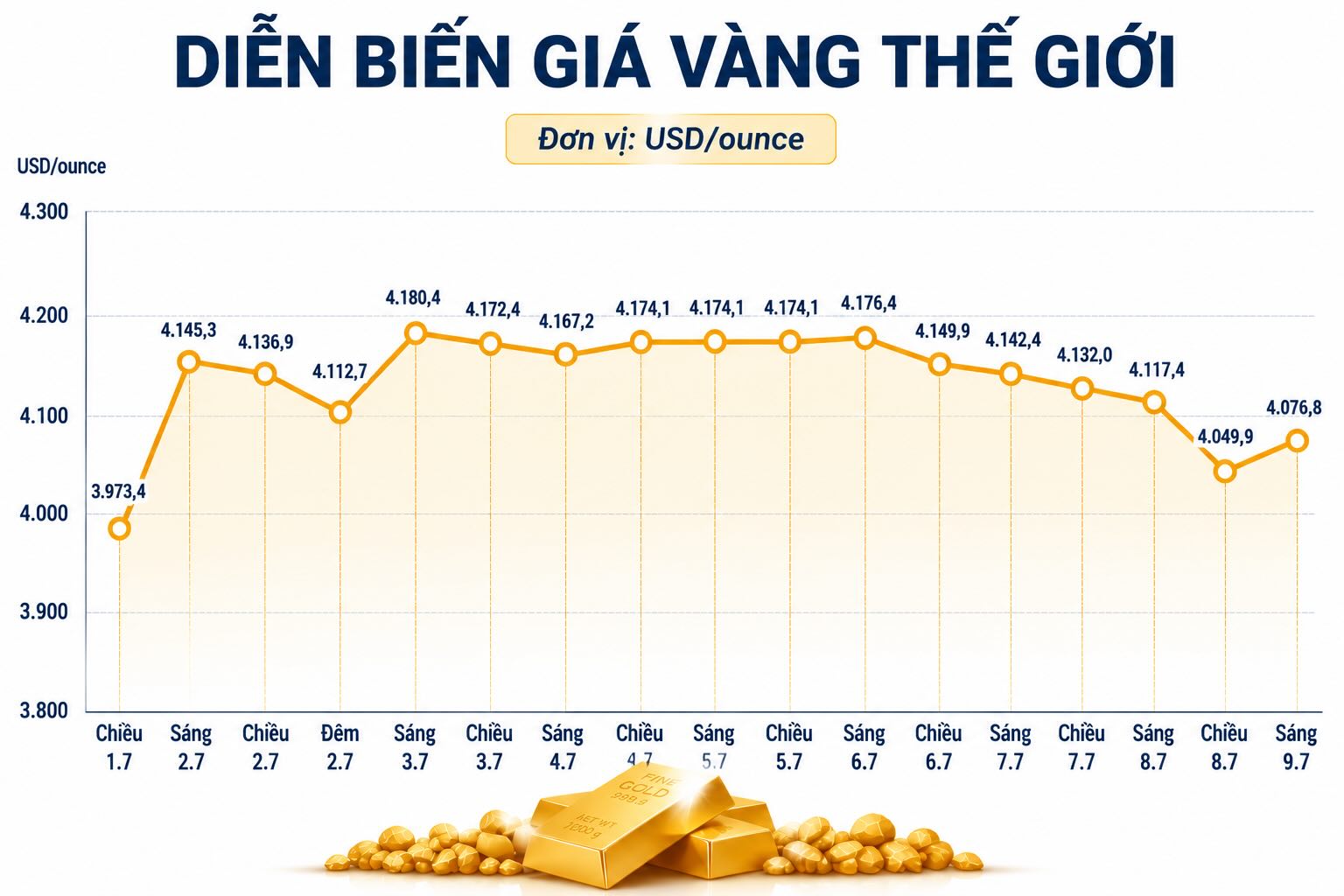
At 9:10 am, world gold prices were listed around the threshold of 4,076.8 USD/ounce, down 40.6 USD/ounce.
Gold price forecast
Gold prices are entering a period of strong fluctuations as long-term supporting factors face increasing pressure from inflation, interest rates and the USD.
In the short term, analysts believe that the precious metal may continue to struggle as the market re-evaluates the monetary policy outlook of the US Federal Reserve (Fed).
Minutes of the June policy meeting show that the Fed is still particularly cautious about the risk of prolonged inflation. Although members agreed to keep interest rates unchanged, some opinions suggest that monetary policy may need to continue to maintain a tight state, even not excluding the possibility of raising interest rates if price pressure does not cool down as expected.
This is a disadvantage for gold. High interest rates and bond yields increase the opportunity cost of holding precious metals, while a stronger USD may also weaken demand for gold from non-US markets.
Geopolitical tensions continue to create a two-way impact. On the one hand, instability in the Middle East may boost safe-haven demand. On the other hand, the risk of energy supply disruption and rising oil prices further increases concerns about inflation, thereby strengthening the Fed's ability to maintain high interest rates for a longer time.
Recent developments show that safe-haven demand is not strong enough to fully compensate for pressure from bond yields and the USD. After failing to maintain the 4,100 USD/ounce zone, gold prices are being closely monitored around the 4,000 USD/ounce zone. This is considered an important psychological zone, where buying power may appear if the price continues to adjust.
Although the short-term outlook is still cautious, long-term supporting factors for gold prices are still positively assessed. It is noteworthy that the gold buying demand of central banks aims to diversify reserves and reduce dependence on traditional assets.
According to a World Gold Council survey, 45% of central banks participating in the survey expect to increase gold reserves in the next 12 months, while 89% believe that official gold reserves globally will continue to increase.
Therefore, the outlook for gold prices in the coming time may continue to differentiate. Pressure from inflation, high interest rates and the USD may limit short-term recovery waves. However, long-term buying demand from central banks, geopolitical risks and portfolio diversification demand are still factors that can support gold prices in the second half of 2026.
Gold price data is compared to the previous day.
See more news related to gold prices HERE...