
Two analysts Dominic Schnider and Wayne Gordon of UBS (a large financial - banking group in Switzerland) believe that investors are more cautious with gold as yields remain high.
The market is re-examining the concept of opportunity cost. The non-interest-generating nature of gold is once again becoming a more considered factor, in the context that real interest rates are still high" - the two experts wrote in the report.
According to Mr. Schnider and Mr. Gordon, demand for gold ETFs and futures contracts has weakened significantly. Recent cash flow shows signs of stabilization, but it is still not enough to restore the strong upward momentum that gold recorded in the early 2026 period.
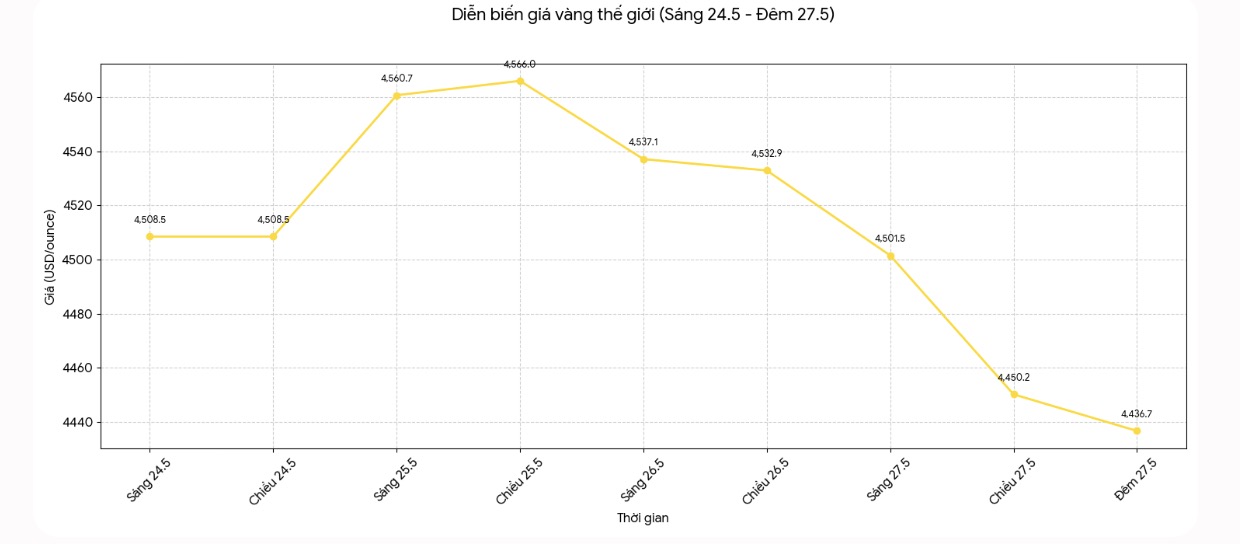
Although UBS does not believe that the long-term upward trend of gold has ended, experts believe that investors may need to be more patient with the current challenges. However, UBS still forecasts that gold prices will end the year at a level higher than about 1,000 USD compared to the current price.
Looking to 2027, Mr. Schnider and Mr. Gordon believe that a more neutral monetary policy context could weaken support for the USD, thereby improving investor appetite for gold.
Previously, on April 13, Mr. Giovanni Staunovo - a commodity analyst at UBS - said that commodities such as gold and oil could continue to record outstanding increases even after the war in Iran ended. According to him, investors holding large amounts of gold should consider expanding their portfolios to other commodities.
Gold prices are currently nearly 13% lower than the record high closing level in January. Expectations of rising interest rates since escalating tensions have negatively impacted market sentiment," he said. "Goods in general have increased by about 17% since the beginning of the year, based on the UBS CMCI Composite total earnings index in USD.
Mr. Staunovo believes that although the geopolitical risk compensation is forecast to gradually decrease, the basic foundation of the commodity market is still supportive.
“Oil product inventories are at low levels in many economies. This may require prices to rise further to limit demand before reserves are replenished,” he said. “In the medium term, we still expect gold to rise sharply if geopolitical instability continues to be high, while interest rates are expected to cool down.”
He added that UBS forecasts that the shortage of copper and aluminum supply will continue, supporting prices in the medium term. In the long term, structural drivers such as electrification will also strengthen demand.
According to Mr. Staunovo, commodity yields "can be very positive when supply-demand imbalances or macroeconomic risks such as inflation, geopolitical events are high".
On March 16, UBS commodity experts predicted that changes in the market's risk assessment, interest rate policy, inflation and strong fundamental demand could still push gold prices up to 6,200 USD/ounce by the end of 2026.
Experts then noted that gold has not been able to break through the $5,200/ounce mark since the Iran conflict began, while safe-haven buying as expected has not clearly appeared. This development is in contrast to the 65% increase in gold last year, when increased geopolitical risks became a driving force, alongside fundamental factors such as lower real interest rates and public debt concerns.
Recent developments in gold are similar to historical behavior in such events, as investors look for liquidity and consider alternative options such as energy assets" - UBS said.
For example, gold increased by 15% after the Russia-Ukraine conflict broke out in 2022, but then decreased by 15-18% when the US Federal Reserve raised interest rates. The same thing happened in the Gulf War and the Iraq War, when prices increased by 17% and 19% respectively in the early stages, then decreased when tensions cooled down" - experts wrote.
Although gold has recently been sideways, UBS still maintains the view that this precious metal may increase by 20% or more in 2026.
We continue to believe that gold prices could rise to the 5,900-6,200 USD/ounce range this year" - UBS said - "Gold is a defensive tool against the broader impacts of conflict, rather than just reacting directly to the risk of war. Gold mainly protects investors from monetary risks such as currency devaluation, increased budget deficits and economic recession - consequences that may arise from geopolitical conflicts.


