
World gold prices recovered in the trading session on September 18 when US bond yields slightly decreased, the USD weakened and pressure from the US Federal Reserve (Fed)'s interest rate hike temporarily subsided.
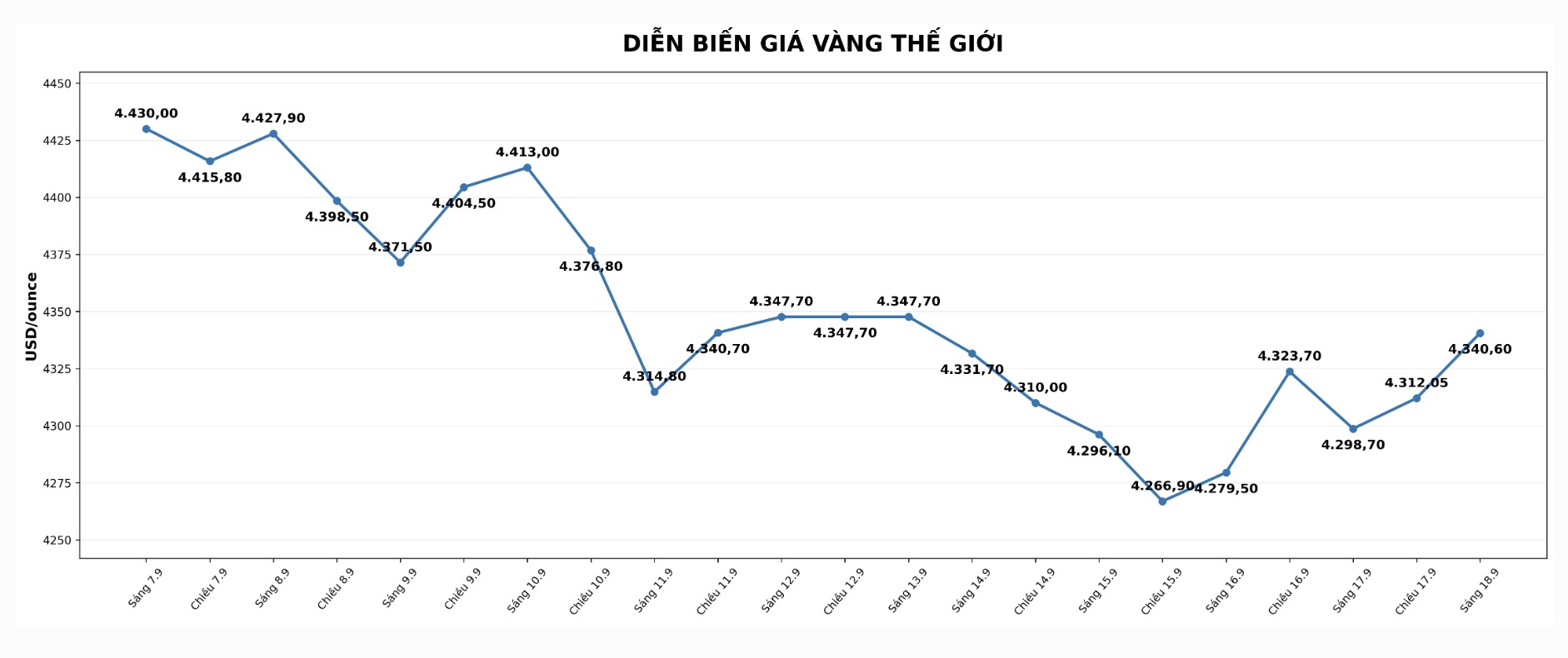
Recorded at 3:55 am on September 18 (Vietnam time), spot gold price traded around 4,340.6 USD/ounce. Last night, at one point gold price increased sharply to 4,372.30 USD/ounce, silver price to nearly 65.477 USD/ounce. This increase took place after the precious metal was under pressure from the Fed's tough monetary policy message in the previous session.
Gold benefits when bond yields cool down
Previously, the Fed raised interest rates by an additional 0.25 percentage points, bringing the operating interest rate band to 3.75-4%. Along with the decision to raise interest rates, the agency signaled that monetary policy could still be adjusted if inflation does not cool down quickly enough.
Usually, high interest rates put pressure on gold because they increase the opportunity cost of holding non-genuine assets. However, in the latest session, the yield of US government bonds with a 2-year term decreased to about 4.72%, while the yield of 10-year term fluctuated around 5%. The yield decrease has helped reduce pressure on precious metals.
In addition, the weakening signs of the USD also create more momentum for gold prices. When the greenback depreciates, gold often becomes more attractive to investors holding other currencies.
However, the current developments only reflect a short-term recovery, not showing a new upward trend that has been established. The market is still closely monitoring US economic data, especially information related to inflation and jobs to assess the next steps of the Fed.
Oil prices fall, geopolitical factors still support gold
Another factor affecting the precious metals market is the diễn biến of oil prices. Crude oil prices fell as the market expected exploitation and transportation activities in the Gulf region to gradually recover.
Brent oil was traded around 103.48 USD/barrel, while WTI oil was around 100.65 USD/barrel. The cooling of oil prices partly reduced concerns about inflationary pressure, thereby helping bond yields decrease and supporting gold.
However, geopolitical risks in the Middle East region are still factors that prevent defensive cash flow from leaving gold. Instability related to important oil transport routes may continue to affect market sentiment in the near future.
On the stock market, US futures also recovered as investors re-evaluated the impact of the Fed's decision. However, the outlook for monetary policy remains the psychological factor dominating financial markets.
Gold needs more momentum to establish new trends
Technically, gold prices are moving towards testing important resistance zones. To consolidate the recovery momentum, the market needs to surpass the 4,354 USD/ounce zone, and further, the 4,403 USD/ounce mark.
In the opposite direction, if selling pressure returns, the 4,283 USD/ounce zone is considered a near support level. Breaking this zone may cause gold prices to continue to be under adjustment pressure.
For silver, the price is recovering above the 64.40 USD/ounce zone. However, to create a clearer positive signal, silver needs to overcome the 65.28 USD/ounce resistance zone.
The precious metal market is currently still in a state of stalemate when one side is expecting interest rates to possibly decrease in the future, and the other side is the risk of monetary policy continuing to be maintained at a high level if inflation is not controlled.
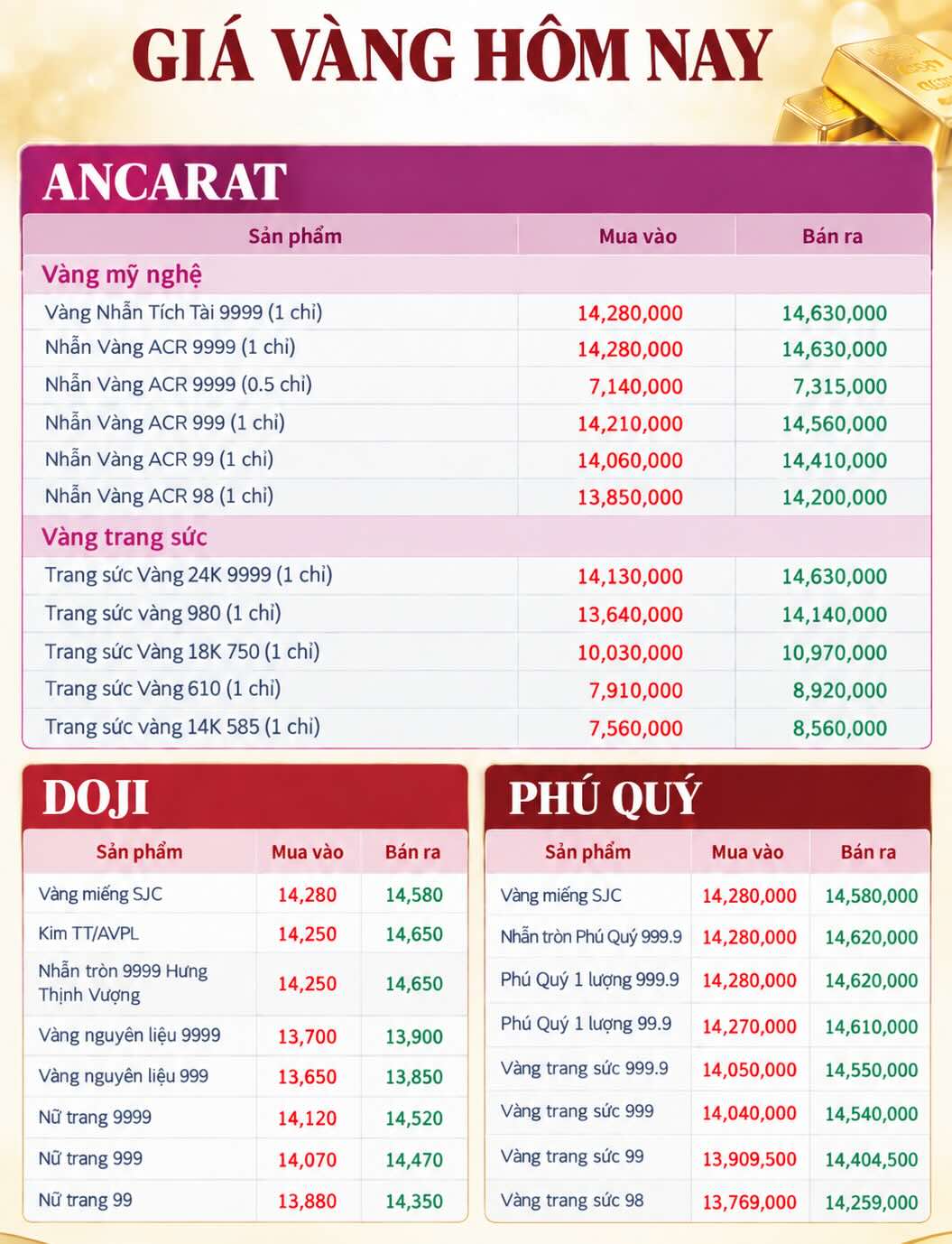
Update on domestic gold prices
The article only updates the developments of the gold market and factors affecting the price of precious metals, not investment recommendations.


