
World gold prices maintained their upward momentum in the context that major central banks in Europe simultaneously maintained interest rates but sent cautious signals about inflation, especially under the impact of the Middle East conflict and rising energy prices.
In the euro zone, the European Central Bank (ECB) decided to keep the key interest rate unchanged at 2.15% in its latest session. The agency said that economic data is still consistent with previous forecasts, but inflation risk has increased significantly while growth prospects are weakening.
The ECB emphasized that the conflict in the Middle East has caused energy prices to rise sharply, thereby creating pressure on inflation and reducing economic confidence. According to this agency, the medium-term impact will depend on the duration of the energy shock as well as the spillover effect in the economy.
The longer the conflict lasts and the higher energy prices remain, the clearer the impact on inflation and growth," the ECB warned, adding that long-term inflation expectations are still controlled, but have increased significantly in the short term.
Meanwhile, in the UK, the Bank of England (BoE) also maintained interest rates at 3.75% with a voting rate of 8-1, continuing to maintain the view of "waiting and observing" before global economic fluctuations.
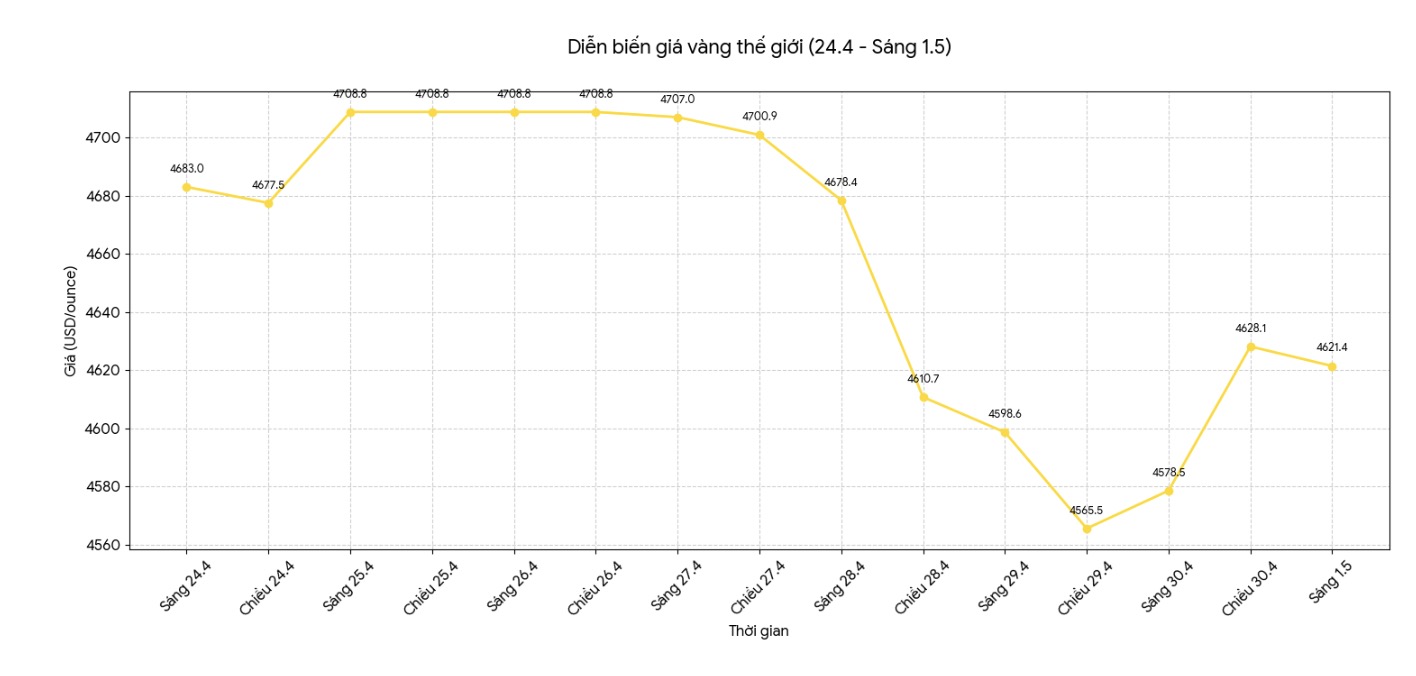
Although this decision was not surprising, the BoE's admission of increased inflationary pressure contributed to supporting gold prices. The precious metal valued in pounds increased to 3,427.76 pounds/ounce, while the international spot gold price reached about 4,635.6 USD/ounce, up 2% in the session.

BoE said that the Middle East conflict has disrupted energy supplies, pushed global fuel prices up and directly impacted the UK economy. Inflation in the country increased to 3.3% in March and is forecast to continue to rise in the near future.
Although monetary policy cannot control energy prices, BoE affirms it will adjust to ensure inflation returns to the 2% target sustainably. However, the bank also acknowledges that slowing economic growth may limit policy tightening room.
Analysts believe that in the context of persistent inflation but limited room to raise interest rates, gold prices are clearly benefiting. Instead of reacting to the interest rate decision, the precious metals market is currently mainly affected by geopolitical risks, inflation expectations and the upward trend of basic commodities.
The short-term outlook for gold prices is therefore still positively assessed, especially if the conflict lasts and energy price pressure shows no signs of cooling down.


