
The International Atomic Energy Agency (IAEA) is conducting negotiations with Russia and some other countries on the possibility of bringing enriched uranium out of Iran, IAEA Director General Rafael Grossi informed.
Mr. Grossi emphasized that this is a complex operation requiring either a political agreement or a major US military campaign on Iranian territory.
The important thing is that the material must be removed from Iran," the head of the IAEA said, adding that this uranium could be mixed with other materials to reduce the enrichment level.
On April 29, in the latest phone call, US President Donald Trump said that Russian President Vladimir Putin had offered to assist in resolving Iran's enriched uranium issue.
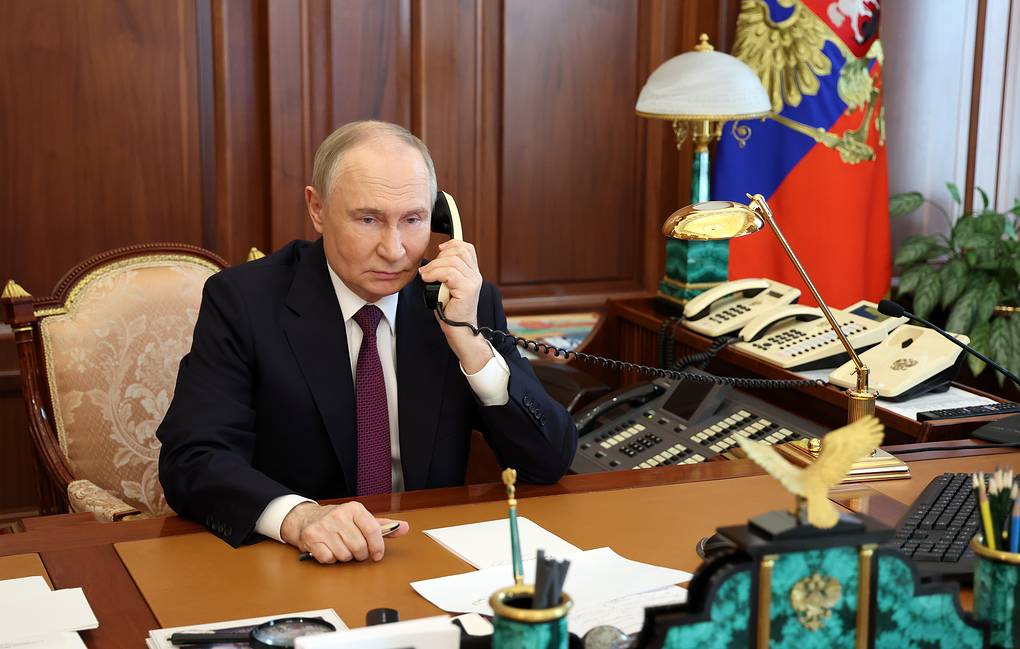
Previously, in an interview with TASS, Iranian political scientist and international relations expert Ruhollah Modabber said that if Iran decides to transfer enriched uranium to Russia, it may reach a more favorable and sustainable peace agreement with the United States.
Also in a sharing on April 29, Mr. Rafael Grossi said that most of Iran's high-enriched uranium may still be located at the Isfahan nuclear complex - which was bombed by the US last year and less attacked fiercely in this year's conflict.
IAEA inspections at Isfahan ended when Israel launched the 12-day war in June last year. The United Nations nuclear monitoring agency believes that a large proportion of Iran's highly enriched uranium "was stored there in June 2025 when the 12-day war broke out, and it has been here since then" - Mr. Grossi said.
“We cannot yet check or refute that the material is still there and the seals - IAEA seals - are still there. What I share with you is our best estimate,” he said.
Satellite images from Airbus show a truck carrying 18 blue containers entering a tunnel at the Isfahan Nuclear Technology Center on June 9, 2025, just before last year's conflict broke out. Those containers, believed to contain high-enriched uranium, may still be in this location.
Mr. Grossi revealed that the IAEA participated in nuclear negotiations between the US and Iran in February this year but did not participate in recent ceasefire negotiations mediated by Pakistan. The agency also had private discussions with the US and informal exchanges with Iran.
According to Mr. Grossi, Iran had a much smaller nuclear program in 2015, when it agreed to curb nuclear activity under an agreement with 6 powers, and only used 1 type of centrifuge.
The current negotiations are a "completely different game", as Iran has made "multiplicative progress", not only in enriching uranium but also in using the latest generation of centrifuges, various compounds and building new facilities.


