
According to Kitco, gold demand from central banks continues to play an important role in the market, as gold prices still maintain important long-term support levels. In this trend, China continues to be one of the notable dominant factors.
Updated data from the People's Bank of China (PBoC) shows that in March, this agency bought an additional 5 tons of gold. Mr. Krishan Gopaul - senior analyst for the EMEA region at the World Gold Council (WGC) - said this is China's largest purchase since February 2025.
According to Mr. Gopaul, the above move also extends China's monthly gold reserve increase streak to 17 consecutive months. Currently, the country's total gold holdings have reached 2,313 tons.
Many analysts believe that despite market fluctuations, China is likely to continue to increase gold purchases to strengthen the value of the yuan, while promoting the goal of making this currency one of the important reserve currencies globally.
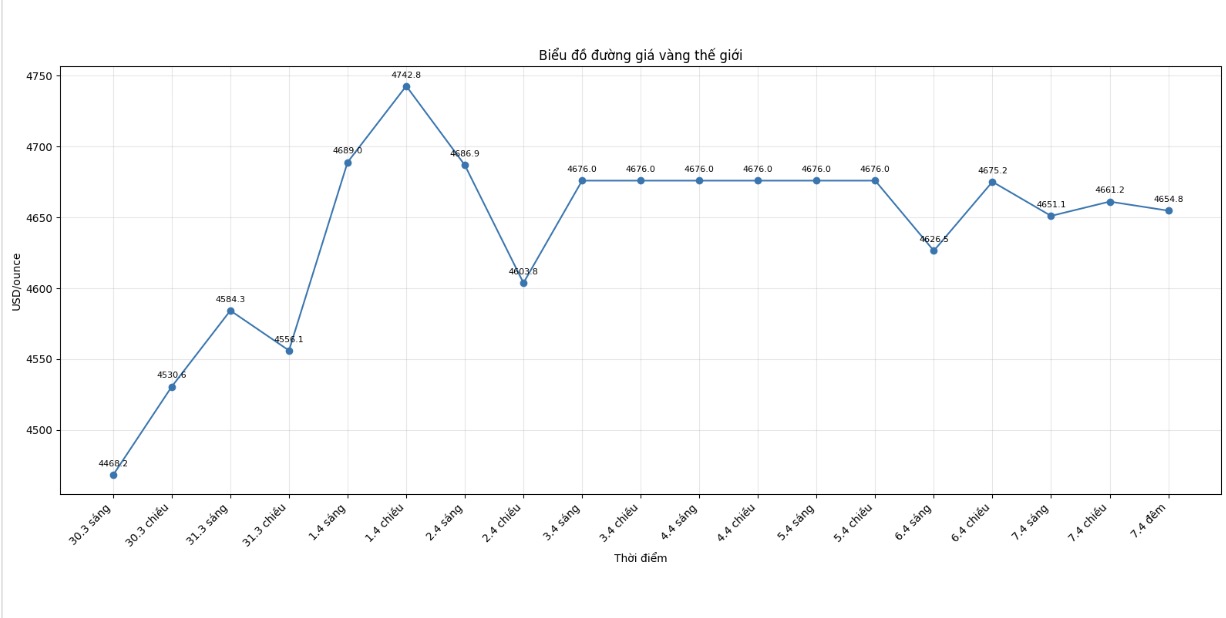
Notably, China's gold buying rate increased in the context that the price of this precious metal has just experienced its strongest monthly decrease, losing 11.5% in the previous month. Analysts believe that the gold demand of central banks is usually not too sensitive to prices. However, they can take advantage of adjustments to increase accumulation.
While China still maintains its role as a strong gold buyer, the gold segment of the sovereign bloc is becoming more volatile. Some opinions suggest that many central banks may be forced to "monetarize" part of their gold reserves to protect the economy from the negative impacts of the ongoing conflict with Iran.
To date, the Central Bank of Turkey is the most transparent agency on the official gold reserve situation. Announced data shows that the country's gold holdings have decreased by another 65.1 tons, bringing the total decrease in the previous month to more than 118 tons.
According to reports, this is Turkey's largest drop in gold reserves since 2013.
The Central Bank of Turkey said that a portion of gold has been sold, but most has been "monetarized" through swap agreements. The liquidity earned is used to buy liras and other foreign currencies to support the domestic economy.


