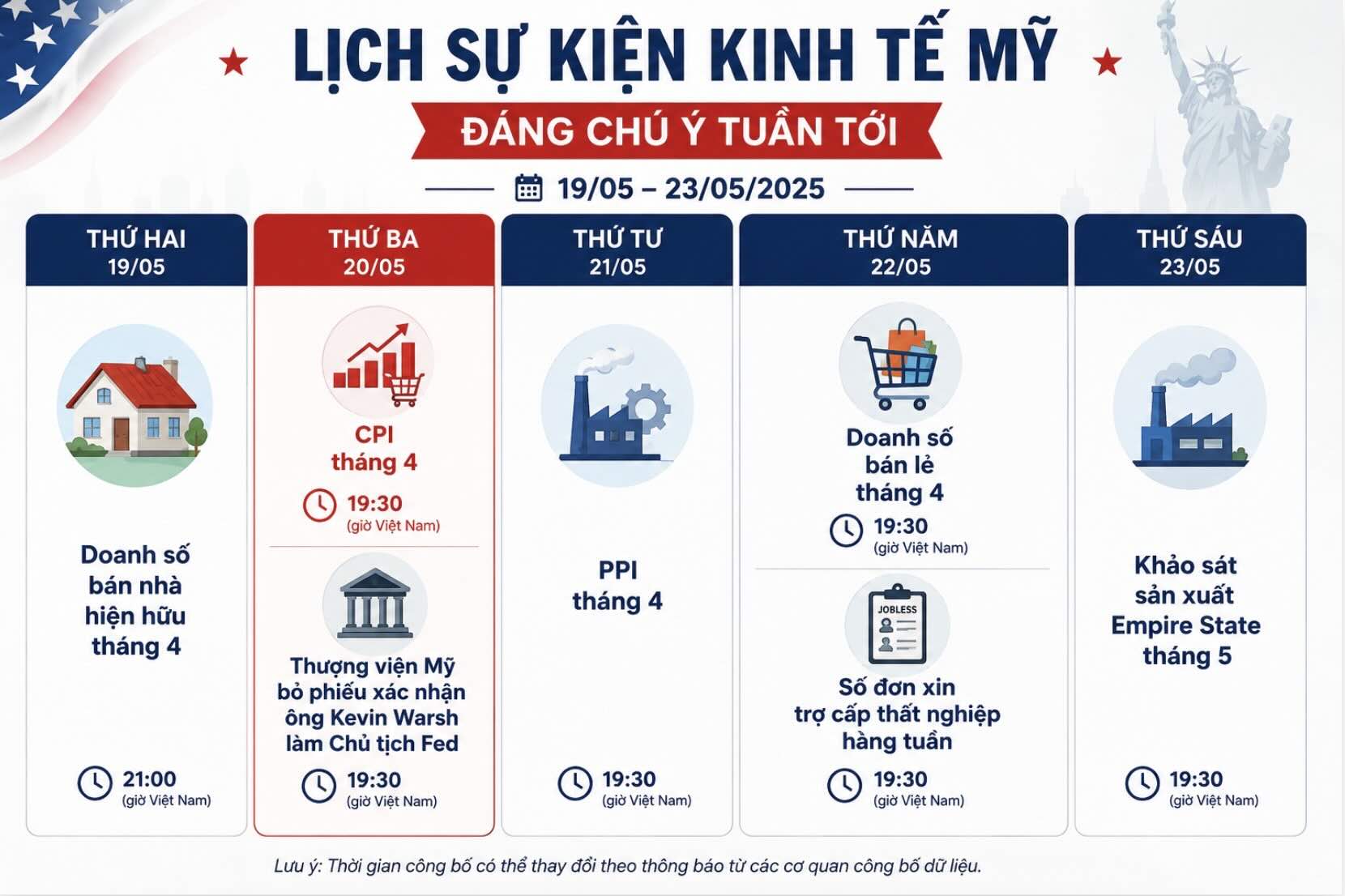
After a week of global financial markets almost completely focused on the US non-farm payroll report, investors will enter a new trading week with a series of important economic data likely to strongly impact gold prices.
The biggest focus is forecast to be the US consumer price index (CPI) report for April released on Tuesday. This is a data that the market is particularly interested in because it directly affects the monetary policy management expectations of the US Federal Reserve (Fed).
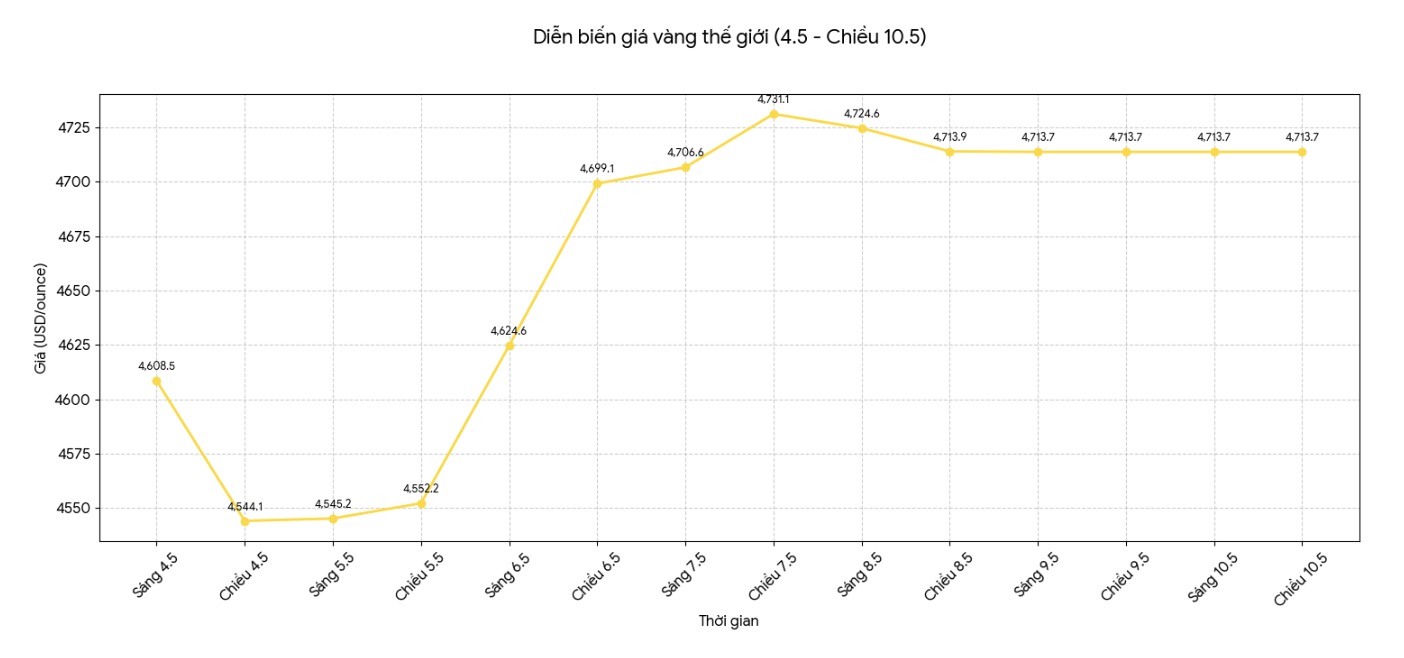
In case the CPI continues to rise higher than expected, the market may increase concerns that inflation is still persistent. This will cause the Fed to maintain interest rates in the high zone for longer, even not rushing to consider the possibility of monetary policy easing.
At that time, the USD and US government bond yields may increase again, putting pressure on gold prices because the precious metal does not yield yields.
Conversely, if the CPI cools down significantly, the expectation that the Fed will soon cut interest rates will increase. The USD may weaken, while cash flow tends to return to safe-haven assets such as gold. This is considered an important supporting factor helping gold prices maintain above the current highs.
On the same day, the market also watched the possibility of the US Senate voting to confirm Mr. Kevin Warsh as the new Chairman of the Fed. If signs appear that the new Fed leadership tends to be softer on monetary policy, gold prices may benefit from expectations of future interest rate reductions.

By midweek, the April producer price index (PPI) report will continue to provide more perspectives on inflationary pressure in the US. The strong PPI increase may strengthen the view that the Fed needs to maintain a cautious policy, thereby putting pressure on gold. Meanwhile, the cooling PPI will support positive prospects for precious metals.
Thursday's trading session was also highly appreciated when the US announced its April retail sales and weekly unemployment claims.
If retail sales continue to grow well and the labor market remains stable, investors may believe that the US economy is still strong enough to withstand the high interest rate level. This scenario may cause the Fed not to rush to cut interest rates, thereby disadvantaging gold.
However, in the event of weakening consumption and a sharp increase in unemployment claims, concerns that the US economy slows down may increase. This often boosts safe-haven demand, thereby supporting gold prices to rise.
Closing the trading week, the May Empire State manufacturing survey will provide more signals about the health of the US manufacturing sector. Weaker-than-expected data may reinforce the view that the economy is losing momentum in growth, thereby helping gold maintain its attractiveness in the international market.