
The sharp drop has not completely changed the outlook
Gold prices entered a new trading week in a cautious state after a sharp drop last weekend. The precious metal closed the week around 4,454 USD/ounce, losing more than 3% in a short time and breaking through a series of important technical support zones.
Selling pressure appeared strongly after the speech of US Federal Reserve (Fed) Chairman Kevin Warsh at the Jackson Hole conference. The tough message about inflation caused the market to quickly adjust expectations of interest rates, the USD and US bond yields to increase together, thereby putting great pressure on gold.
However, this sharp decrease has not caused analysts to simultaneously turn pessimistic.
The latest survey by a precious metals website with 21 Wall Street experts shows that ten people predict gold prices will increase this week. Six experts believe prices may continue to fall, while the remaining five predict the market will move sideways.
Some factors continue to support gold
Despite strong short-term pressure from interest rate expectations to increase, gold's outlook has not completely turned negative. The reason is that many fundamental factors that once boosted the upward momentum of the precious metal have not changed significantly.
First of all, the very high level of US public debt continues to put great pressure on fiscal policy. As debt repayment costs increase, the ability to maintain a high interest rate level for a long time also becomes a difficult problem for the economy. This makes the market still expect that the Fed will have to consider carefully before continuing to tighten its grip.
Meanwhile, inflation is still persistent and has not returned to the target level sustainably. The Fed is therefore facing a difficult situation: if it maintains a tough monetary policy, capital costs and pressure on growth may increase; but if it is eased too early, the risk of inflation returning will be greater.
The tug-of-war between the need to control inflation and the pressure to maintain growth is creating a favorable environment for gold holding demand in the medium and long term. Precious metals are still considered one of the assets that can benefit when monetary and fiscal policy instability and the purchasing power of the currency increase.
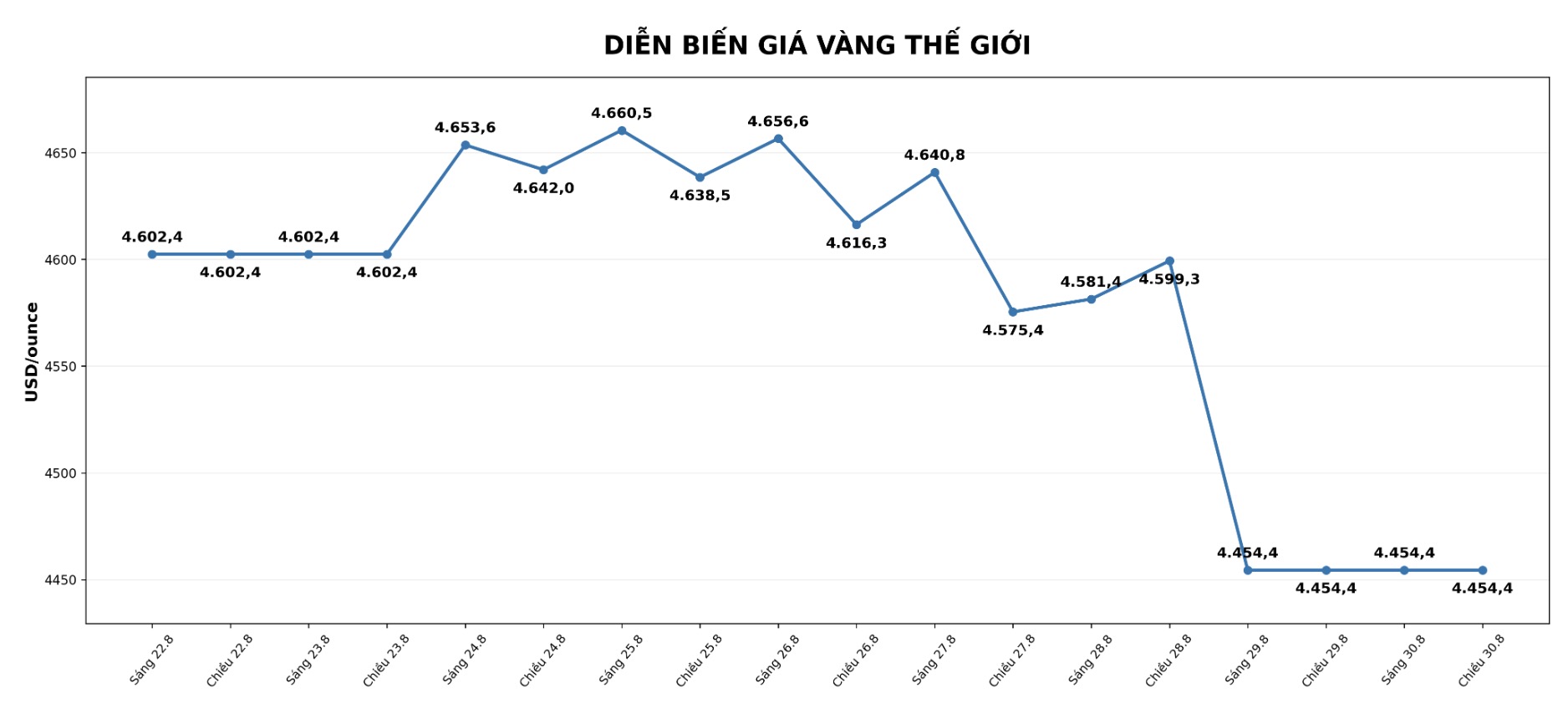
In addition, the sharp decrease last weekend occurred after a period of rapid gold increase and continuous establishment of new highs. Therefore, part of the selling pressure may come from profit-taking and status adjustment after a hot uptrend, instead of reflecting a complete reversal of the trend.
If the USD and US bond yields cool down in the coming sessions, buying power in low price zones may reappear. This is also the reason why, despite just experiencing a deep decline, gold prices this week still receive many positive forecasts from analysts.
US job data may decide the direction
This week, the focus of the market will shift to a series of US economic data, especially the labor market.
Investors will monitor the ISM manufacturing index, JOLTS job positions, ADP private sector jobs report, unemployment claims and the ISM service index. Most importantly, the August non-farm payroll report will be released at the end of the week.
If job data weakens, expectations of the Fed raising interest rates may cool down, thereby pulling bond yields and the USD down, creating conditions for gold to recover. Conversely, positive economic data may strengthen the Fed's tough stance and put precious metals under further pressure.
Technically, the 4,400-4,436 USD/ounce zone is being considered a noteworthy support area. Some experts warn that if buying power does not appear here, the short-term outlook for gold may worsen further.
The content of the article aims to update information, developments and trends of the gold market, not to recommend investment. Investors need to carefully consider risks before making a trading decision.


