
Domestic gold prices have just experienced a negative trading week. Closing the trading session at the end of the week, Saigon SJC Jewelry Company listed SJC gold bar prices at the threshold of 146.2-150.2 million VND/tael for buying - selling. Compared to the closing session of the previous week, SJC gold bar prices at this unit decreased by 9.8 million VND/tael in both directions.
At DOJI, SJC gold bar prices were also listed at the threshold of 146.2-150.2 million VND/tael, down 9.8 million VND/tael in both buying and selling directions compared to the last session of last week.
With this price, if buying SJC gold bars in the 31.5 session and selling them in the 7.6 session, buyers at Saigon Jewelry Company SJC and DOJI both lost up to 12.8 million VND/tael. This is a large loss in a very short time, showing a significant risk when investors buy gold at high prices and then have to sell it in the context of market reversal.
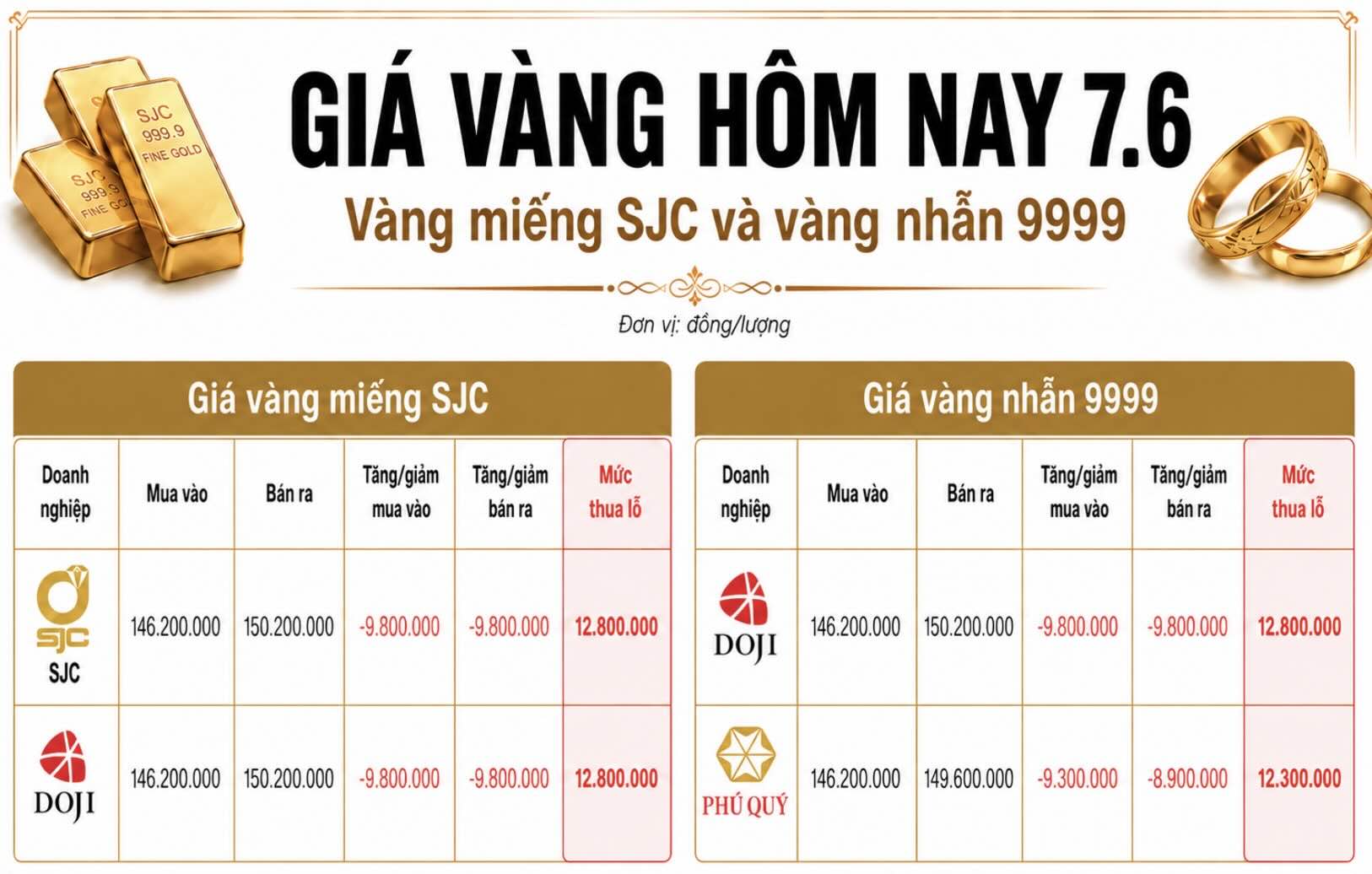
Not only gold bars, 9999 gold rings also recorded a sharp decrease. DOJI Group listed the price of gold rings at the threshold of 146.2-150.2 million VND/tael, down 9.8 million VND/tael in both buying and selling directions. Phu Quy Jewelry Group listed the price of gold rings at the threshold of 146.2-149.6 million VND/tael, down 9.3 million VND/tael in the buying direction and down 8.9 million VND/tael in the selling direction.
If buying gold rings in the 31.5 session and selling them in the 7.6 session, buyers at DOJI lost 12.8 million VND/tael, while the loss at Phu Quy was 12.3 million VND/tael.
This development shows that investors need to pay special attention to the buying - selling price difference. Currently, the difference at many businesses is still very high, commonly 3-3.4 million VND/tael. This means that immediately after buying gold, investors have faced corresponding losses if they sell immediately.

In the context of strong gold price fluctuations, the high spread margin makes the risk even greater for investors with a psychology of chasing prices or short-term surfing expectations. When prices turn down, losses not only come from price fluctuations, but are also amplified by the buying-selling spread.
The second risk comes from the erratic developments of world gold prices. Closing the weekly trading session, world gold prices were listed at the threshold of 4,328 USD/ounce, down 210.3 USD compared to a week ago. During the week, gold prices were supported at times by geopolitical factors in the Middle East, but this upward momentum was not enough to compensate for pressure from the USD, US Treasury bond yields and US economic data.
Technically, world gold prices have broken through the important support zone around the 200-day moving average. This development makes short-term prospects less positive, especially in the context of increased cautious sentiment after a strong sell-off at the end of the week.
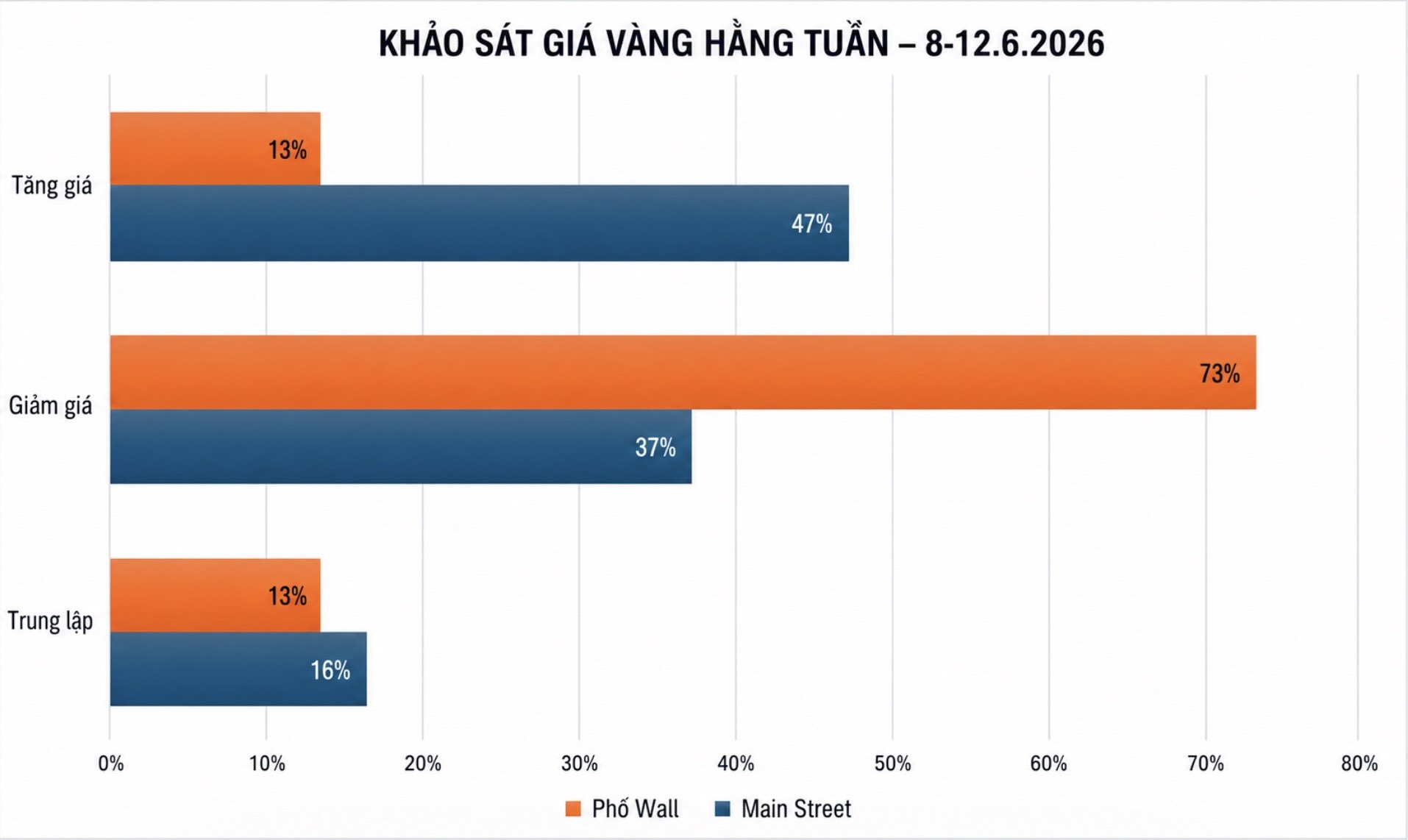
The third risk is that the forecasting sentiment of Wall Street analysts has quickly reversed. The latest survey by Kitco News shows that out of 15 experts participating in the survey, only 2 people, equivalent to 13%, predict gold prices will increase next week. Up to 11 experts, equivalent to 74%, believe that gold prices will decrease. The remaining 2 experts, equivalent to 13%, predict that gold prices will remain flat.
This result shows that analysts are strongly leaning towards a negative scenario in the short term, after gold prices failed to maintain an important support zone.
However, some experts believe that the long-term outlook for gold is not completely negative. The reserve demand of central banks and the safe-haven role of gold are still important supporting factors. However, this does not mean that individual investors can ignore short-term risks.
For domestic investors, buying gold at this time needs to be carefully considered in terms of holding targets, risk tolerance and investment time. In the context of erratic world gold prices, negative short-term forecasts and high domestic buying-selling spreads, pursuing crowd psychology may cause investors to face large losses if the market continues to adjust.
Investors should not use borrowed capital or the entire short-term cash flow to buy gold. For people who need long-term accumulation, it is necessary to break down the buying time, closely monitor world price fluctuations and pay special attention to the difference between buying and selling prices at each business.


