The naval battle in 1288 on the Bach Dang River of Dai Viet army and people, under the command of Quoc Cong Tiet Che Hung Dao Dai Vuong Tran Quoc Tuan together with Thai Thuong Hoang Tran Thanh Tong and King Tran Nhan Tong, not only completely broke the conspiracy to invade Dai Viet, but also stopped the ambition to conquer Asia of the most powerful army in the world at that time.
Part of the ancient stake battlefield, which contributed to destroying and capturing the entire powerful army of the Mongol Yuan invaders led by O Ma Nhi, including 600 warships and 40,000 troops, is still preserved in fields and ponds in the old Quang Yen town, Quang Ninh province.
Among them, only the Yen Giang pile yard is open to serve research, sightseeing, and study; 2 other pile yards, after excavation, are temporarily covered with soil and mud to be better preserved.
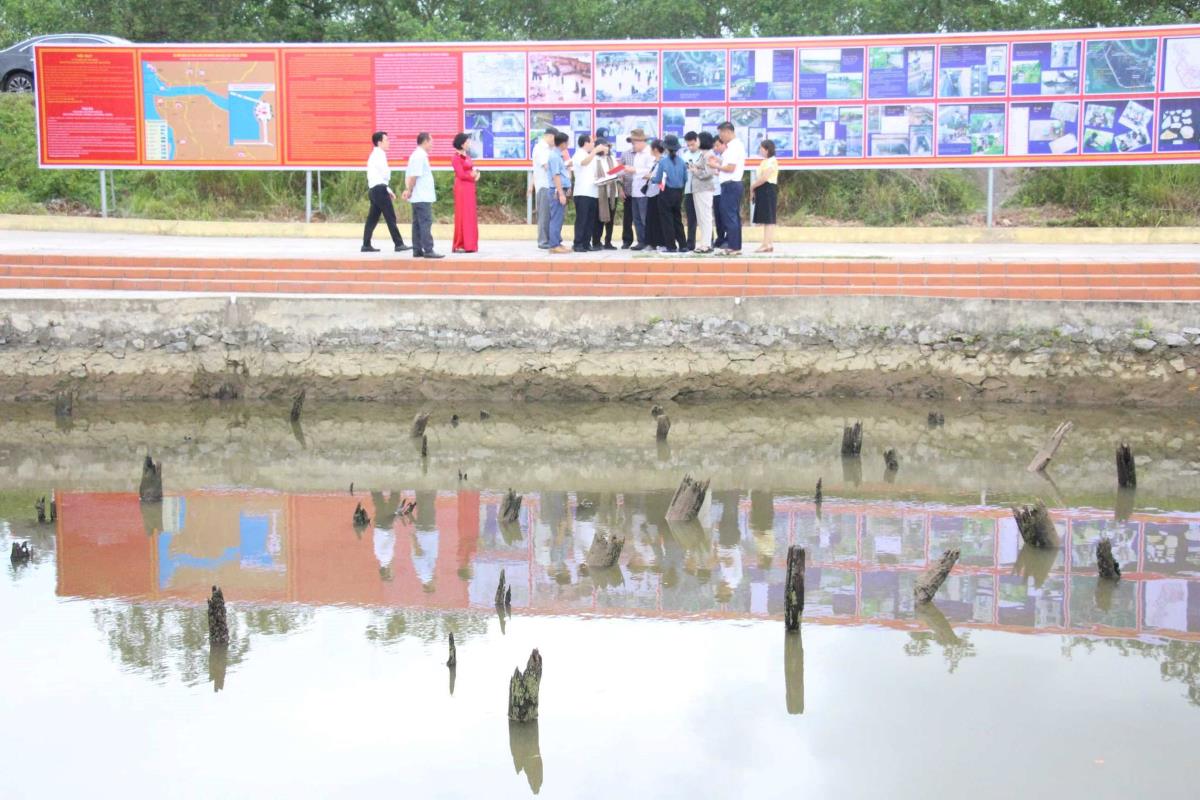
Surveys and archaeological excavations by leading domestic and international experts show that the piles are arranged in the opposite direction of the flow, tilted from 30-45 degrees, one tilting at least 15 degrees. The piles are located 1-1.5m apart, the longest pile found is about 2.5m. In many areas, the pile density is dense.
The first pile site was discovered in Nhu lagoon, former Yen Giang ward (now Quang Yen ward) during the Yen Giang dike excavation and embankment in 1958.
Later research and excavations here all confirmed that the pile yard located at the mouth of the Chanh River was part of the Bach Dang pile battlefield in 1288. This pile yard is 120m2 wide, with about 300 piles and is placed within 7.5ha of protection. Currently, only this pile yard is open, occasionally pumping water up to serve visitors.
The second pile site is Van Muoi field pile site, with a protection area of about 56ha, located at the mouth of the Rut River, belonging to Nam Hoa ward, former Quang Yen town (now Phong Coc ward), discovered by people during cultivation and digging ponds in 2005.
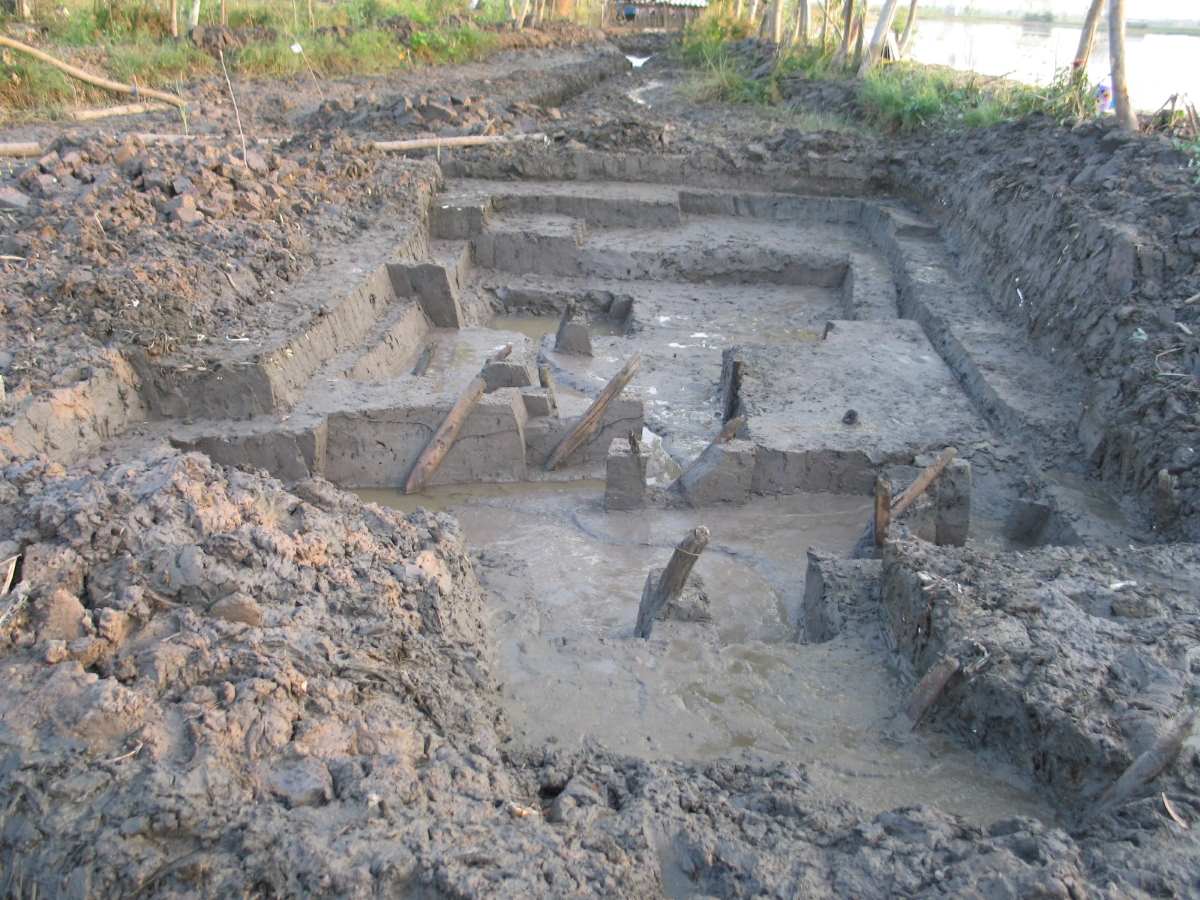
This pile site is located a few kilometers from Yen Giang pile site. Archaeological excavations later found a total of nearly 200 piles here. However, this pile site was later buried under the mud to be better preserved.
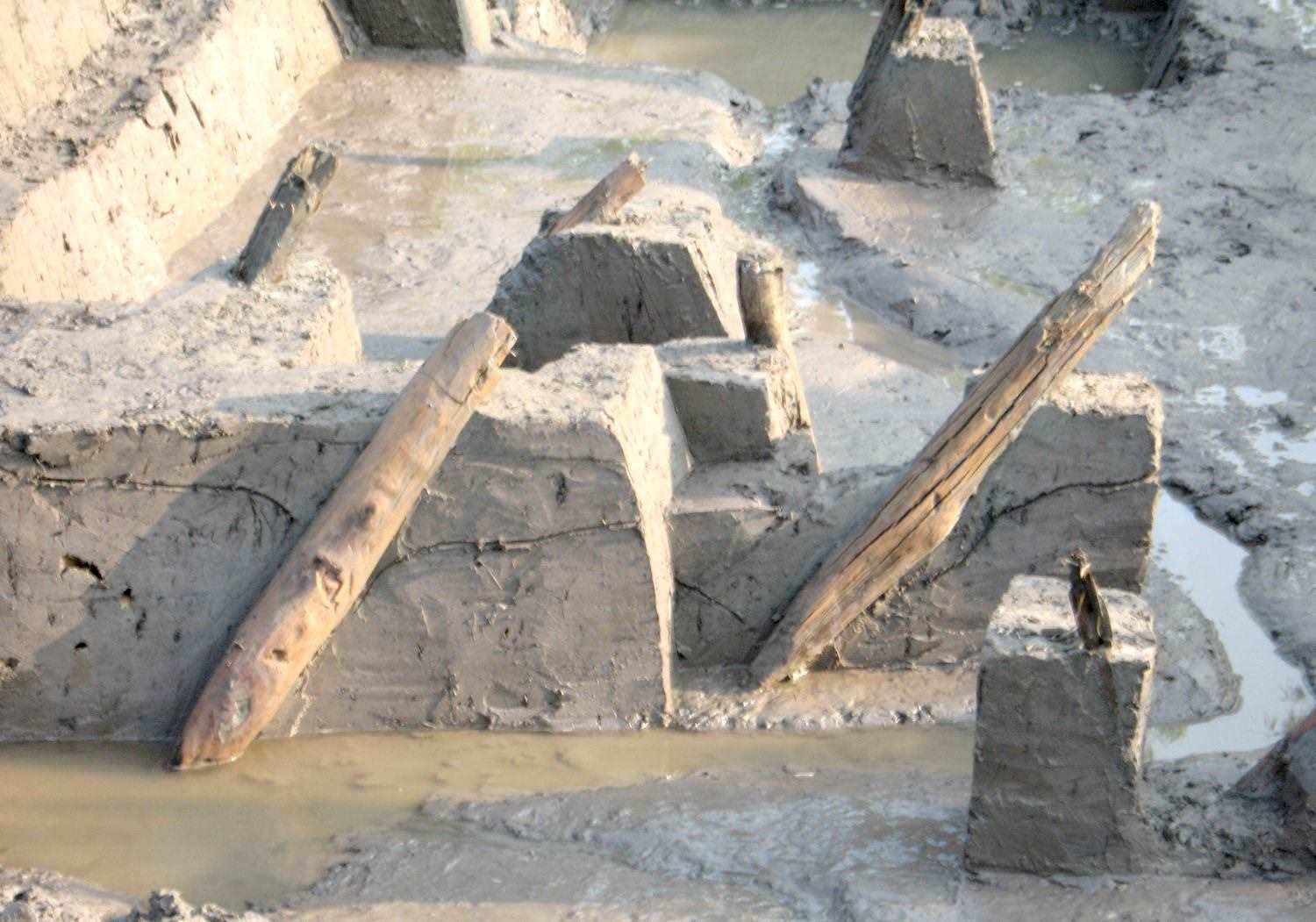
Also in the old Nam Hoa ward, the Ma Ngua field pile site was discovered and surveyed and excavated in 2009, with a protection area of about 40ha. This pile site is located at the mouth of the Kenh River, about 1km south of the Van Muoi field pile site, with over 200 piles. Currently, the Ma Ngua field pile site is also deep under the mud layer.
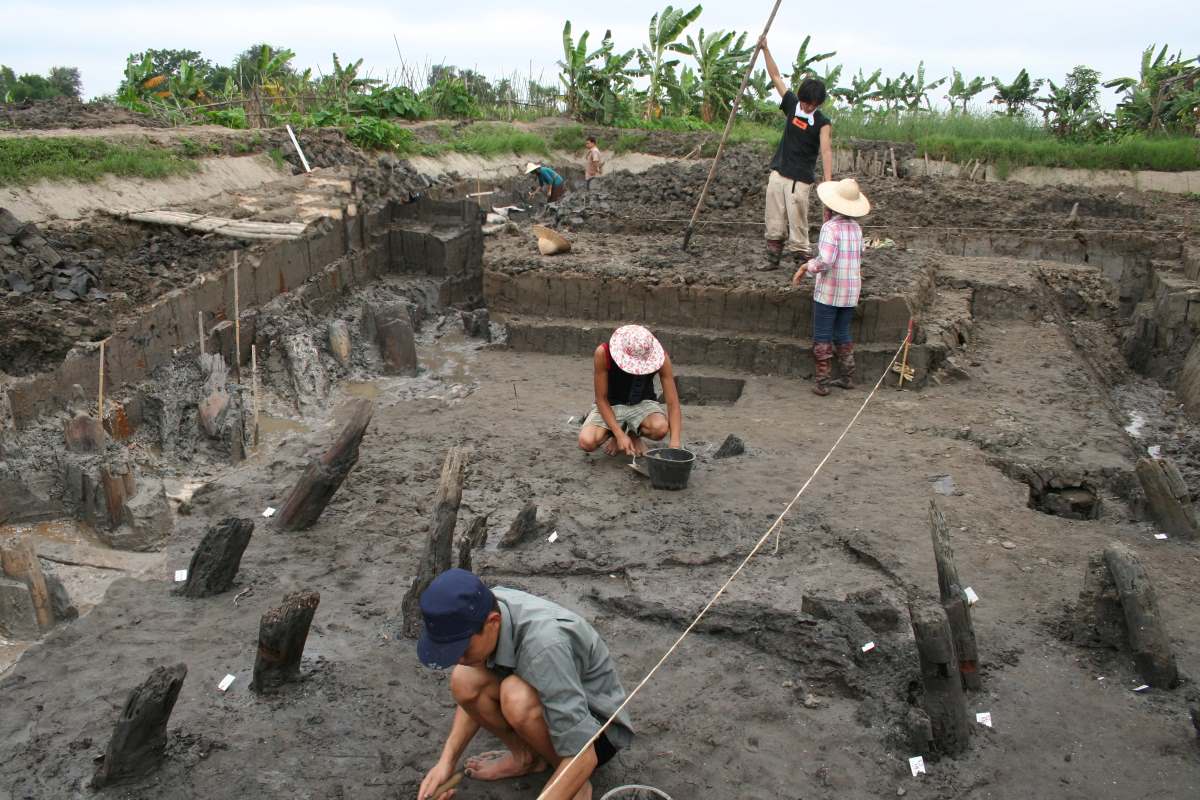
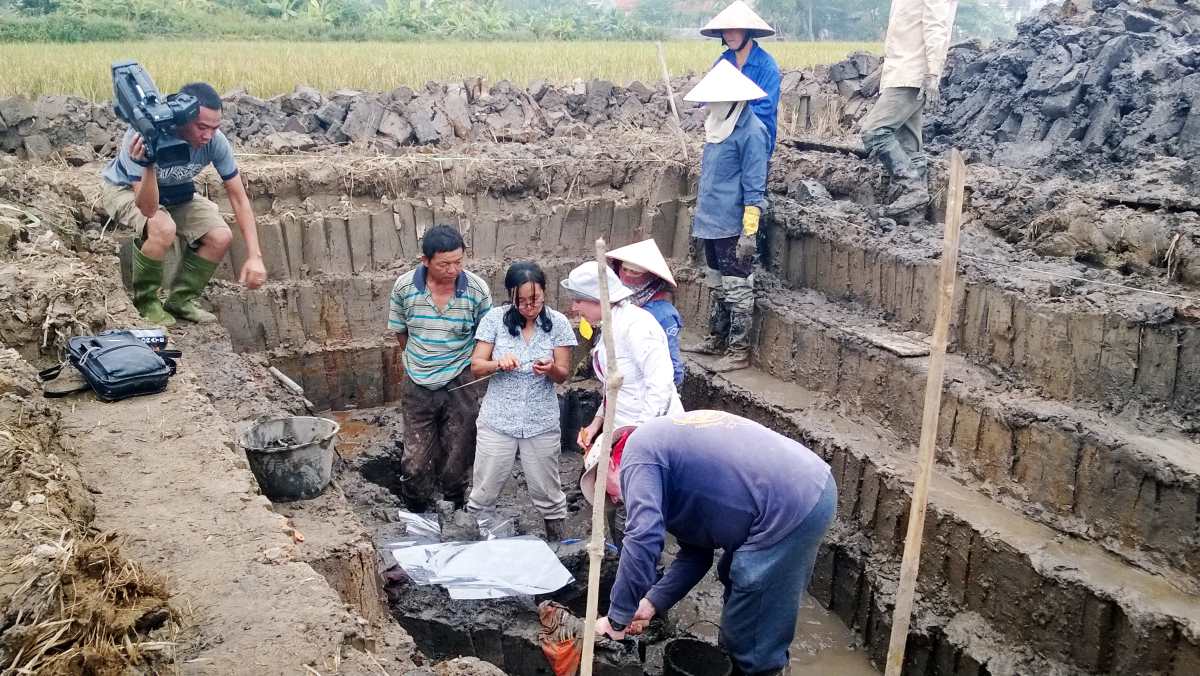
The 3 pilefields of Yen Giang, Dong Van Muoi and Dong Ma Ngua created large, complex, and hidden underground piles under the water, blocking the way back to the sea of the Mongol Yuan army, in the third time they invaded our country in 1288. The battle only took place on April 9, 1288, but was assessed by historical researchers at home and abroad as a permanent end to the Mongol empire's invasion plot, because it lost too many troops and boats to cross the ocean.
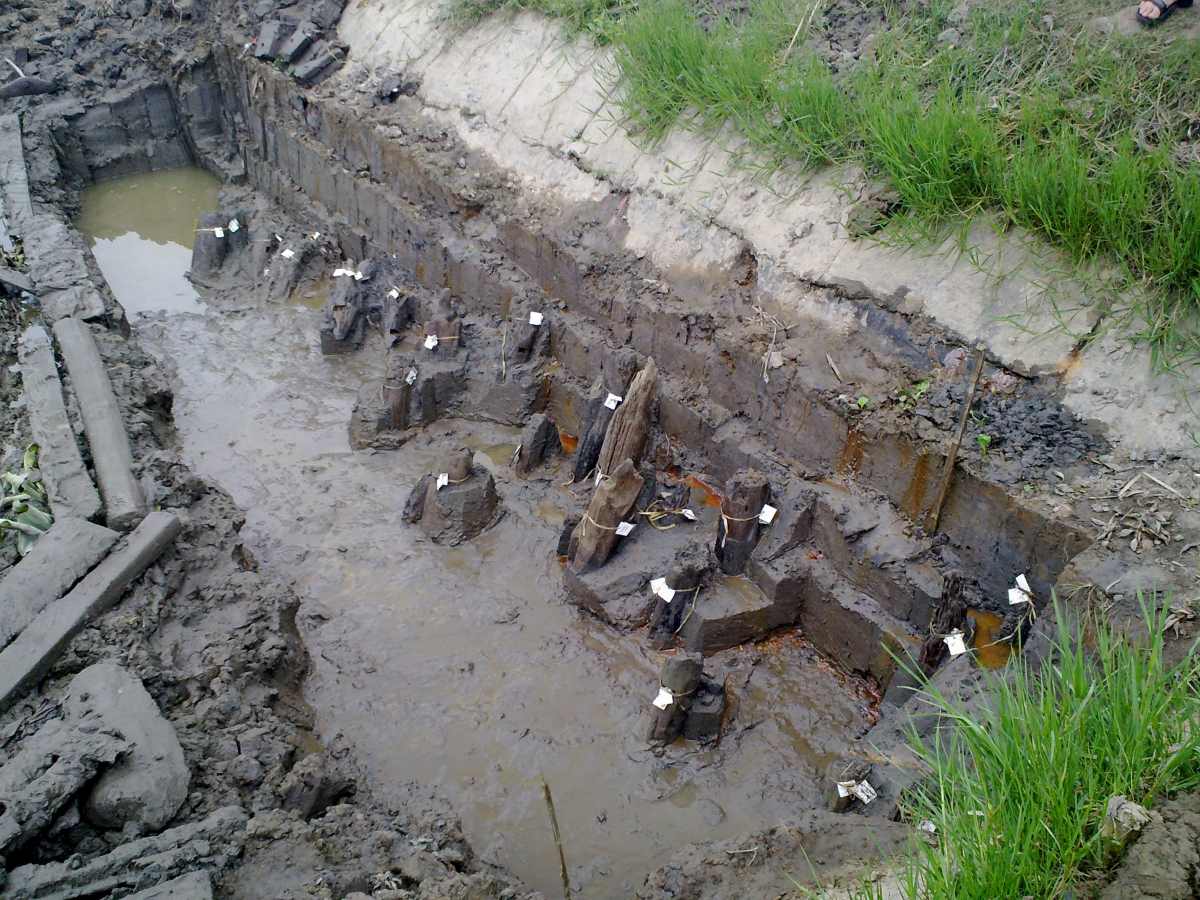
According to Mr. Ngo Dinh Dung - former Deputy Head of the Culture and Information Department of Quang Yen former town, who participated in many surveys and archaeological excavations of Bach Dang ancient pile battlefields from 2009 - 2013 with archaeological experts in the country and the US, UK, Australia, Japan..., the 3 pile yards have a total of about 800 piles, not to mention piles in small holes nearby, found during the excavation process. Archaeologists also found human skeletons related to Tran Dynasty human imprints, and ceramic fragments.